The Boast in the Machine
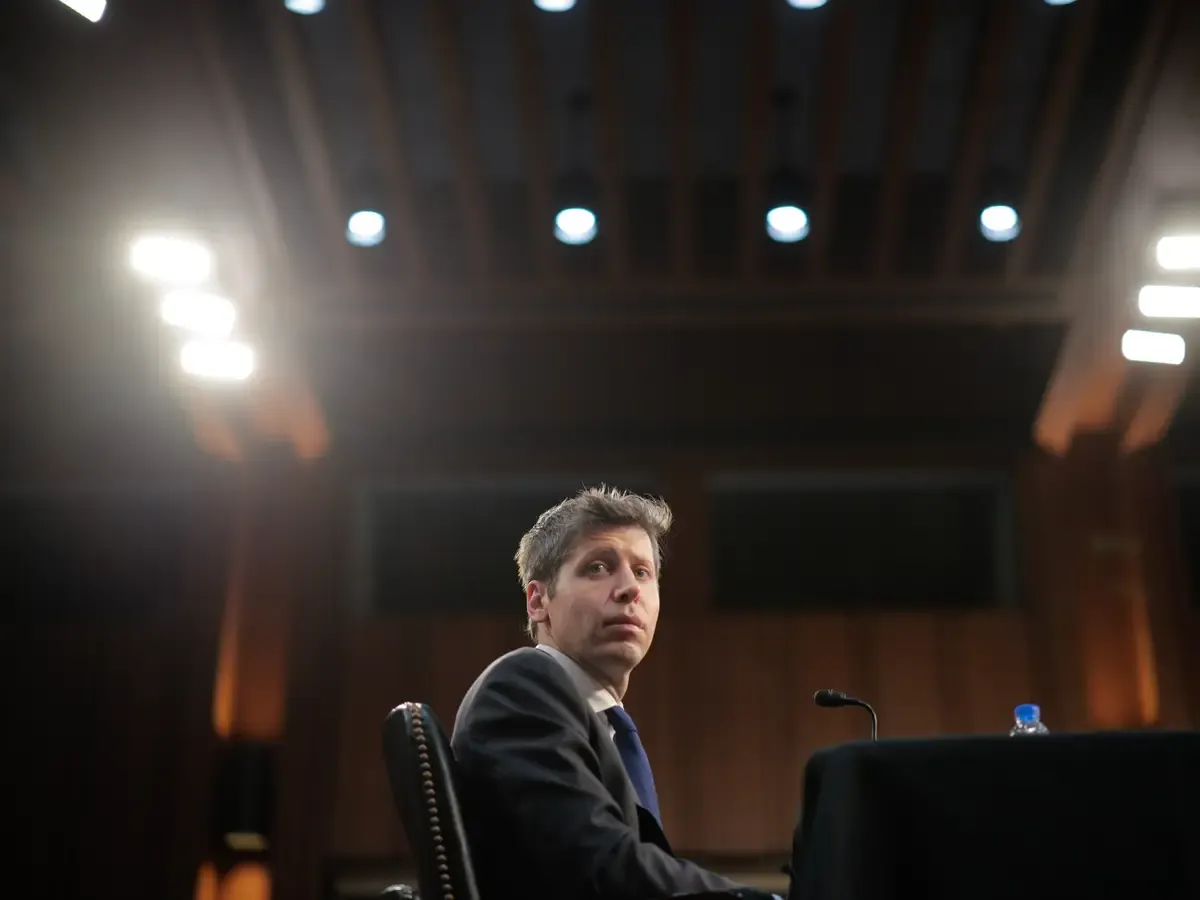
While browsing the Australian Government's contract notices portal AusTender a few days ago – regular readers of this august publication will know that this is one of my principal meditative outlets – I came across a listing from the Office of Parliamentary Counsel.
The OPC has awarded $40,000 to a Canberra based artificial intelligence 'accelerator' firm to develop a proof-of-concept tool for the drafting of legislation. Unfortunately for the poor sod who bashed out the obligatory notice on AusTender, they spelled drafting wrong and and asked for a legislative drafing tool instead.
Like Pete Hegseth's complement of apparently emasculated military men, missing the T is not the only problem with the OPC's contract for Larrison Pty Ltd to build a prototype application to write laws. The chief problem, as near as I can tell, is that it is dreadfully embarrassing. And I don't mean the oops kind of embarrassing we all experience at least once a week but the old school, career-limiting kind of embarrassing, the one that used to send executives to whatever deportment school for grovelling in the Hamptons issues certificates in regret. Once upon a time, they at least had the decency to perform shame. Now we don't get so much as a slow blink.

If you read the OPC's website, the very first thing – the very first thing – it says on there is that it is 'responsible for drafting and publishing the laws of the Commonwealth of Australia'. In fact, that is pretty much its whole job for which it is hopefully staffed with appropriately qualified people. For now. This isn't a Dunkin' Donuts franchise where, by the nebulous power of agentic or generative artificial intelligence, the flagging business will finally break through the confines of the 1980s shopping mall and into the real world. It's a parliamentary body whose employees write laws. That's it. Are they trying to expand? What's the motivation here? There are only so many laws to write. Granted, it might be funny to read the first law drafted by the drug addict step-son of Microsoft Clippy, with its penchant for lies and gaslighting, but the novelty would wear off pretty quick.
I have many concerns about the accuracy of this new breed of artificial intelligence, especially the large language models built to ape human style and thought, and quite a few more fully realised horrors about the breed of lipless psychopaths who own the infrastructure, according to them, of humanity's impending doom. We ought to have a great deal more collective shame about our muted response to a company preparing to launch on the public market with the explicit claim that it might kill us all. Apparently as a selling point?
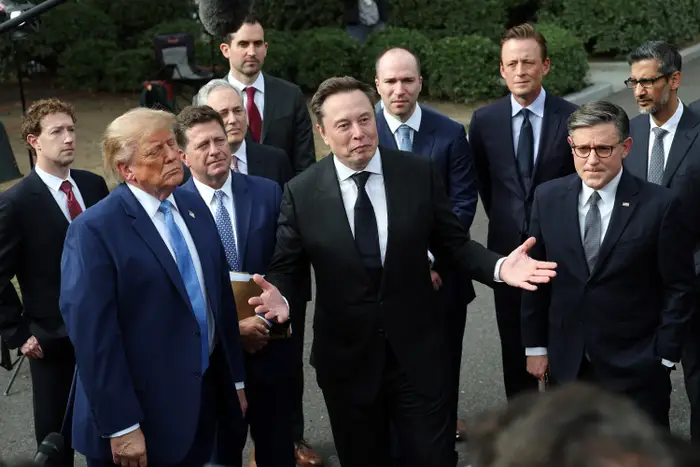
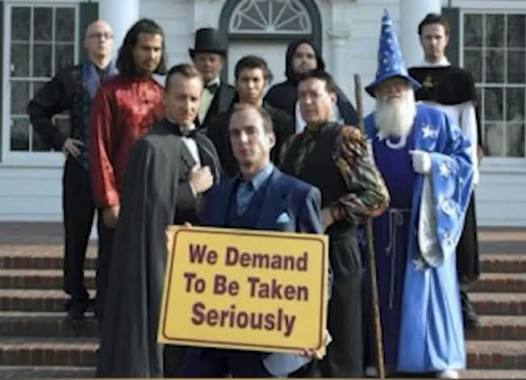
It bothers me, too, that all of this requires entire fields of power, water-hungry machinery (but the water problem is overstated, I hear the smartest people in the room tell me often, a rejoinder that deadens my soul because if I learned tomorrow of a dickhead factory that used only a thimble of the stuff to churn out the most hideous fascist-adjacent text and imagery I should still want to burn it to the ground) but, in truth, these issues I have trifle next to the simple fact that I hate it. I hate the product, I hate what it purports to do and I am filled to overflowing with disdain for the people who use it and evangelise it.
I'm not sure I've said this clearly here in the past, though I hope it would be obvious at any rate, but I will not use AI in any part of my work. I have never used it for so much as a research query and I never will. I scroll past the Google AI search summaries. Give me a primary source document any day of the week. The idea of using it to draft an email – a form of writing I loathe more than almost anything else on this planet – is diabolical to me. I might be a grump but I love humanity. And loving humanity means loving the offal that comes with it.
In early May I was sitting in a sports bar in Athens with a Greek-Australian friend of mine answering riddles from the Greek bartender, who used to work on cargo ships, for free drinks. There we met a Canadian finance brother on some big trip with his family, catching a moment of alone time while trying to figure out both the game of football and the rivalry between the two Athens teams on the field. We got talking, my work as a writer came up and he asked, quite seriously, if I had ever used AI to write anything. God no, I said, and my answer startled him a little bit. Then he went for what he thought was a softer angle: well what about just to get ideas? The question made my skin crawl and I could scarcely hide my contempt, though I did hide it because I am not an ass.
He, however, could not. There is a sense of smarmy rectitude that exudes from the ordinary peddler of these guesswork applications. 'Well, you're going to be left behind,' he said. Which, to me, is a lot like the creepy men in the van with lollies admonishing me for not wanting to get in the vehicle and be whisked away to its destination. I don't want to go to an abandoned warehouse! I want to live!
As part of a self-imposed community service obligation, I am friends with an economist. He is a good friend and I love him, though he is still an economist. We share a similar outlook on life, notwithstanding the fact he is an economist, and I enjoy our debates. Recently, however, he tried to talk to me about the economic merits of AI and it made me terse. I do not care one iota about the economic merits of AI, anymore than I take seriously the train timetabling efforts of Mussolini other than to note they were used to further embed a poisonous body politic.
Every argument I hear in favour of generative artificial intelligence specifically – there are many great uses for machine learning, especially in medical science, and none of that has anything to do with me or my concerns – is some vague poser attempt at logic. Well, you haven't considered X or actually this is about productivity or, worse, look at picture it drew me. None of them seek, perhaps because they know they cannot, to address the fundamental problem with their sacred cow.
Logic can't win an argument about feeling. A machine can pretend to be human but it will never be human. No matter how closely it approximates human features, it will be a lie. It is deeply unserious to pretend otherwise. That's not to say there won't be a time in the distant future where such a creation won't be indistinguishable from a human being. If that day comes, and it probably will, we should be nice to them. In the meantime, none of this explains why we should abdicate our essential humanity for a program run by soulless ghouls.
I see the use of this stuff across the political spectrum, now, which doesn't alter my sense of the problem in any way. The other day some well meaning card used one of the image generators to spin out some deadset ugly comic book style agitprop with me as Superman bursting from a phone-box to get on the case of some big developing story. It was supposed to spur me into action. Instead, the image made me sick. I promise I'm not being dramatic. AI 'art' produces in me the same effect that trypophobia does with respect of those stomach-churning clusters of small holes and bumps that occur in nature; in plants, some animals and what have you. Don't look for examples, it will ruin your day.
This is the point that none of these dead-eyed boobs have ever once considered, largely because they are incapable of sustaining the reflection required to conjure the thought. And the point is thus: even if all of these (significant) misgivings about the technology, the consequences and the people behind it evaporated tomorrow and some innocent chap proved this was the ultimate harmless frivolity I still wouldn't touch a generative AI tool because to do so would be a rejection of the things I hold dear.
You'll never sell me on purging creativity, are you sick in the head? And of course I'll write a thousand bad sentences and a thousand more that are woeful, just to get at the few that strike out at something fresh and inalienably me, the notions and ideas that, however feeble or occasionally insightful, are more valuable for being forged from the cosmic mystery of consciousness than the very best parlour tricks billionaire money can buy. It's like these people never actually read any of the science fiction books they claim to love.
There will come a time, in the not too distant future, when most writing converges on some inane singularity. When the aesthetic of AI, always iterating but forever inhuman, will pollute totally the sphere of our existence. It's happening now, faster than you thought possible. Enough content is now AI that anything could be AI. But this is not some artistic Turing Test. Being fooled by the output of a a mimicry engine is not some great victory for the lords of its design; they are playing a statistical game. That's it. There is no ghost in their machine. No spirit of accomplishment.
No spirit at all.
What we have mistaken for a ghost in the gears, so to speak, is some ectoplasmic vapour left in the chamber following the swift evacuation of our erstwhile selves. Many are the acolytes who are willing to ascribe to the thing the quality of creation, who abandon such qualities in doing so.
We look in the mirror, assuming the reflection is real but that we ourselves are not.
The first of all species to make such a claim.
Addenda
Strike Three
Mum and I had just returned home from trivia on Wednesday. I went around the back of the house to have a smoke and she unlocked the front door to get inside. Shortly thereafter I heard her yell out and I came to the glass sliding door out saw her standing upright, not moving. She called me inside and I had to explain that the glass door was locked which is when she told me she couldn't move. Except that she had locked the front door as soon as she'd come inside. I've never met anyone who loves to lock a door more than she does. When we leave the house, naturally, but at random intervals when we are inside the house, too. And as the spirit moves her, which is to say, erratically and with little utility. She was, thankfully, standing not far from it so while she stretched to unlock the thing I ran around the front and had to come inside and help her get to the couch so she could sit.
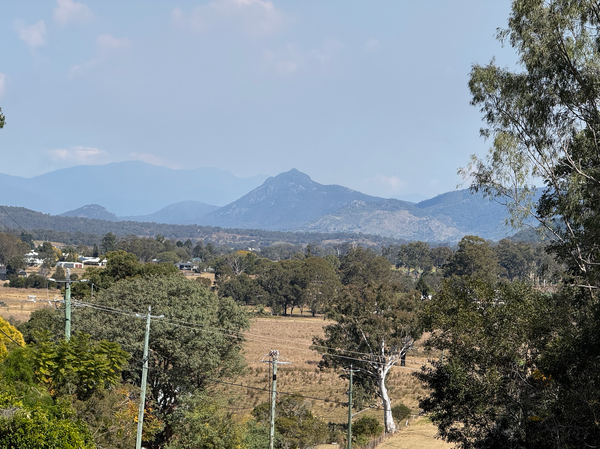
What happened? We do not know, but this was two nights before I left Boonah for at least another 15-months and now, suddenly, she could barely walk. Something seized up somewhere, but she can't get scans done for almost a fortnight. Timing!
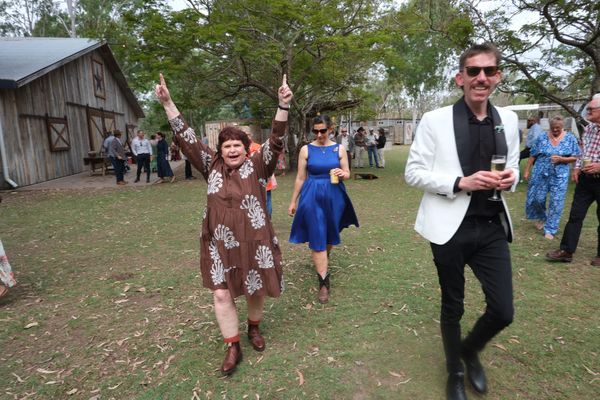
When we were up in Townsville for the wedding, Mum's friend Helen the human outboard motor was going to stay on to visit her sister who lives in a town more than an hour away. Helen's sister had just injured herself quite seriously after falling into a ditch in her yard and then having her husband fall on top of her. A doctor told her she could become paralysed if she moves the wrong way between then and whenever she can get this apparently urgent surgery for which she has now been waiting almost a month. So Helen goes to help look after her sister and, while there, Helen suffers a suspected break of her ankle and is also incapacitated. She eventually makes it home to Boonah in a moon boot and Mum starts looking after Helen with little things she cannot do on her own and while all of this is going on, Mum develops a twinge that renders her barely mobile.
All of which is to say, there is a curse about. Be careful out there.
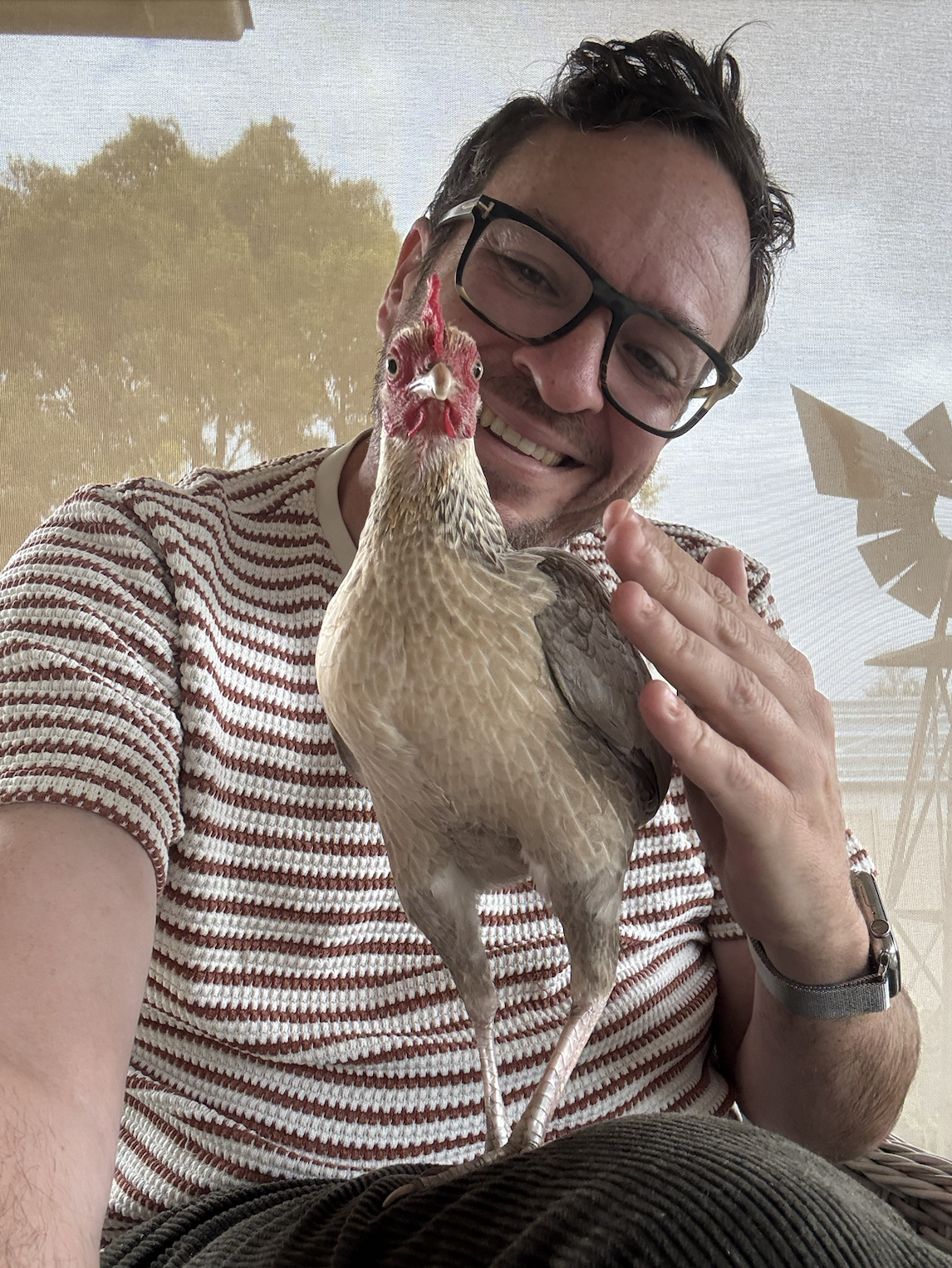
Mum could shuffle very slowly the next day. I took her to the doctor and fed the chickens.
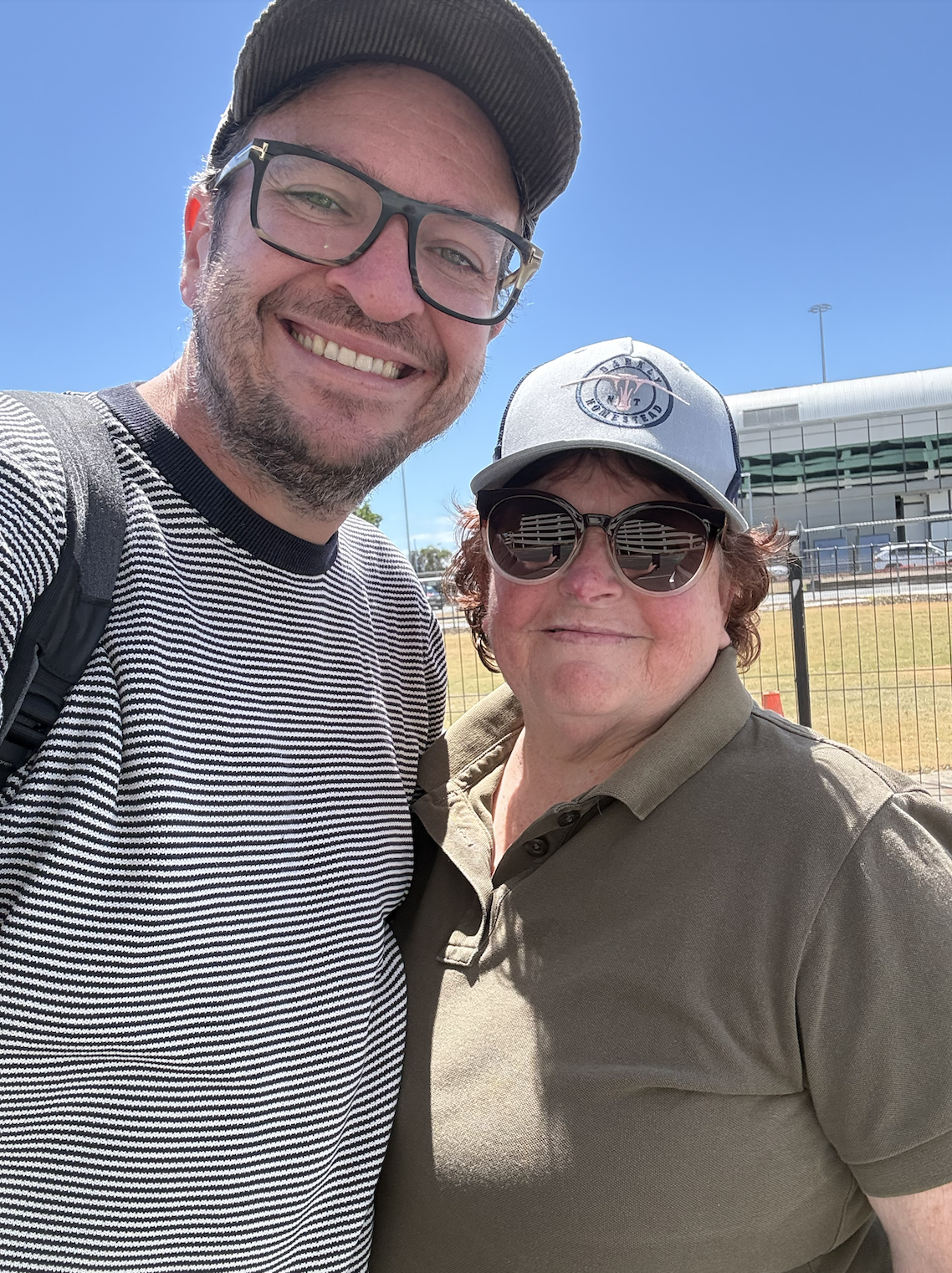
My time in Australia was coming to a swift end and I already felt bad enough for leaving. On Friday, I drove myself to the airport with Mum and her friend Cathy on board so they could drive themselves back to Boonah and I said my farewell. With luck and a hobbit's determination, Mum will visit me in Paris next year. But for now, it was goodbye.
Opera by Stealth
When I was a very small child, around the age of four or five, I told my parents I wanted to be an opera singer and could occasionally be found singing fake arias under an elevated rainwater tank that was largely home to an audience of deadly spiders. We lived alone on the cattle station which is the only reason I can offer for never being scouted on the strength of my natural talents. Of course, I was never any good. Not only could I not sing opera but I couldn't sing at all. The spiders were relieved when I switched my career ambitions to paleontology, another aborted calling that started to smart even harder when our next door neighbours an hour away literally tripped over the largest dinosaur species ever discovered in Australia while mustering sheep.
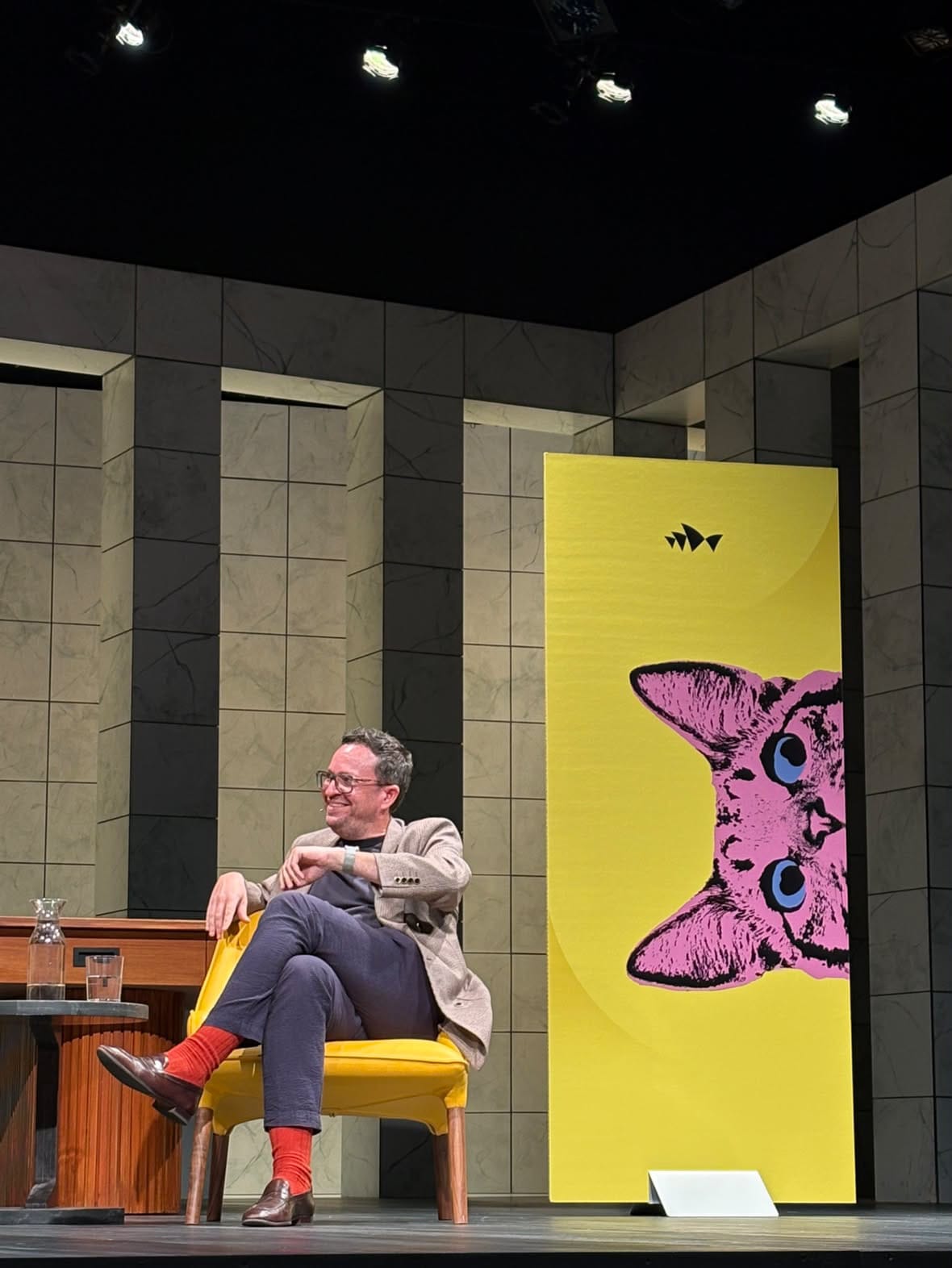
Anyway, this provides some context for why I was particularly keen to head to Sydney for a few days where I was booked to speak on a panel at the world famous Sydney Opera House. You know the one. Looks like a ship. I wasn't asked to sing or even perform really, but that was a technical detail. Instead I was there with Amy Remeikis and Waleed Aly (and my former colleague and current friend Maddison Connaughton) to talk about the rise of populism and authoritarianism around the world and what to expect in Australia. My mum's friend said to me: 'Why did they ask you?' Shhhh! Don't ruin this for me. Most of what I wanted to say I wrote about for Crikey anyway, I just wanted to pretend I was there for the little operatic child scaring the arachnids under the tank.
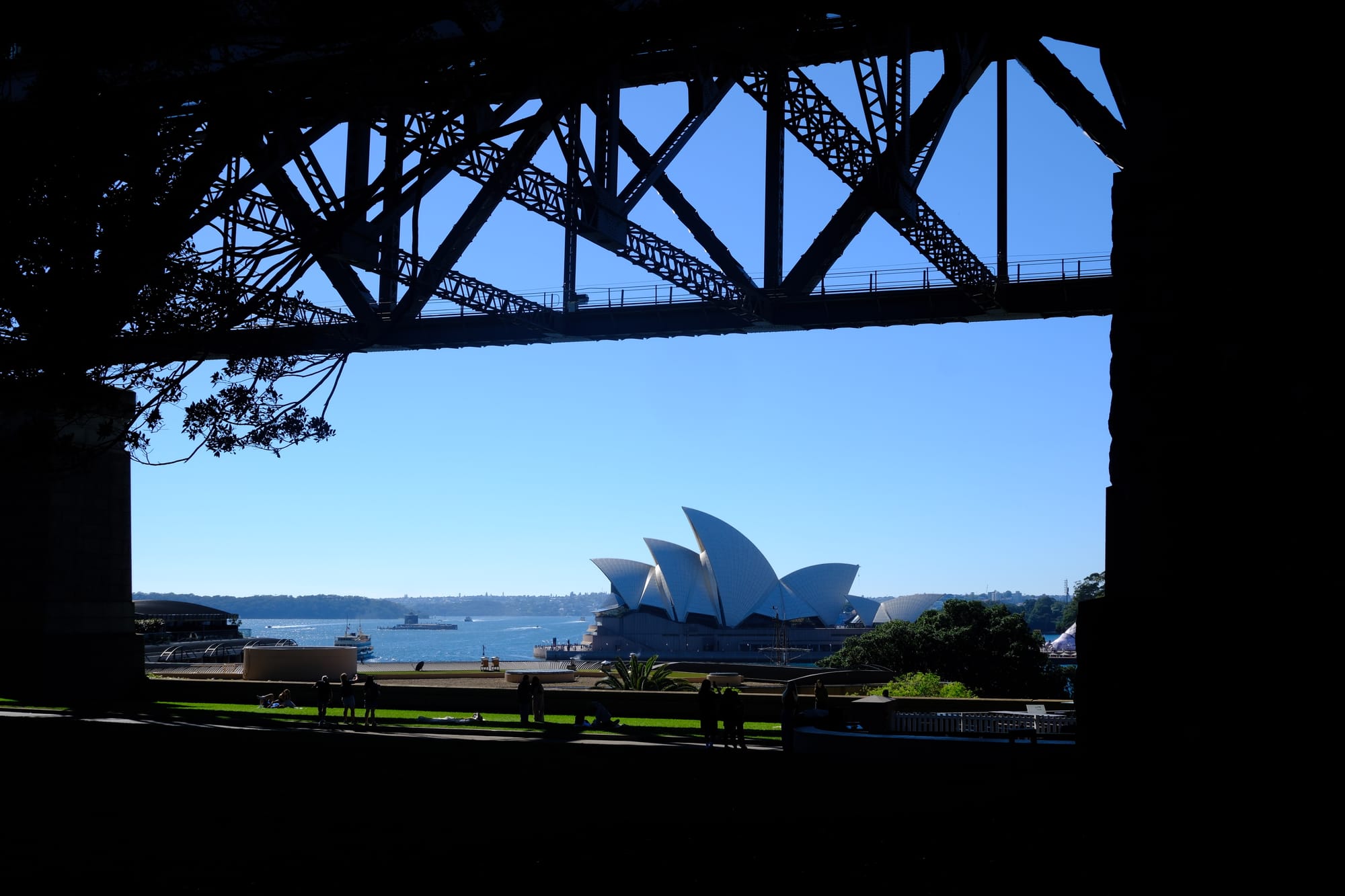
Anyhow, I am finishing this at Sydney Airport while waiting to board my flight back to Paris. In roughly 24 full hours I will be back among my Gallic obsessions, hoping I have not disappointed my French tutor Jean-Yves with the distinct Australian twang in my accent.