Deliver Us, Lord, From Ridicule

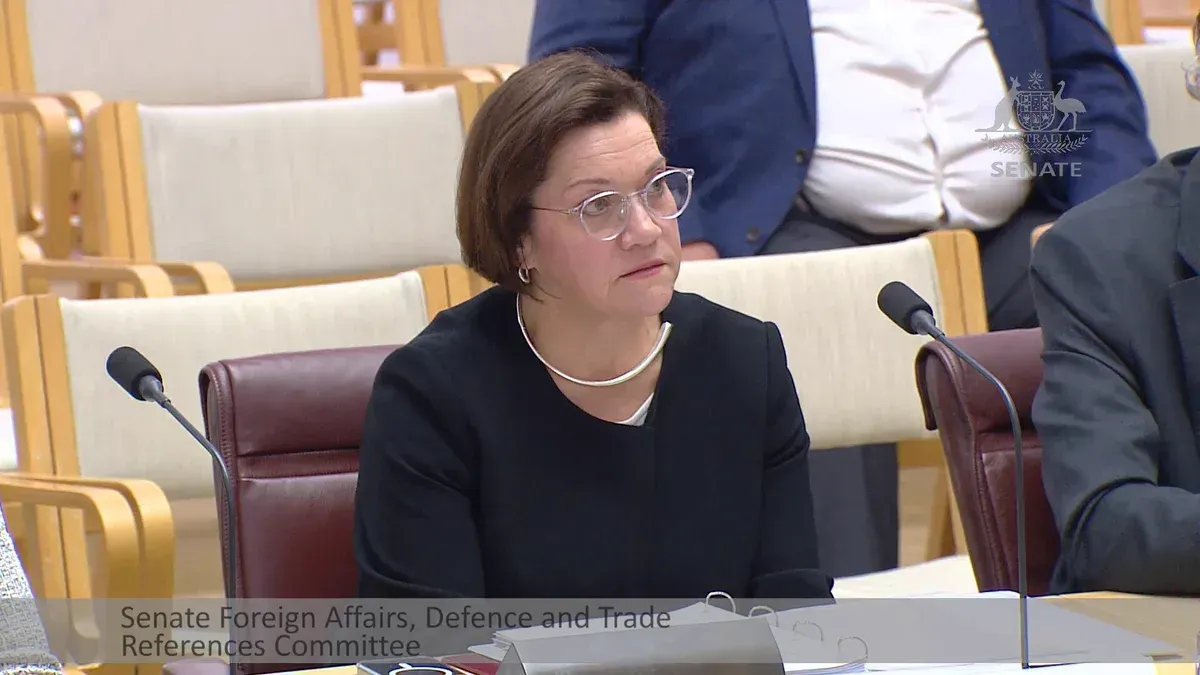
On Friday, Defence deputy secretary Celia Perkins began her evidence before a senate inquiry into asset sales by the department and Australian military with an embarrassing manoeuvre.
'In closing, I would note for the record that the Defence witnesses appearing before the committee today are pleased to take your questions but do not consent to the reposting of our evidence to social media sites or the reproduction of our likenesses for purposes outside the framework of the parliament and the transparent public proceedings of this committee,' she said.
This is the parliamentary equivalent of copy-and-pasting one of those Facebook privacy 'disclaimers' that your least tech-savvy uncle posts as a prophylactic against all the rights he has already signed away by being on the platform in the first place.
Greens Senator David Shoebridge was incensed, as he should be, and immediately sought a ruling on the gormless demand. Of course, Perkins' was simply hoping the senate would acquiesce. As far as defensive strategy goes it was a bad one, almost like having deterrent submarines from AUKUS so advanced that the submarines themselves are deterred from ever actually turning up. In short: Perkins didn't have a leg to stand on. Her attempted gag on further public sharing of the proceedings in bite-sized form – the format she and every public servant knows is most easily digested by a public that takes a passing interest in state affairs – was shot down. Sad trombone.
'I find it absolutely extraordinary that a senior Defence official would make such a claim without either first raising it with the committee beforehand or seeking advice from the clerks or others about the nature of a parliamentary inquiry and the obligations and roles of witnesses in a public inquiry—extraordinary behaviour from Defence,' Shoebridge said to Perkins after the matter was decided.
When I first saw this clip I knew I was going to write something about it because, per my reluctant specialisation over recent years, this was far from an exceptional case of public service arrogance. It is a more extreme expression of a common symptom – contempt – that has turned the upper echelons of the Australian Public Service into feudal lords marooned in the lonely, rarified, atmosphere of their castle ramparts fending off simple inquiries, Freedom of Information requests and document production orders via the cunning use of obfuscation.
This kind of bureaucratic obfuscation is at once incredibly effective, because the vast majority of us will never understand the arcane fortifications of administrative power quite as well as they do. Only the termite really knows its own mound. An unfortunate consequence of this tactic, however, is that it also looks, from the outside, incredibly ridiculous. You can only watch an official paid $300,000 a year or more avoid saying the word 'yes' or 'no' to a basic question – via the prodigious use of every other filler word in the English language – for so long before you decide that you have just witnessed the termination of sense. Mockery is invited, not offered. But having been invited, what choice does anyone have but to ridicule? As my good friend Voltaire once said: 'I have never made but one prayer to God, a very short one. Oh Lord, make my enemies ridiculous. And God granted it.'
I hadn't read the submission of the powerful Secretaries Board to a separate parliamentary inquiry when I saw a glimpse of Perkins' single vehicle clown car crash, not realising that this was in fact a pile-up of clown cars on the off-ramp to government opacity. That submission makes clearer a point being actively considered at the highest levels of department-land: that the bosses there just don't like the fact we're laughing at them. And related matters.
'It is not uncommon for public servants to be accused of "hiding" things,
"covering up" for the government, or "being a liar’," the Secretaries Board submission to the Joint Committee on Parliamentary Standards says.
'Official Witnesses can and should be prepared to explain government policy and its implementation. Officials should also expect to be challenged about the effectiveness of administration, the implementation of programs and the evidence supporting decisions. Such scrutiny is entirely appropriate. However, it is ultimately ministers who are responsible for determining government policy and answerable for those decisions, while officials are responsible for providing factual evidence regarding administration and implementation.'
This is true in the theoretical sense but it isn't at all true in practice and anybody who argues otherwise is, I hate to say it, lying. Robodebt showed once and for all that as much as ministers are responsible for setting government policies and priorities they are not alone in this. Significant work, on the initiative of ambitious secretaries and their reports, is often cooked up within departments and effectively sold to ministers because it makes the public servants' lives easier. Robodebt was born out of a naked desire to make the department look good (by 'saving' billions of dollars) and piggybacked deliberately on the Coalition's already set deregulation agenda to get it across the line. It was designed, sold, implemented and defended for years from any external scrutiny by public servants. Scott Morrison was found to have allowed his own Cabinet to be misled by the proposal but it was Kathryn Campbell, who once treasured her own power on the Secretaries Board alongside Mike Pezzullo, who was found by the Royal Commission to have actually misled the cabinet. It's so much worse than even this, but I wrote Mean Streak about it and don't have time to go over it all again.
Again, an extreme example, but even a cursory examination of budget estimates and the careful responses to live questions – more umms than a Vedic chant – or even the downright misleading or deliberately obtuse answers to the questions on notice tells us that the public service leadership as a whole ducks its responsibility for 'providing factual evidence' of government administration and implementation as claimed by the Secretaries Board.
Just a few weeks ago I was reading an FoI release of some senate estimates briefing packs prepared for the officials who were to front these hearings and give their famous factual evidence. It was a Health pack, from memory, about the scandalous Future Fit program that sold out Meals on Wheels, and in it you have these subheadings I have seen a million times in every brief for the public, every set of talking points prepared by officials for ministers or for themselves. If pushed. That is to say, there is always an answer the bureaucrats are willing to give to pointy questions, but only if pushed and even then you'd best believe this is just a palatable version of the real facts that sit behind an issue.
'If pushed' is a small phrase, used the way journalists use 'allegedly' as an apparent defence against a quagmire, but it is quite instructive. It tells us, for instance, that senior officials go into estimates with a state of mind that requires senators and parliamentarians to actually push them to get answers to questions. It tells us that they have a hierarchy of information deemed worthy of release and will keep it all to themselves if given half a chance. No wonder these hearings descend, occasionally, into argy-bargy; the witnesses have proven themselves incapable of fulfilling the noble roles outlined for them by their secretaries. And it starts with the secretaries.
'The Secretaries Board is concerned about the use of excerpts from parliamentary committee proceedings, including Senate Estimates hearings, on social media platforms,' their submission says.
'Parliamentarians, political offices and third parties can readily extract short segments of committee broadcasts and distribute them to large audiences via social media. While committee proceedings are public, and transparency is a fundamental feature of parliamentary accountability [emphasis my own] concerns arise where excerpts:
• present an incomplete or misleading representation of exchanges;
• remove questions or answers from their broader context;
• portray public servants as personally responsible for government policy decisions;
• invite ridicule, hostility or abuse directed at individual officials; or
• generate significant online harassment and abuse directed toward witnesses and their families, including behaviour that is threatening or intimidating.'
Look, it goes without saying that threats and intimidation are deeply uncool. I don't doubt that there have been examples of this directed in social media comments to well-paid public officials whose clips have taken off online. I don't doubt it because you can ask any woman in media if she has experienced the same. Hell, you can ask me. I'm a journalist with a public profile and I have been called all manner of things, sometimes because I sucked at my job and sometimes because I didn't. It sucks. But I query very strongly if me, and you for that matter, have the same definition of abuse and hostility as our considerably better paid and more protected public servants.
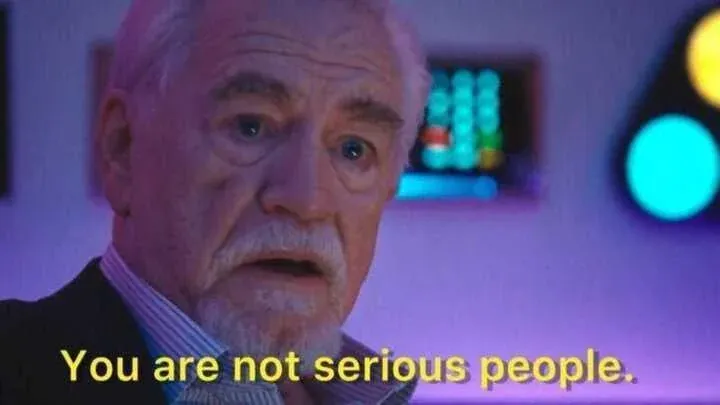
The Secretaries sort of give the game away in their submission, lumping in the fact their employees get 'ridiculed' or experience 'hostility' alongside the considerably more serious term 'abuse'. Ridicule is the weapon of satire. It brings shame to the shameless and thus forms a cornerstone of human relations. Sorry about it. The Secretaries Board also includes a list of terrible words their officials have been called in the past, to illustrate how bad things can get. One of these apparently heinous epithets is clown. Sad clown nose honk.
As I told the former Australian Public Service Commissioner Gordon de Brouwer in Mean Streak when I wrote about his views on FoI – in brief, that public servants were scared of writing things down because they might get caught by Freedom of Information laws, therefore the problem was with the FoI laws and not the public servants shirking their legal obligations – grow up.
This might sound mean. Maybe even, gulp, hostile – and to the extent that the definition of hostility runs the gamut from unfriendly to aggressive opposition you can consider me such (words have meanings and I believe in ascribing to them the meanings they ordinarily have, not the ones I wish them to have) – but grow up. Grow up, grow the fuck up.
Institutional actors see hostility everywhere they go but what they really mean is opposition, sometimes they even just mean advocacy. The public, on the other hand, is told that to ascribe hostility to the actions of an elected government and its bureaucrats is unfair, even when those unelected officials spend so much time in their paranoid fortifications attempting a kind of linguistic alchemy, turning language into dull, meaningless goo. I consider it a deeply hostile act to massage information until it ceases to be a fact, to incidentally aid a government's war on transparency. Often this is not because public servants are all political operatives but because they're not; they are playing their own game that happens to coincide with the interests of their ministers, who they frequently view as their only master.
It makes a senior public servant's life easier if they keep their ministers happy and the public in the dark. Fewer things to respond to, less scrutiny, more freedom to fail. And I know, from having covered the robodebt conspiracy, that every ill trait from laziness to antipathy in the middle to upper management of an agency is necessary in the creation and sustenance of such a disgrace. I know, too, that what these incredibly important officials hate more than almost anything else is being called out on that behaviour.
The fact the secretaries felt they were even able to put this in writing for public consumption, however, tells they don't fear ridicule nearly enough.