Can You Hear The People Sing

So you may have seen, on the news or thereabouts, that Paris is burning and that France has fallen. I received about one hundred messages to that effect after the October 17 mass protests across the country, led by angry high school students and the revival of the yellow jackets, les gilets jaunes, from 2018.
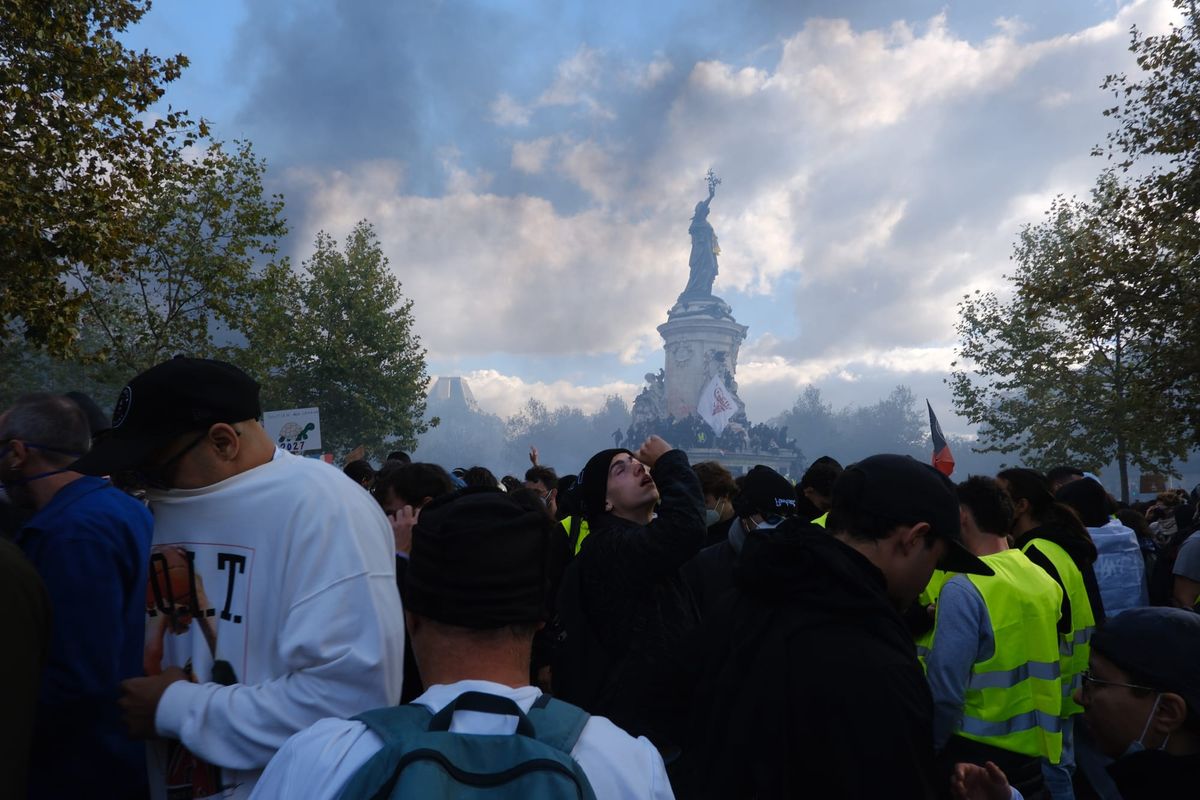
And to be fair, things did get pretty wild, even for France which generally treats its protests, or manifestations (how good) as a sort of secular rumspringa for the body politic. The photos I took and published on my own Instagram page didn't exactly help. I'd gone to Place de la République with the explicit intention of experiencing, as fully as possible, the radiant rage of a crowd now spurred on as much by living conditions as police brutality in the preceding student demonstrations.
'I want to go but my friend lost an eye and I'm afraid,' one of the casual baristas at my local coffee shop told me ahead of the Saturday. I knew a student had lost a hand picking up a stun grenade used for crowd control but even so didn't exactly believe this story because, sigh, even at the age of 39 I am quite naive. But lo, there it was in the news. A student had lost the use of his eye. Another had his jaw smashed in by the military police arm, the gendarmerie.
These were the priors. I went into the protest, at the location sanctioned by the police prefecture, knowing all of this. Still, with more than 150,000 people taking to the streets around Paris, most of them at the square dominated by the symbol of the French Republic, the 25m high statue of Marianne, I didn't imagine I'd be able to get that close to the antsy core of the demonstration. Ha! I just wandered in, thinking I was late for the 2pm start. Double ha! C'est France, ici. Closer to the square the police had cordoned the streets, attempting to funnel protesters into the main march on the road. Here, my broken French proved useful and I just told them I was passing through and not a part of the protest itself, which was technically true. This allowed me to move a bit faster to the main square which was wall-to-wall human flesh, people dangling from trees and lamp posts, sitting on top of bus stops; clamouring for better views. I pushed my way through until I was underneath Marianne herself.
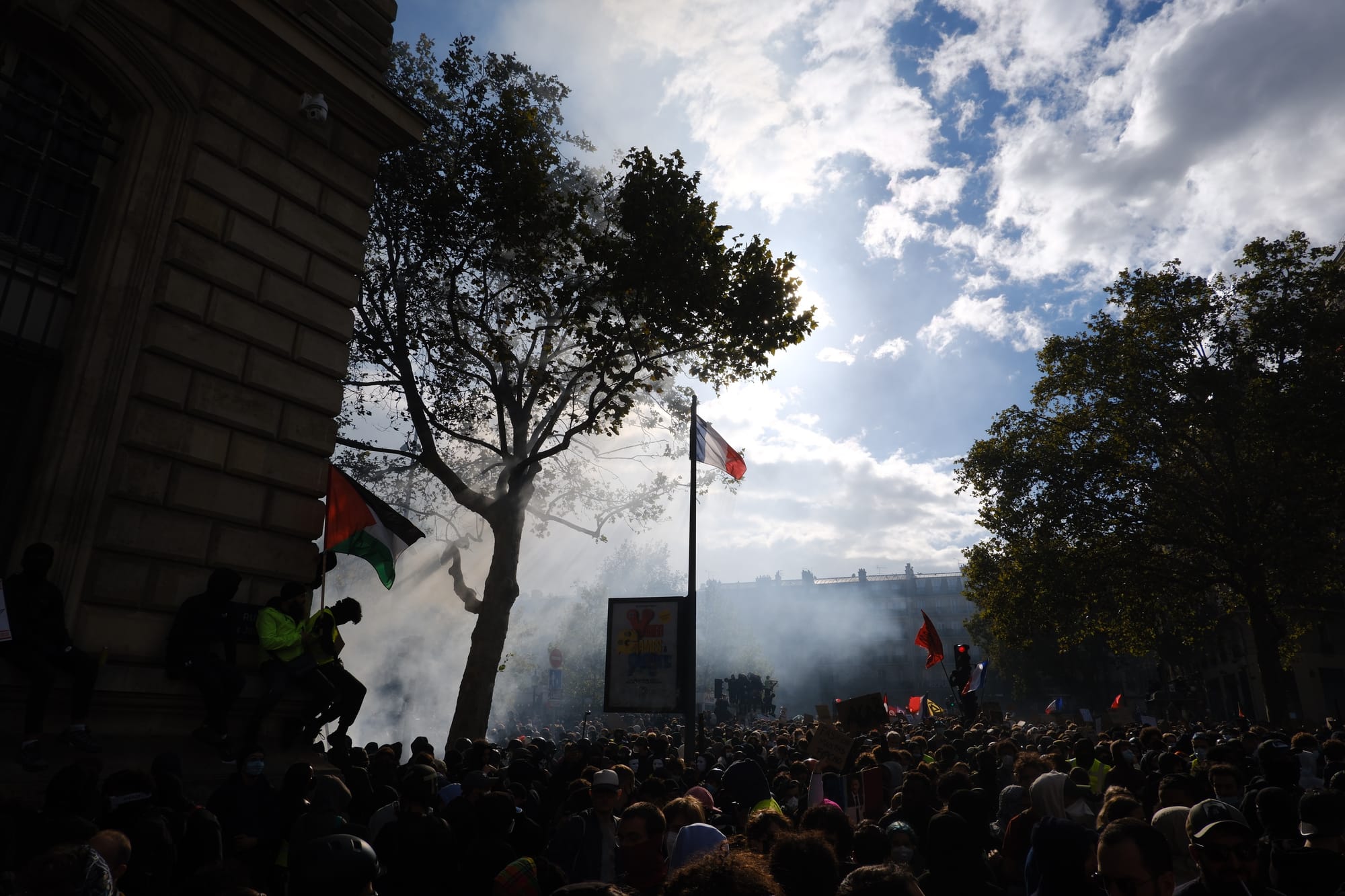
There was clearly a street on the other side of the square where the vast majority of riot police had gathered and things there were popping off. Every 30 seconds or so mild explosions split the air and tear gas would erupt like volcanic plumes from over yonder before blowing across the field of people that included me, sending whole sections of the crowd running to escape it. There was, within an hour, no escape as tear gas and smoke choked the square. Here's something I wrote for The Saturday Paper:
A line in The Australian’s front-page report on Monday bristles with ignorance that might have been mine on another day: “But the marches turned violent, with gangs of people who had planned for clashes using face masks, goggles …” This is nonsense. With very few exceptions, the thousands of people I saw had all arrived with face masks and goggles, not because they “planned for clashes” but because this wasn’t their first French protest. To even attend the sanctioned protest in the location approved meant exposure to the gas. It was my first time experiencing the pure disorientation that follows repeated dustings. What began as a mild irritation, from which the crowd would attempt to flee as one, later ended with a frightening few minutes where I had copped a dose so severe I was totally unable to open my eyes, except in painful bursts that revealed nothing of the world around me because tears flowed as torrents. My breathing became sharp – childhood asthma – and the crowd moved around me in sharp changes of direction, like starlings. I was stranded and afraid. A kind protester saw me spinning around and steadied me, offering me, un étranger with a camera and only passable French, some saline eye drops. Another gave me a mask. The community of the manifestation is remarkable. Tear gas, my journalist colleague tells me, sinks down into the Metro stations. And so it did on the weekend. Tourists, mothers with young children and babies, and the elderly were all struck, and they weren’t even going to the protests.
I have been too lazy to sort out my press accreditation in France – and I really should, because journalists here get into all museums and many special events at museums for free – so I didn't really plan on getting that close to the more violent elements that piggy-back on official protests; the so-called casseurs or breakers. But also I am quite silly and the instinct that made me want to become a reporter in the first place – the base instinct, not the noble one, the one that desires being close to any kind of action – is ineradicable. The moment some group, clad all in black, set fire to a bus stop and a thick column of toxic smoke shot up across the square, like the signal fires of Gondor, I made a beeline for the scene.
Almost 20 years ago, when I was a cadet reporter on the Gold Coast, I was working a Saturday shift – there was no Sunday paper so it was the only day of the week when the shift was just one or two people – and ended up bouncing from one job to another long into the night and early the next morning, carrying a portable police radio scanner with me the whole time. I'd made it home at sunrise and was having a cigarette on my balcony, looking back over the western side of the city, when I saw an enormous black cloud of smoke coiling moodily into the sky. I sighed, ordered a cab and, as nothing had been called in yet over the scanner, gave him the only address I could when he asked where I was going.
'See that smoke,' I told him, 'just take me to that.'
It ended up just being an extremely large tyre fire at a car wreckers but, one never knows with these things. At any rate, I am drawn to such things, like a moth, I suppose. A goth moth. And so I was at the protest in Paris, amazed that I was able to get so close to the burning bus stop as to feel the heat singe the hairs on my arms. I went on like this for three hours, just following the sound of shattering glass and fireworks being shot from handheld pipes. After my first encounter on the way in, I never saw the police again save for the frankly otherworldly sight of the hulking water canon that would accelerate up from a side street, blast the crowd with high pressure water and then slink back into its hiding spot until it was ready to go again.
While (attempting) to photograph this moment, a woman dressed in black approached me and yelled pas des photos and I was quite annoyed because I hadn't been shooting the rioters, couldn't see any of their faces and they were all filming themselves anyway. So I said buh non because there is something wrong with me. And then she started throwing, well, not quite punches but not quite slaps either, repeatedly and quickly until I was backed up against a tree. Arrête, arrête, arrête, she screamed and then she tried to get the crowd to join in my punishment. Thankfully they all found her as silly as I did and I ended up being able to walk away.
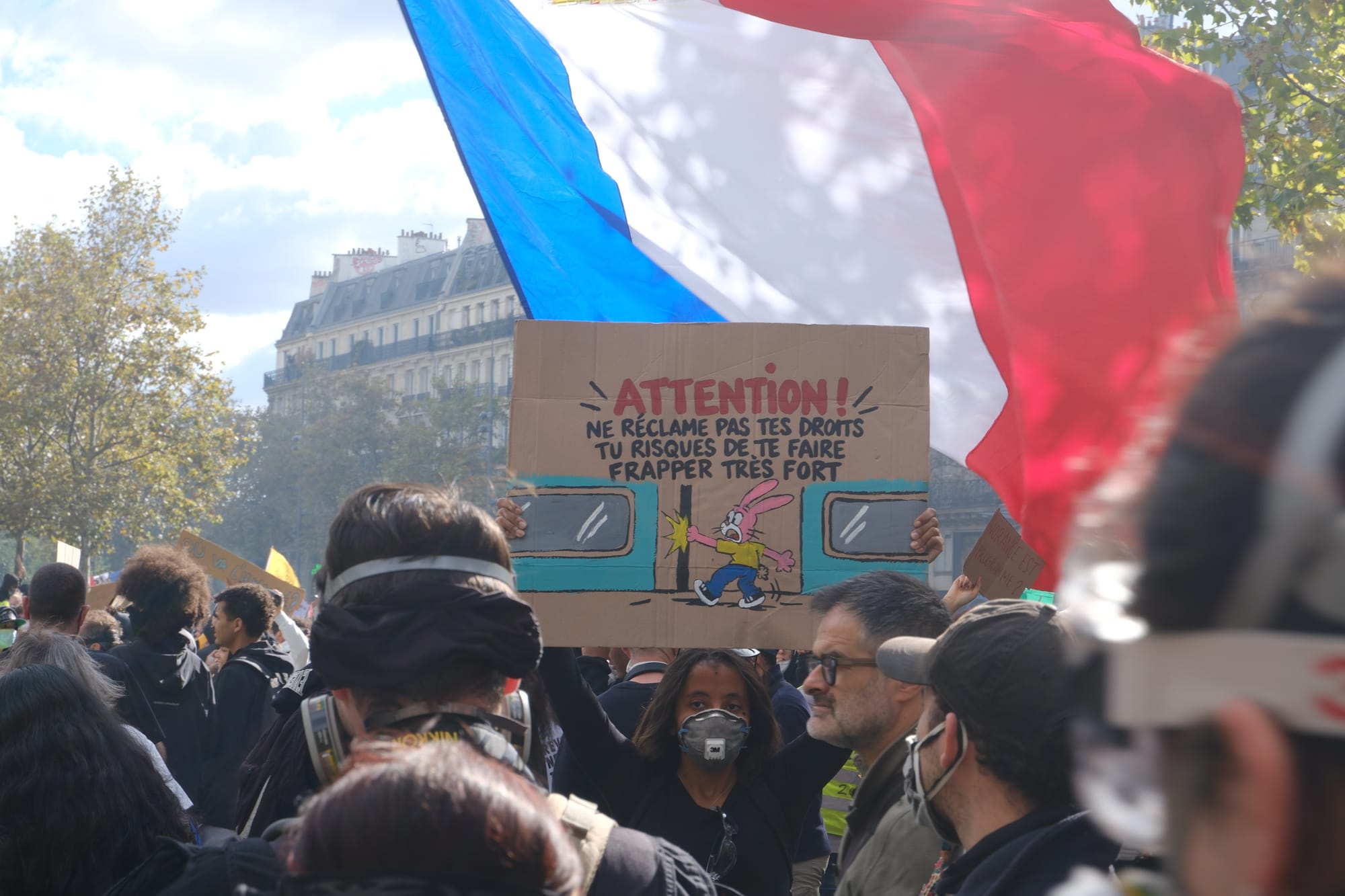
It is from this vantage point, and the night of destruction that followed across France, that I understand the instinct of those from Australia and beyond to wonder what the fuck happened. Certainly, I spoke to more than a few French people who agreed that things had gotten, perhaps, a little out of hand. Especially as it related to the small business owners who were looted or threatened and beat as opposed to the large corporate stores whose premises are well adjusted to a night of violence; just ask the leaseholders along the Champs-Élysées any night after a big Paris Saint-Germain win. The scenes of the 150-year-old town hall in Limoges gutted by fire were front page material, naturally, recalling the shock, if not the full emotional impact, of Notre Dame in 2019.
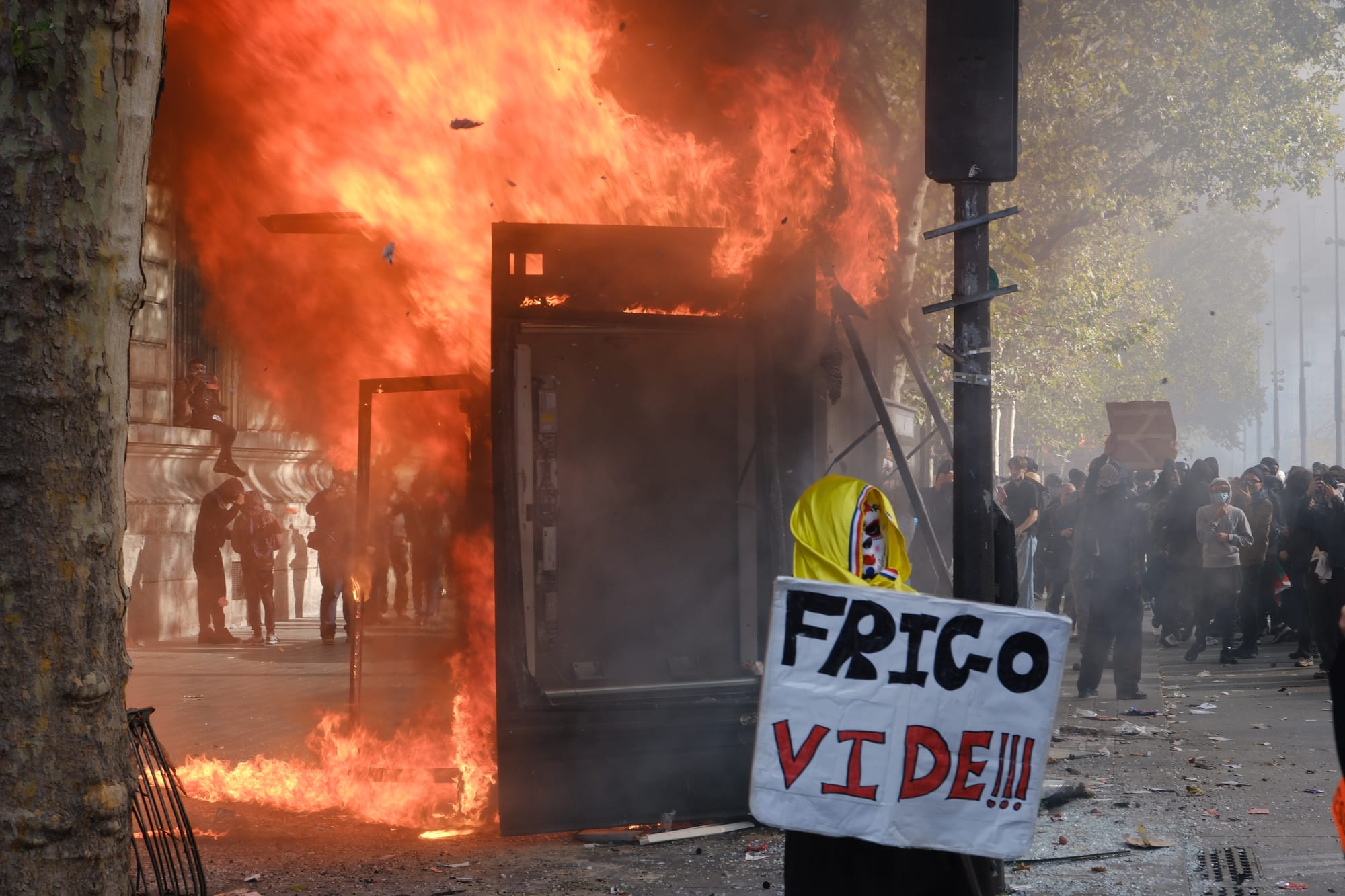
What was missing from all of this, however, was any sense of history, culture or the sheer bloody will of the French people when they feel they have been wronged. Some of it is obvious: the national celebration in France on 14 July each year quite literally rejoices over the storming of the political prison, the Bastille, at the hands of a determined and idealistic mob. It wasn't enough that they liberated that in 1789. It was so hated that over the months that followed it was dismantled stone by stone until nothing at all was left of the damned thing. There is, of course, the matter of the king and queen who lost their heads. And the thousands of other nobles and rich, mostly royalists – but also hallucinated enemies of the various revolutionary blocs – that followed over the next few years as the guillotine was pushed to Henry Ford levels of factory efficiency during the Terror.
The original gilded gold royal gate, a replica of which fronts the phantasmagoria of Versailles today, was torn from the palace by revolutionaries in 1794. And what is a town hall, today, if not the modern representation of a palace out of touch with its people? People were hungry when the revolution started and they're starving today, too. Now, you might ask what burning a town hall achieves. And I might ask what taking the gates from Versailles actually achieved, or the torching of the glorious French Renaissance Paris town hall, l'Hôtel de Ville, in 1871 achieved, or the Tuileries palace that same year. But that is to miss the point. The fact that people do burn buildings, have and will, tells us something about political anger and where it goes to be expressed when citizens are at the end of their tethers.
And while France has one of the longest histories of immigration in Europe, much of this did not begin until the mid-1800s. By which I mean to illustrate an idea. According to the moth-eaten logic of centrist and conservative commentators these October protests must have been the sole domain of ungrateful immigrants because the violence was so un-French. To this I would simply say, my brothers in Christ, have you read a single book? The French Revolution was famously violent. There have also been a series of smaller but still intense, bloody revolutions in the century since. My friend François, to this very day, believes the Sacré Cœur basilica should be torn down because it represents, in his and the eyes of some Parisians, a direct affront to the memory of the Paris Commune of 1871. Every now and then hard-left political candidates and politicians will echo these sentiments, arguing that the building is an architecturally out-of-step fuck you to the 20,000 plus communards who were slaughtered in 1871.
We can argue all we want about whether any of this works but the suggestion that immigrants are the natural progenitors of this political violence in France is silly. That said, breaking shit is not exactly a national pastime. People are pushed into such things. And at the risk of indelicately threading the needle here, the majority of the casseurs are apparently from migrant families which begs the question: why are they so upset? Ahead of the French presidential election in April and May next year, and alongside the more-or-less exponential success of Marine Le Pen's far-right National Rally, you might understand why the decades-long demonisation of migrant France is taking a toll on the psyche of its people. The only difference between taking their political rage out in the same manner as those (white) Frenchmen and women in the 1700s is that we call one a riot and the other a revolution. In any case, migrants have worn the racism for some time, an indignity leavened only a little by the economic promise of western Europe. When the racism stays but material conditions deteriorate, well, I can't imagine what I would do.
As my friend Félicien tells me, the secular pulse of the French revolution – part of that enduring hatred for the Sacre-Cœur – has a sting in the tail and has engineered today, in France, an especially virulent Islamophobia.
'So, look, it might be true that the casseurs are mostly migrants but nobody is asking why they might be so angry in the first place,' he says. Hard enough to have those conversations during ordinary times but the impending elections, after 14 years of the much reviled Macron, have only encouraged intemperate political rhetoric, especially from the Le Pen stable who stands to gain the most from the destabilisation of the current lot. Part of this is self-inflicted. After decades of a wealth tax on millionaires during which some 60,000 rich taxpayers 'fled' France, Macron repealed the measure which did not much at all to bring those taxpayers back but which did boost the holdings and income of the existing wealthy elite by 27.5 per cent while median incomes across the country struggled to improve by 2.5 per cent. Wealth inequality got worse, for no appreciable gain. Anger grew.
Another friend, with Moroccan heritage, told me:
“Of course people are going to destroy those fancy buildings – their lives are shit. These kids have been abused by the police since forever. People genuinely do not understand the weight of racism, classism and just being poor in a capitalist society. Their [government and capital's] goal is to keep you poor, uneducated and brutalised. The fact that people don’t understand that this drives people insane is bonkers.”
Just as the political rhetoric becomes sharper, Macron is telling high school students and the poorest citizens, whose costs and contributions to state insurance programs have increased while the wealthy get carve-outs, that the state is broke. Certainly, this is not untrue. Things are bad. Public debt is €3.6 trillion or almost 120 per cent of Gross Domestic Product. What does any of this mean? More than you'd think, especially in France.
We're not just calling back to 1789 for political violence analogies here. There was a debt crisis in France then, too, which was a major contributing factor to the revolution. The country was broke and old mate Louis XVI was struggling to keep a lid on things. Debt then was worth almost an entire year's national income in the country and, naturally, the privileged classes didn't want to pay any extra and the poor were already quite poor and then a bunch of people got together and chopped some heads off about it. Et voila.
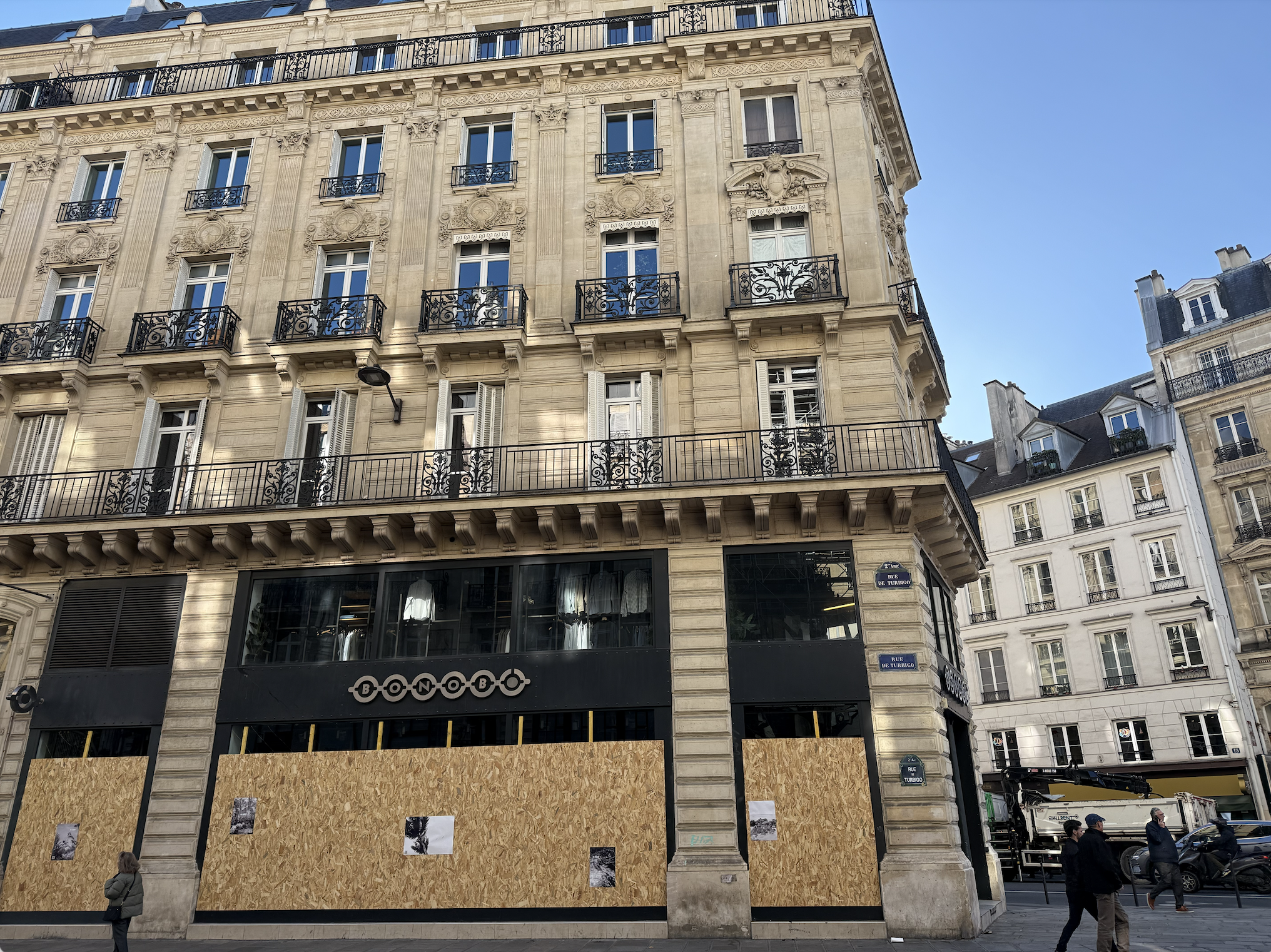
As I was walking around last week, picking up supplies for my Halloween costume – there were no spooky financial reckonings for sale, sadly – ahead of the third weekend of protests following October 17 I watched as the corporate chains and luxury stores in the centre of Paris boarded up their shopfronts.
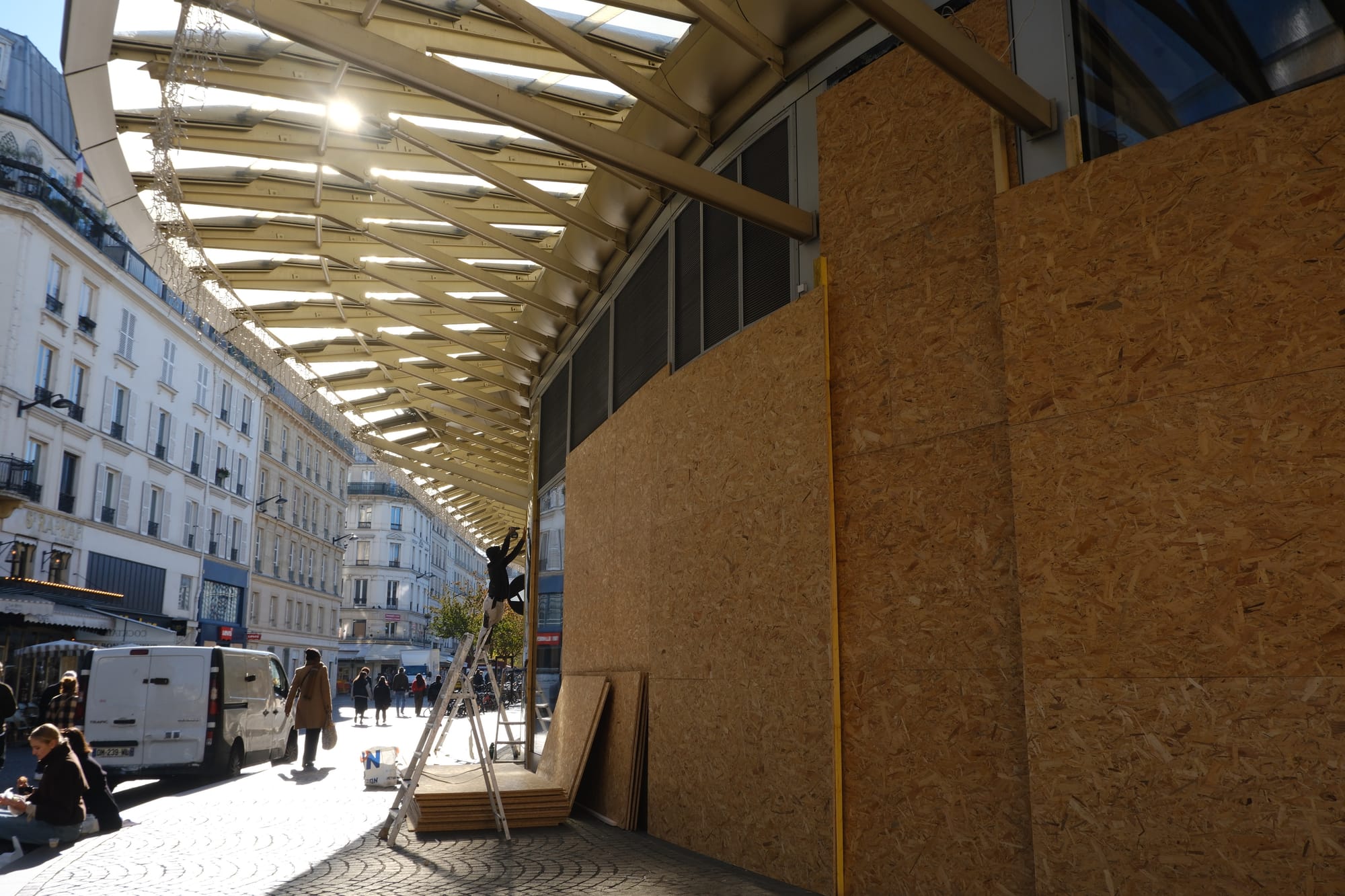
It was an eerie sight, in some respects, and a reminder that everyone here understands the anger, whether they support it or not. Street after street was chip board and screws over glass.
More manifestations are on the way. And what a word for protest it is. It is an active word, not a reactive one. It is a word for people who are pushing for something better. In the words of Ian Malcolm from Jurassic Park: 'If there is one thing the history of evolution has taught us it’s that life will not be contained. Life breaks free, it expands to new territories and crashes through barriers, painfully, maybe even dangerously, but, uh… well, there it is.'
Or perhaps it is more apt to quote the economist Thomas Piketty on France, loathe as I am to give the economists too much of a platform. This from his website in April:
The idea that adjustment will come quietly by taxing the middle and working classes, inflation or cuts to public services and welfare benefits they’re entitled to does not stand up to analysis.
As in 1789 and 1945, leaders will have no choice but to turn to the wealthiest, and this will need to be done at higher rates than the minimal 2% tax on the ultra-rich that was debated in the fall of 2025 and should have been adopted unanimously. Those who claim that even such a tiny levy would be confiscatory only demonstrate their rejection of calm, rational, history-informed debate. By investing so much energy in defending the interests of the powerful, they help redirect social anger toward identity politics and anti-migrant and anti-poor rhetoric. This will solve nothing. The billions are not to be found there and will only delay the reckoning. However, it may distract political attention for some time, causing considerable damage. Beyond the ubiquitous role-playing, the reality is that nationalists and free-market liberals are complicit and are leading us toward disaster.
History is not a perfect mirror but it does not need to be. Sometimes, it is is enough just to see the shape of things.
When Emmanuel Macron suggests that this is not France, this modern disquiet, he has given in to rhetoric. It is, exactly, France.
Addenda
The Robodebt TV Show, November 22
Last time I was here I got so distracted by my return to Paris and various other goings on that I completely forgot to share the trailer for the drama based on my book Mean Streak that has been produced by Lingo Pictures and is due to air on the ABC nearer the end of this month. This has been a long time in the works, from since before my book was even published, and even though I am credited as an executive producer (those in the know will know this means I didn't do much) and worked occasionally as a consultant on the project, I stayed largely out of the way because I had moved to Paris in part to escape the sheer mental strain of that work. I was exhausted and quite incapable of spending so much as another second on it.
But! It was very important to me that this thing was made into a drama and Lingo Pictures are co-owned by ITV in the United Kingdom who made Mr Bates vs The Post Office, a story with more than striking resemblance to the Robodebt scandal. And they've done an amazing job. Please watch it, if you can. I've seen all the episodes and I'm frankly astonished at how they've brought it all together. And, ego-wise, it was very cool to see quite a few lines I'd written in the book make it verbatim on to the screen. Maybe I can have a career at this writing biz after all!
What's Scarier Than Being Perceived?
For Halloween, which is a holiday I now celebrate, me and two of my friends decided we would dress up as each other. I would become Ella, the goth-adjacent Swedish barista, Ella would become Jacob, the 'murican Texan with a bike fetish and Jacob would become me, the gay writer from Australia. Terrifying, non?
We nailed it.
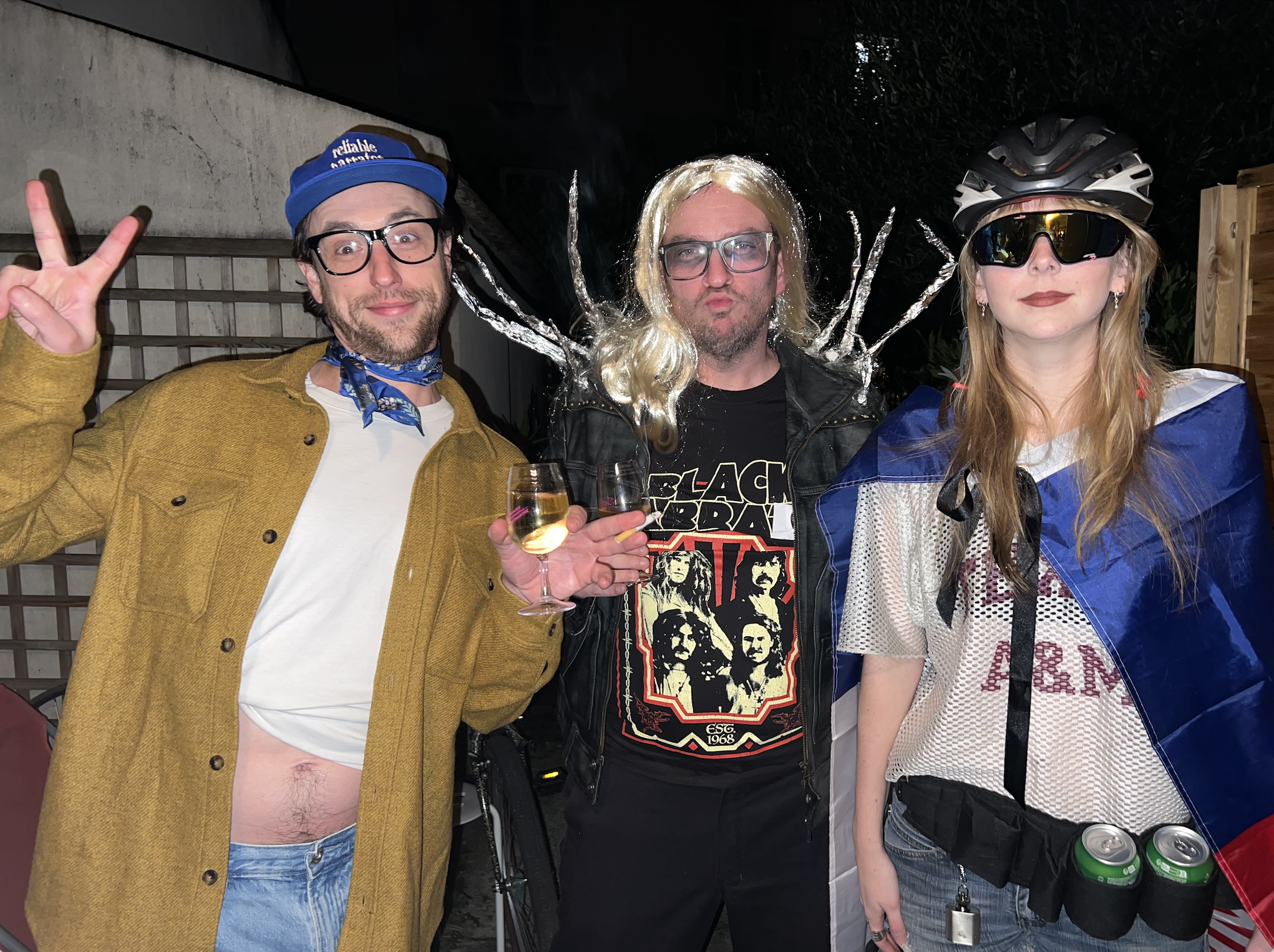
I tried to learn some basic Swedish for my costume, to take full effect of the moment, but from memory all I did was run around most of the night yelling Jag är Ella and, when that got too difficult to say repeatedly, simply a blurted out a Skarsgård here and there.
Jacob went so far as to bring some books in a tote bag that he had chosen to complete his homage to me with what I consider to be very funny and accurate titles.
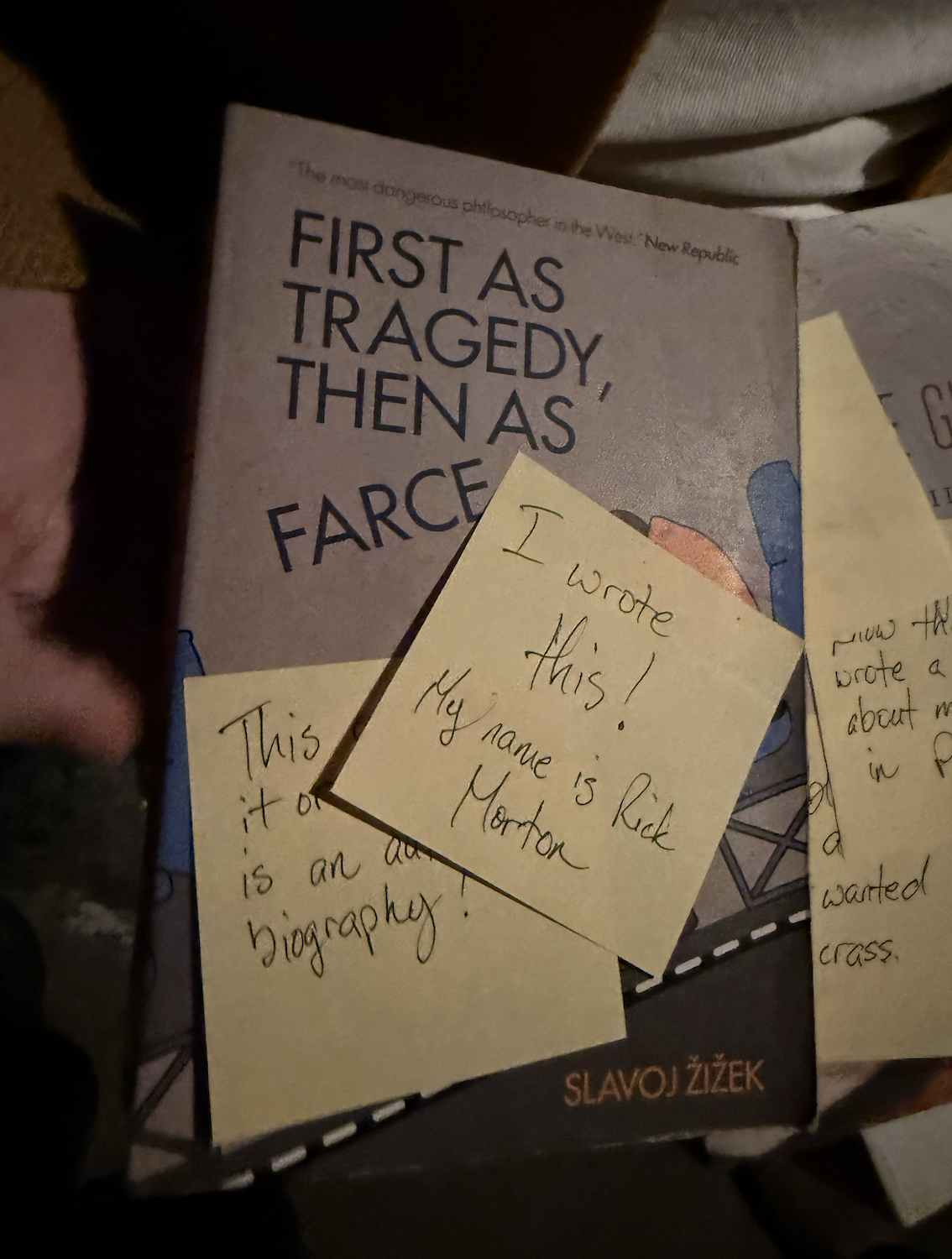
He kept going around all night in a voice one register up telling guests at the house party, almost none of whom had yet met me or knew anything about me: Hi, I'm Rick Morton, I'm gay and I'm a writer from Australia.
With the two of us separated for long enough for new guests to arrive and meet Jacob before me, I found some new people coming through the door and went up to say: Jag är Ella! And one woman, without skipping a beat, said: 'Oh, you're the writer!'
Four guests, without prior arrangement, all came as characters from Twin Peaks and all of them chose a different one, notably Agent Cooper and Laura Palmer here. My friend Christopher went as Bobby which doesn't count because that's basically him anyway.
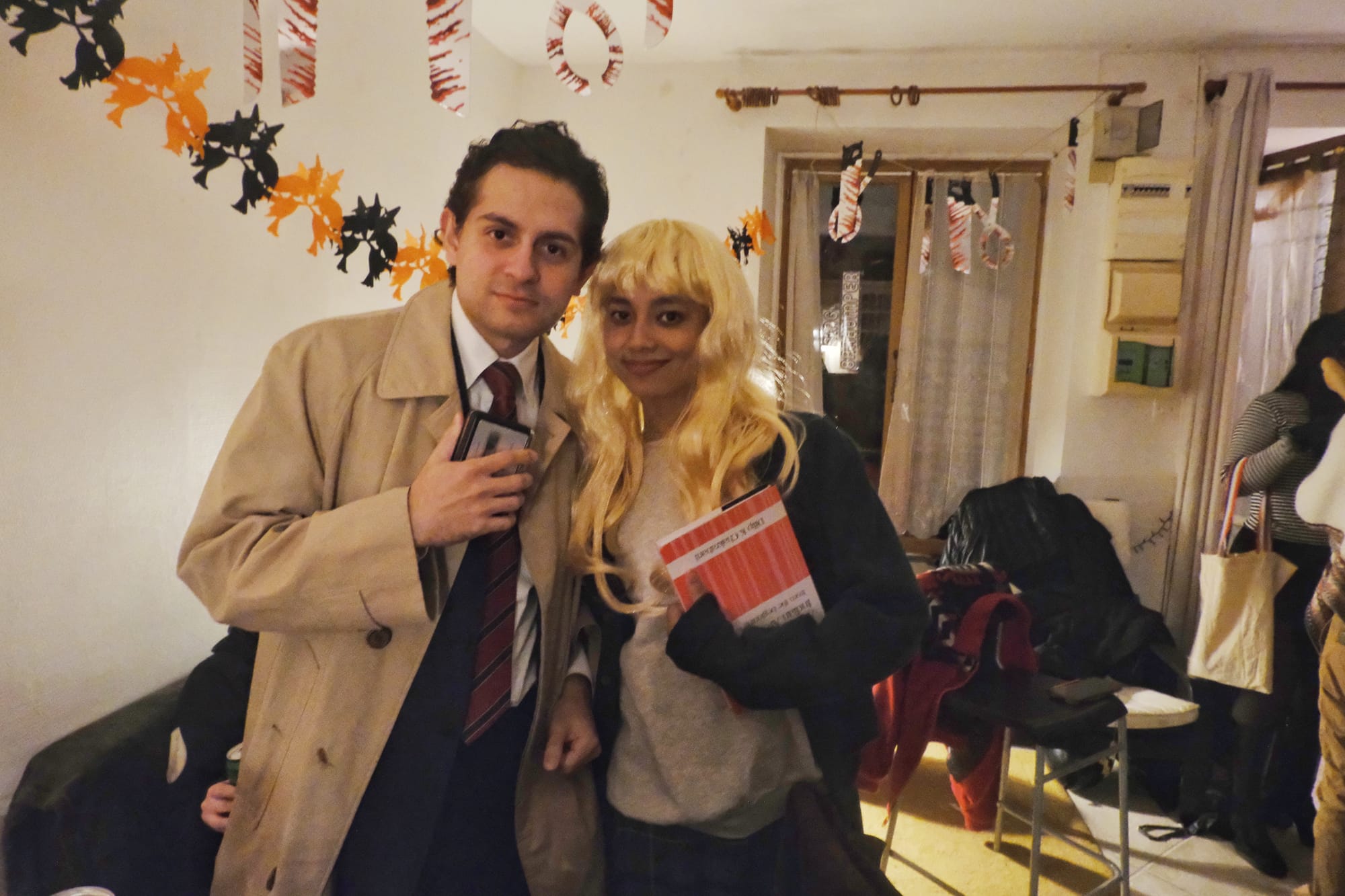
Finally, to end on a note of mild embarrassment, I bought a lovely bottle of natural wine from my local grocer and had a conversation almost entirely in French about how it was a great choice and if I wanted to visit the producer it's just outside Paris and so on. When I returned on Tuesday to buy the same bottle, I was determined to report back on how wonderful it was, in full French. As soon as I had said as much, and that I had previously tried this bottle on Saturday evening, the woman at the grocer asked me for my tasting notes.
I hadn't planned that far ahead at all.
'I don't remember,' I said, 'but it was good.'
Well, we tried.