We're So Back

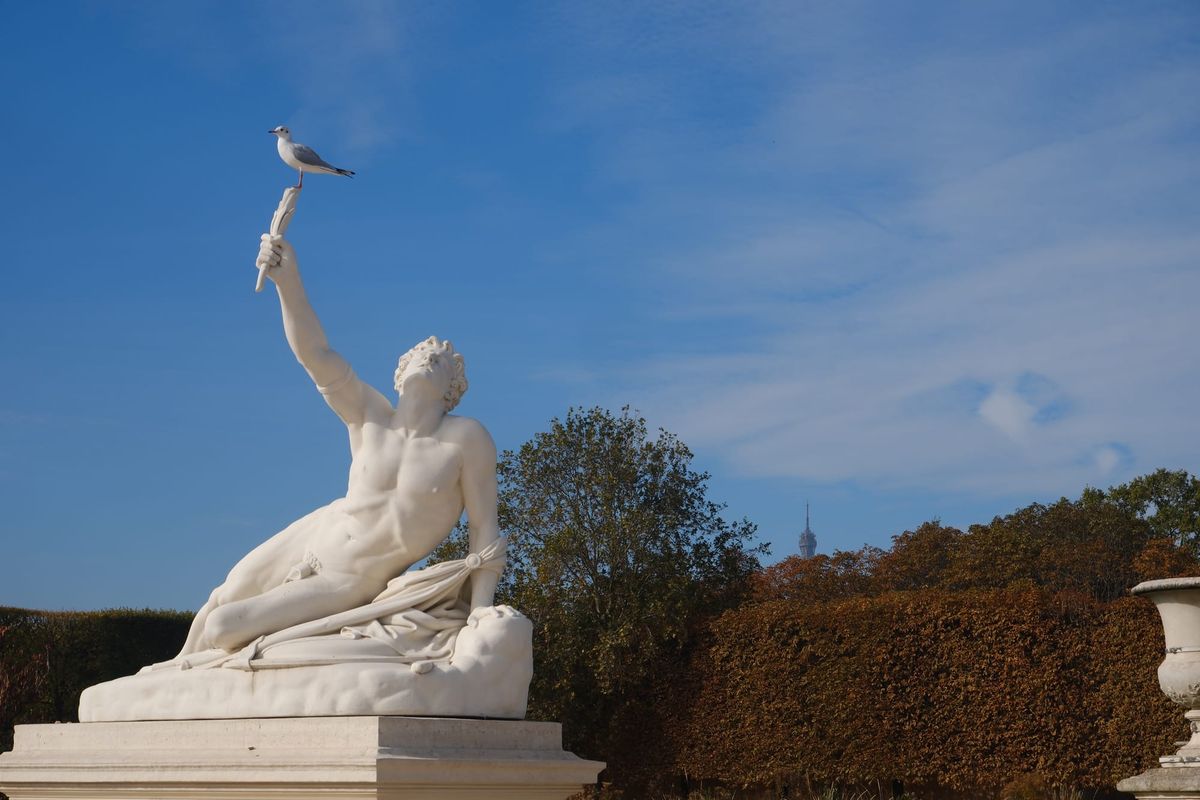
In French, the way to tell someone you miss them is to reverse the onus somewhat. Tu me manques. Literally, you are missing or lacking to me. This is an aberration in terms of other constructions using the indirect object pronouns – for me, you, him, her, us and them – and as such it hits a little deeper than the English might. It's also suitably dramatic, poetic even, as befits a language whose mellifluous tones can render the quotidian so beautiful.
I arrived back in Paris at 5.36am Tuesday a week ago, local time, after an absence of only nine weeks. Not that long in the scheme of a city that has been around since before the Romans rubbernecked over – workers just weeks ago found what experts believe may be the first direct evidence of the much older city of Lutetia, the name of the settlement of the Gallic Parisii tribe built during the Iron Age, not far from the Notre Dame – but long enough for me to develop an angst about what I might have missed in the interim. Long enough, too, for the re-emergence of the same feelings I had the first time I'd landed in Paris in early June 2025, knowing nobody and slightly less of the language than I know now (which is to say, not much at all). As QF255 approached the city on Tuesday morning I experienced a nervous jolt which, had it been given language, might have expressed itself as: what if this is a mistake. After all, what was I coming back to? How would I continue to afford this potential blunder? This is an indulgence, mid-life, that may not pay dividends.
But that was also why I came in the first place, to eschew that kind of thinking. Why should I be ruled by old fears? In any event, the feeling did not last long.
So, having now been back a few days, all of the delights have arrayed themselves before me. It's the little things, and I present them to you here for posterity. I've missed:
- Leaning out of apartment windows watching other people leaning out of apartment windows watching people on the street go about their days
- Walking past the sex worker madame who is always in the same spot every day, between my house and the gym that I go to in Pigalle, and who is always wearing leopard print
- The man on the electric unicycle who zooms along the street, lit cigarette in his mouth, dressed entirely in black
- The way French people hold their mouths in an eternal linguistic forward brace position, lips pursed outward, air in the chamber, ready to make whatever series of spluttering, backfiring motorbike muffler sounds they need to get them through the world-weary day
- The little tubs of riz au lait that I buy from the organic grocer down the street for my post dinner sweet treats
- People riding bicycles, electric or otherwise, absolutely everywhere and at frankly astonishing speeds. Not to mention the scooters, the previously disclosed electric unicycles, the rollerbladers or the various types of trailers and baskets for carrying baguettes and multiple dogs
- Evenings watching workers leave the boulangeries with their baguettes in backpacks, handbags and in hand, tops bitten off on the way to a late dinner
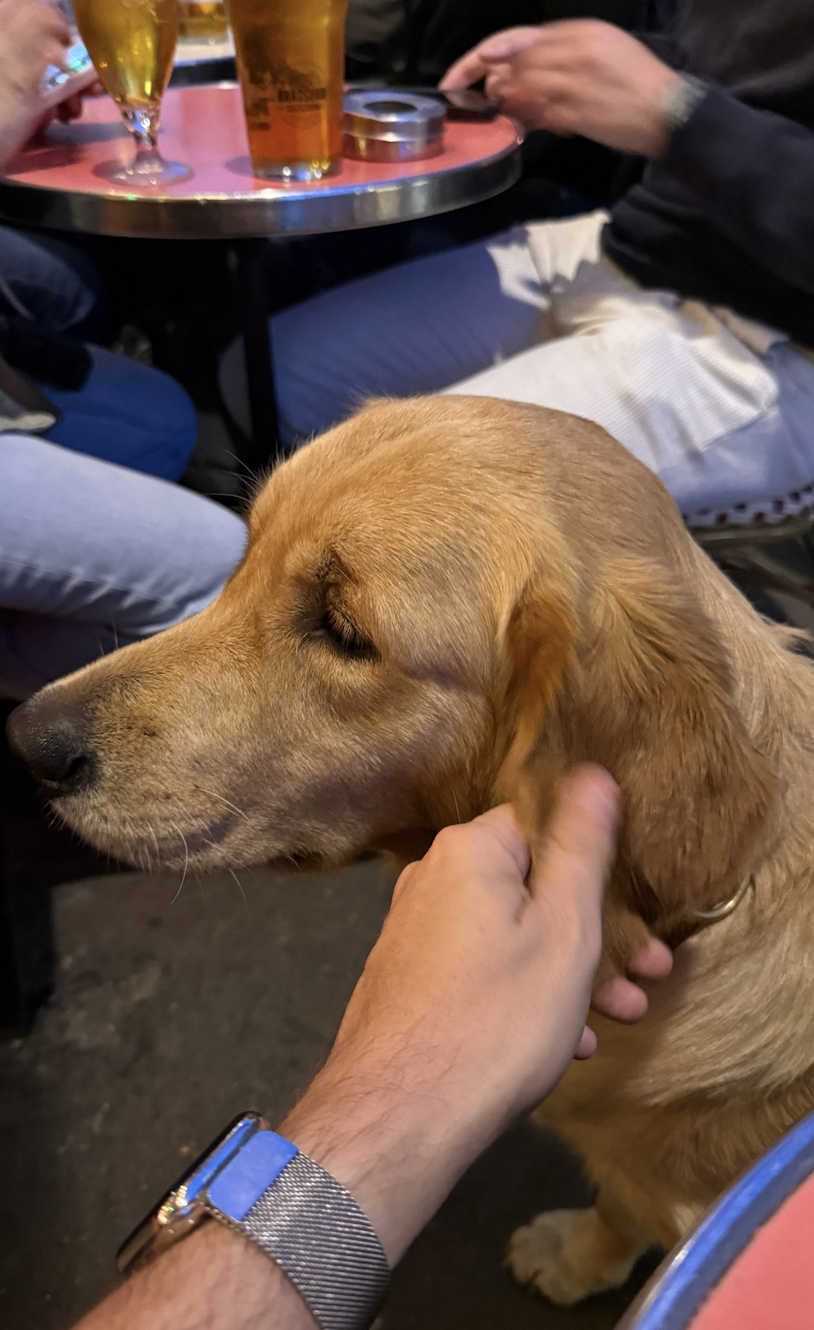
- Abbesses, the golden retriever at my favourite bistro, named after the quartier in which I live. I've been with her since she was a puppy in training for her career as trottoir monitor and when I returned she came and sat right next to me at my table on the terrasse so that I could stroke her fat, soft ear as is our habit
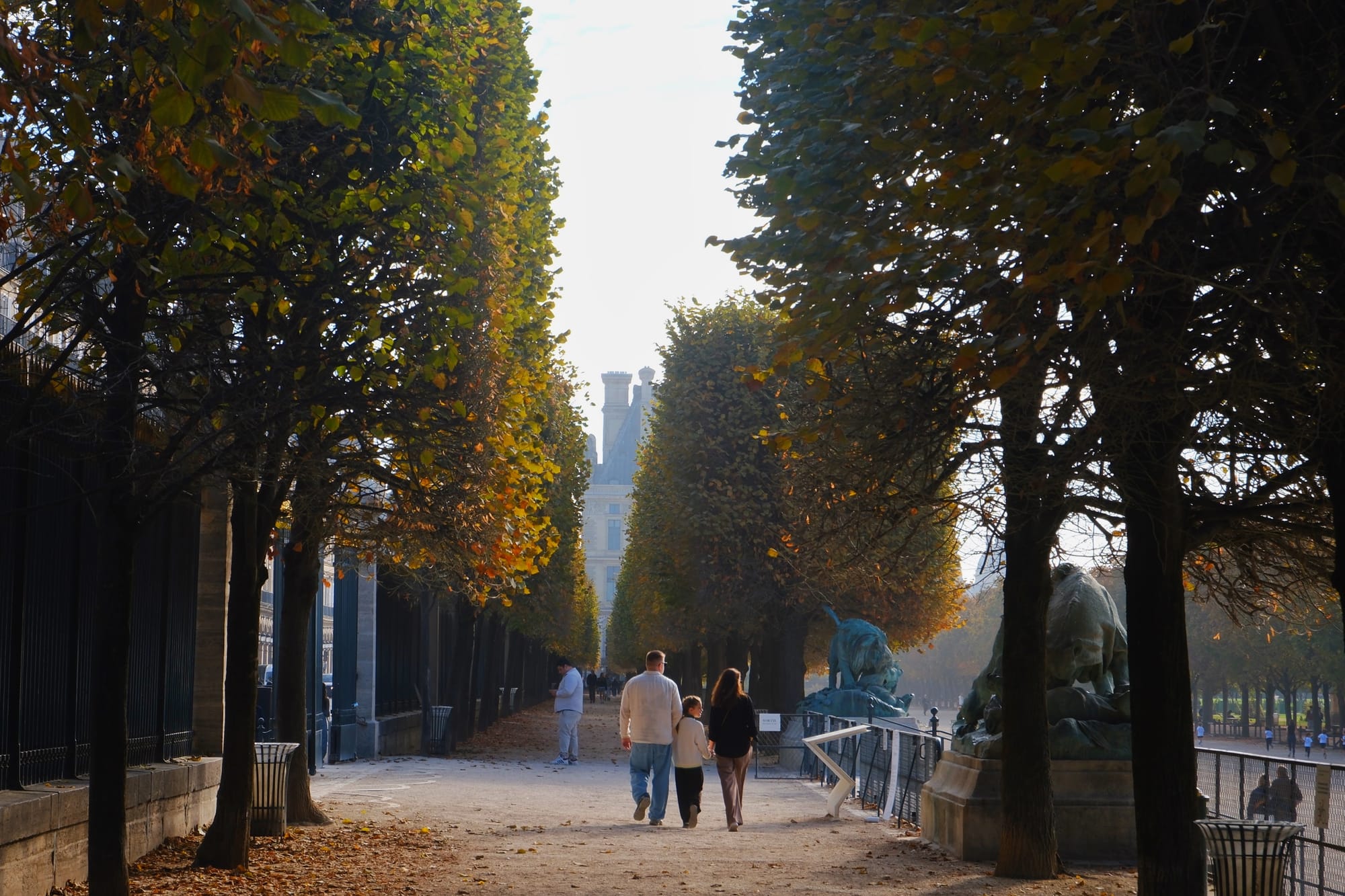
- This city in autumn is a vibe and few things thrill me quite so much as seeing a ray of soft sun strike the rust of a horse chestnut tree, or a Norway maple, in one of the parks. It's like witnessing some performance from the gods.
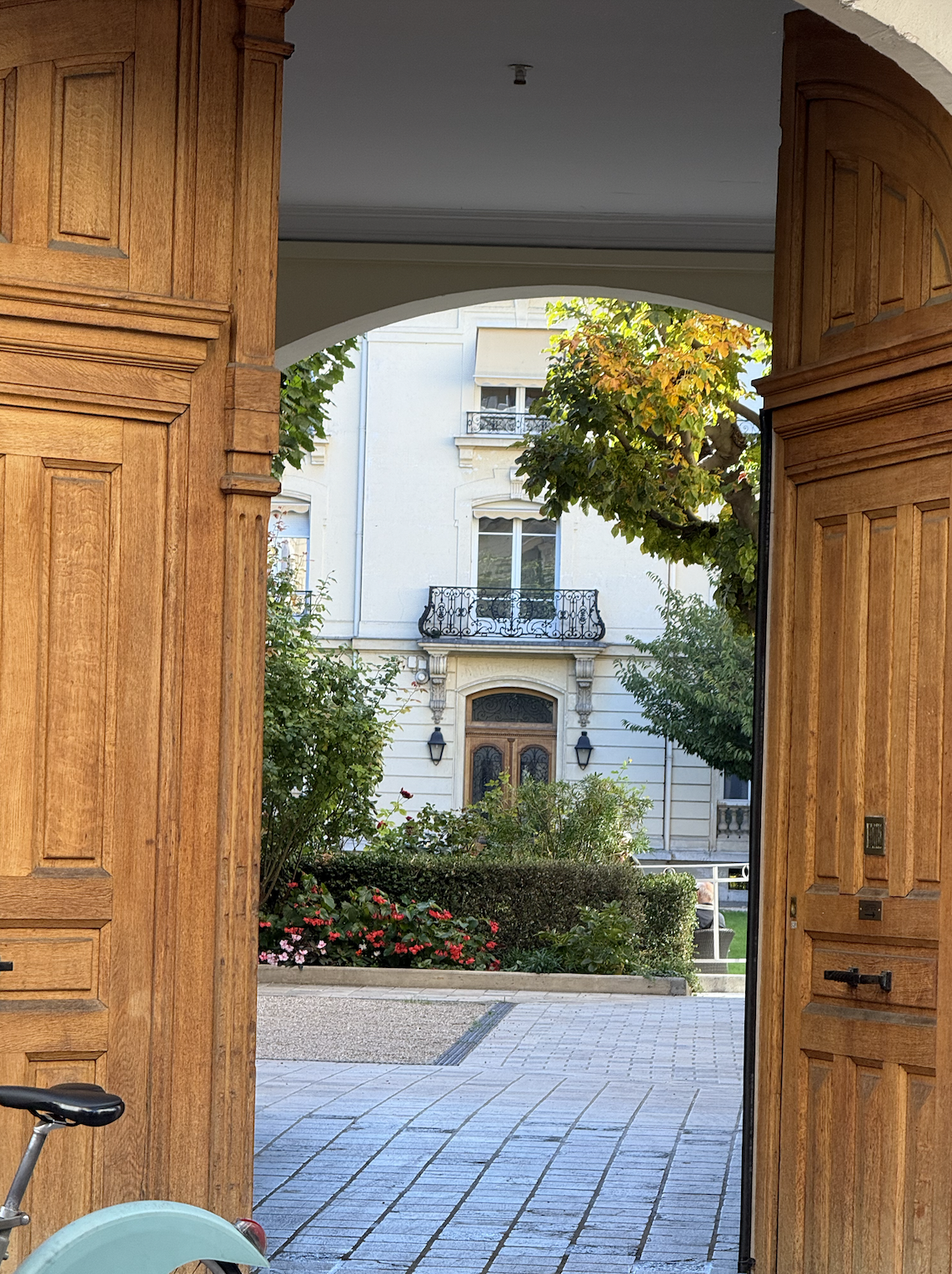
- I've missed, particularly, the hidden delights of the Paris apartment buildings and their huge coach doors added during Haussmann's dramatic, near wholesale, demolition of the old city. These doors, often made of oak or walnut and designed to allow a horse and carriage into an inner courtyard, are usually closed but every now and then, when walking past, you will glimpse somebody coming in or out and steal a view of the interior space, a space reserved only for that building's inhabitants, and some of these are mesmerising. All of them are guarding some secret Paris, off the busy and occasionally chaotic streets, like rare flowers that bloom only so often and manage to explain further the plant that produces them. Just the other day I saw a pair of giant doors slowly closing on a street I walk down every day, but which I had never seen opened, and the view inside was almost too perfect to describe. I managed a single photo.
- My French tutor Jean-Yves who I adore and who, in addition to the language, has been a window into the culture of France and Paris in particular. I once apologised for smoking during one of our lessons and he looked me dead in the eyes with utter earnestness and said 'do not apologise, it is very important to our liberty that you can do that'. We had our first lesson on Saturday morning and he had to take a quick call which had something to do with the government and his status as a sole trader, all very complicated. On a whim, I asked him for his view on just why the French bureaucracy is so strong and dense. Without skipping a single beat, he wrote down the date 476AD and said, quite earnestly in French: 'So, we have to go back to the fall of the [western] Roman Empire.' And then to the creation of the Kingdom of France 20 years later with its first king, a Frankish barbarian called Clovis, who married a Catholic woman during a heretical and delightfully technical crisis in the Church known as Arianism that rejected the Holy Trinity and held that Jeus was subordinate to God. Ooh na na! Anyway, all of this transpired and as Clovis tried to unite the Franks and the Gallo-Romans under the banner of France the Catholic Church reasserted itself with an edict that the Franks and Gallo-Roman people had to marry outside of their family clans to cement the unification of the country. So, Jean-Yves told me, the French were born from the top down. And that he says, is why they have such a strange relationship to government. I love you, JY.
Anyway, I've been writing this post for more than a week now and it has come along very slowly because life just happens here and that, I suppose, is what I love so much about being here.
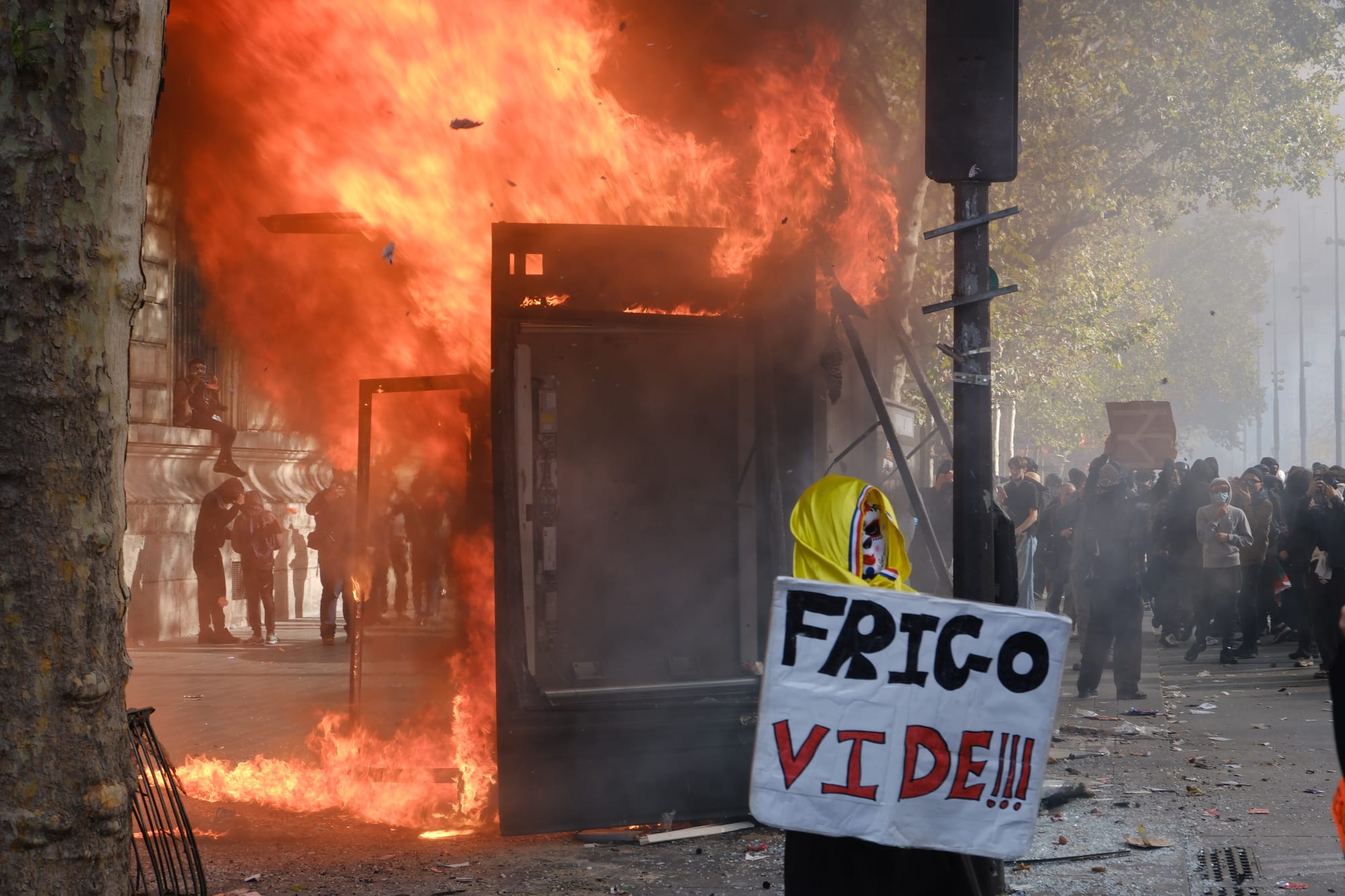
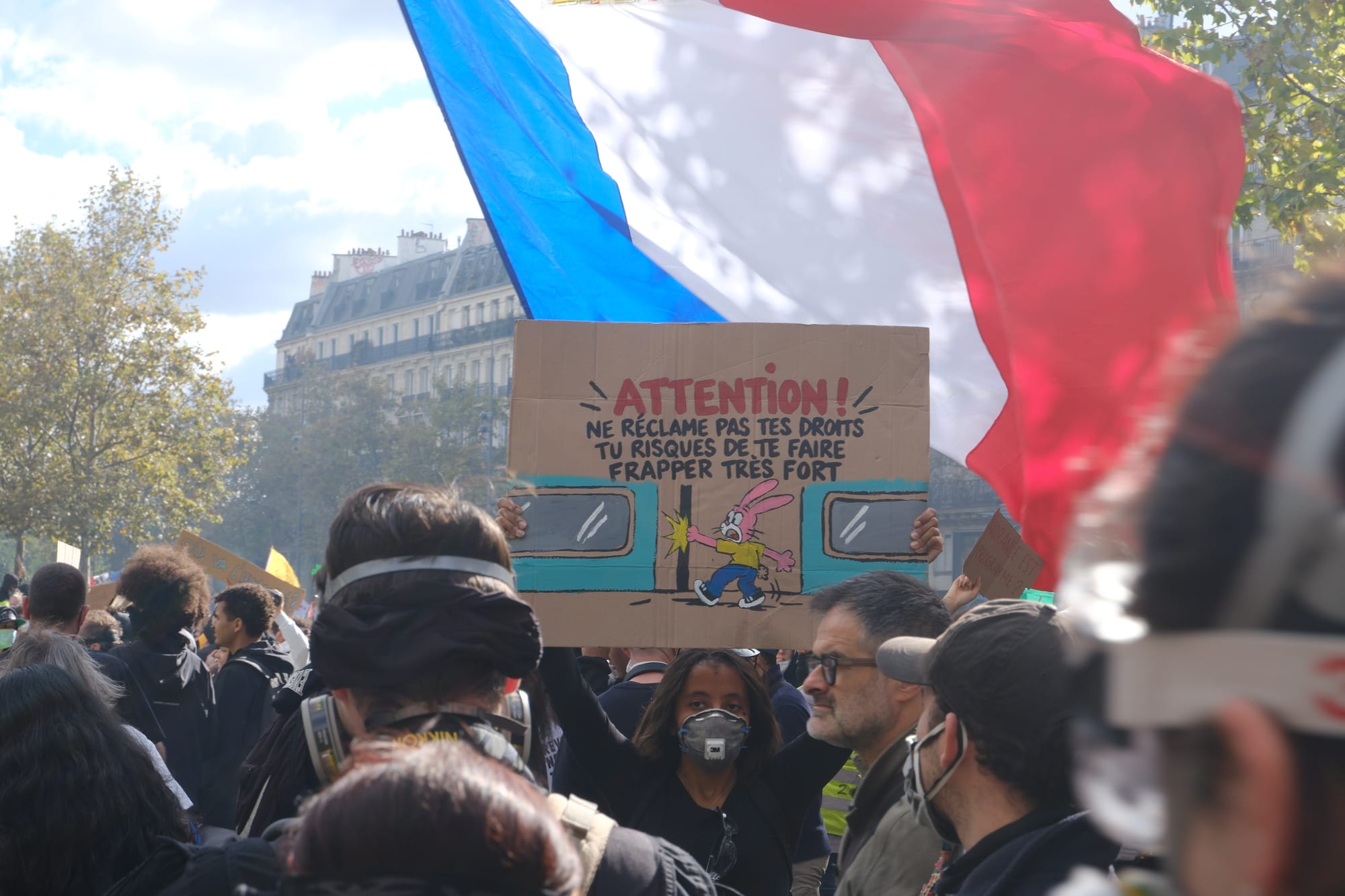
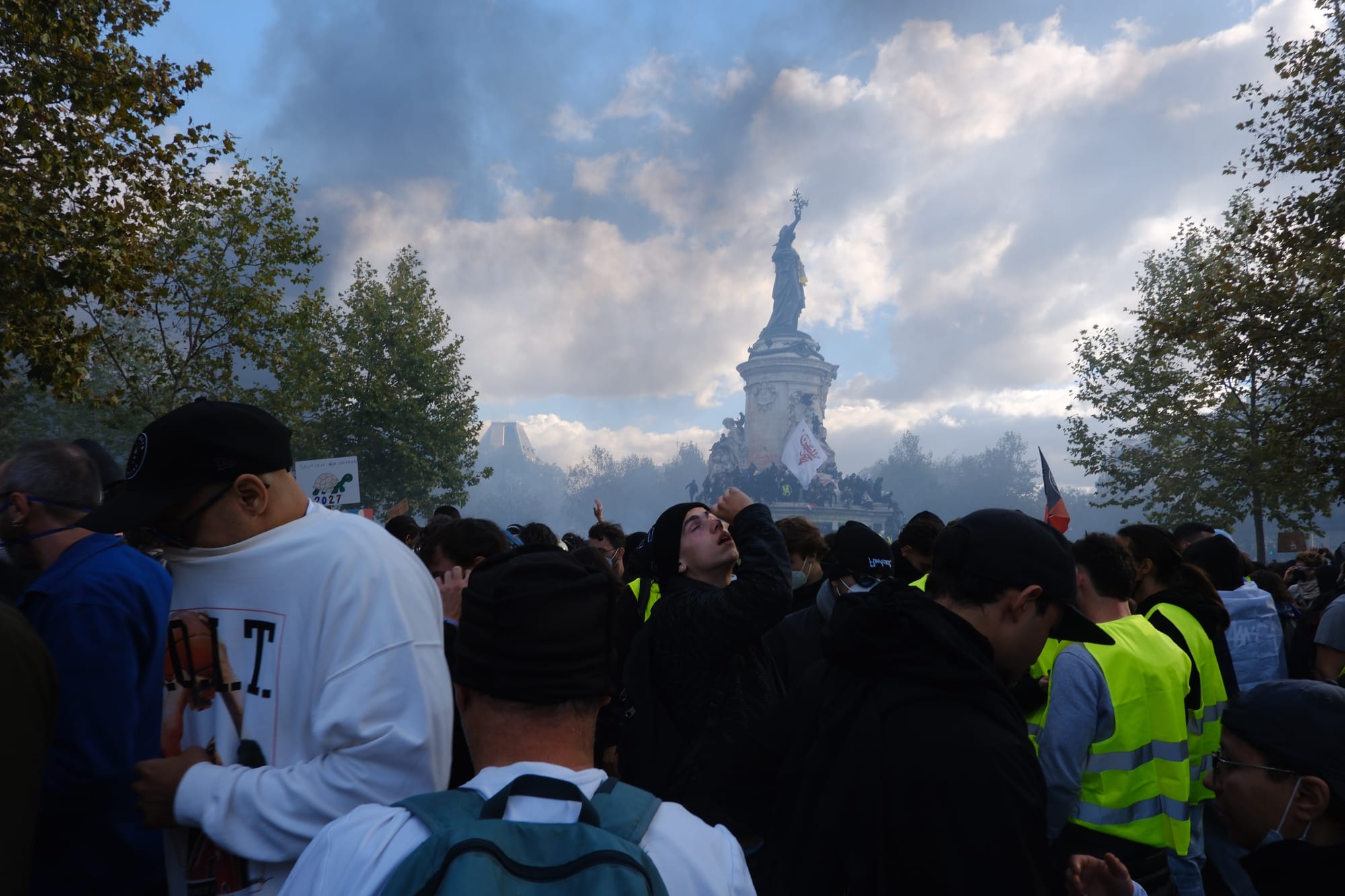
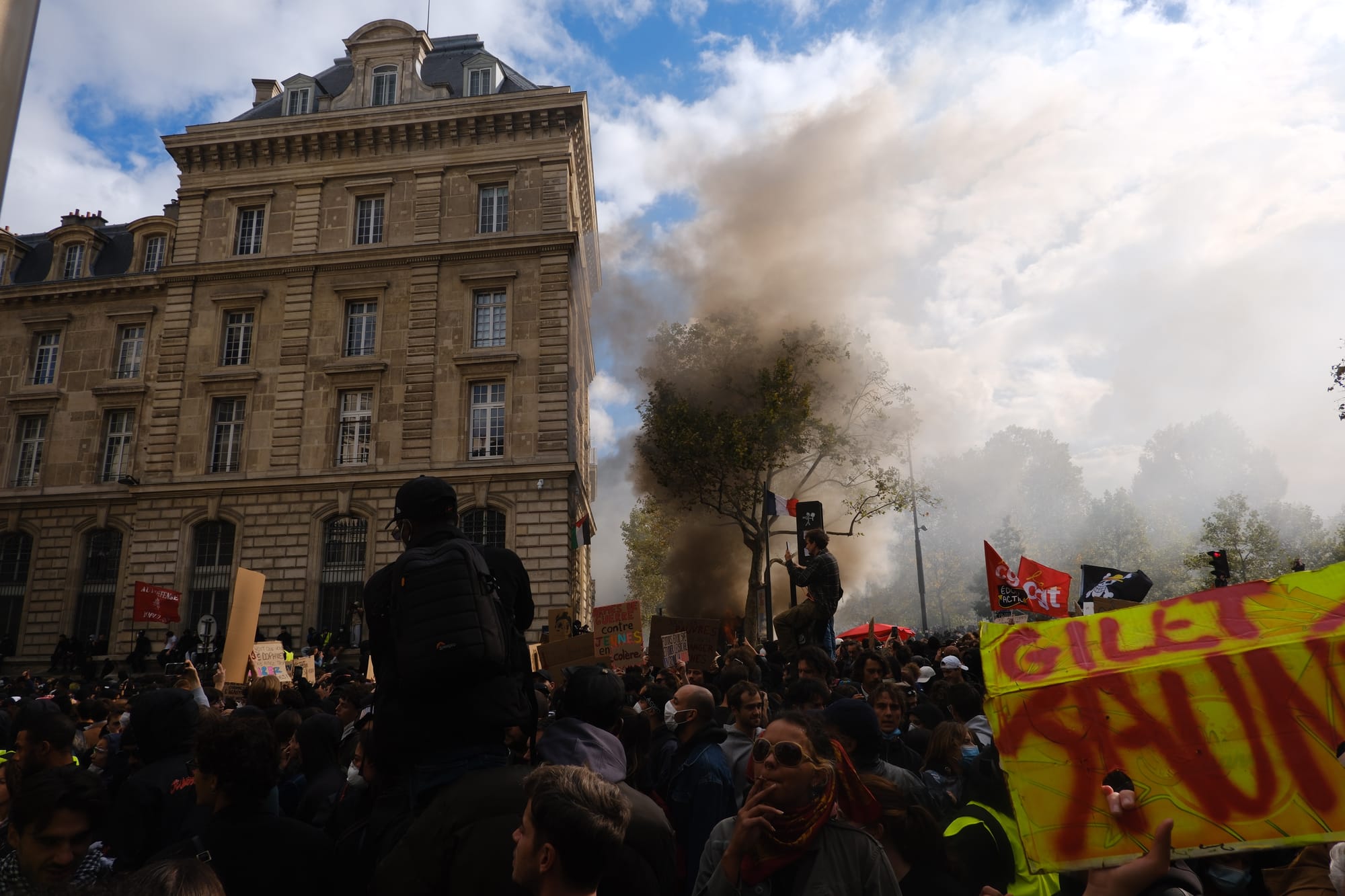
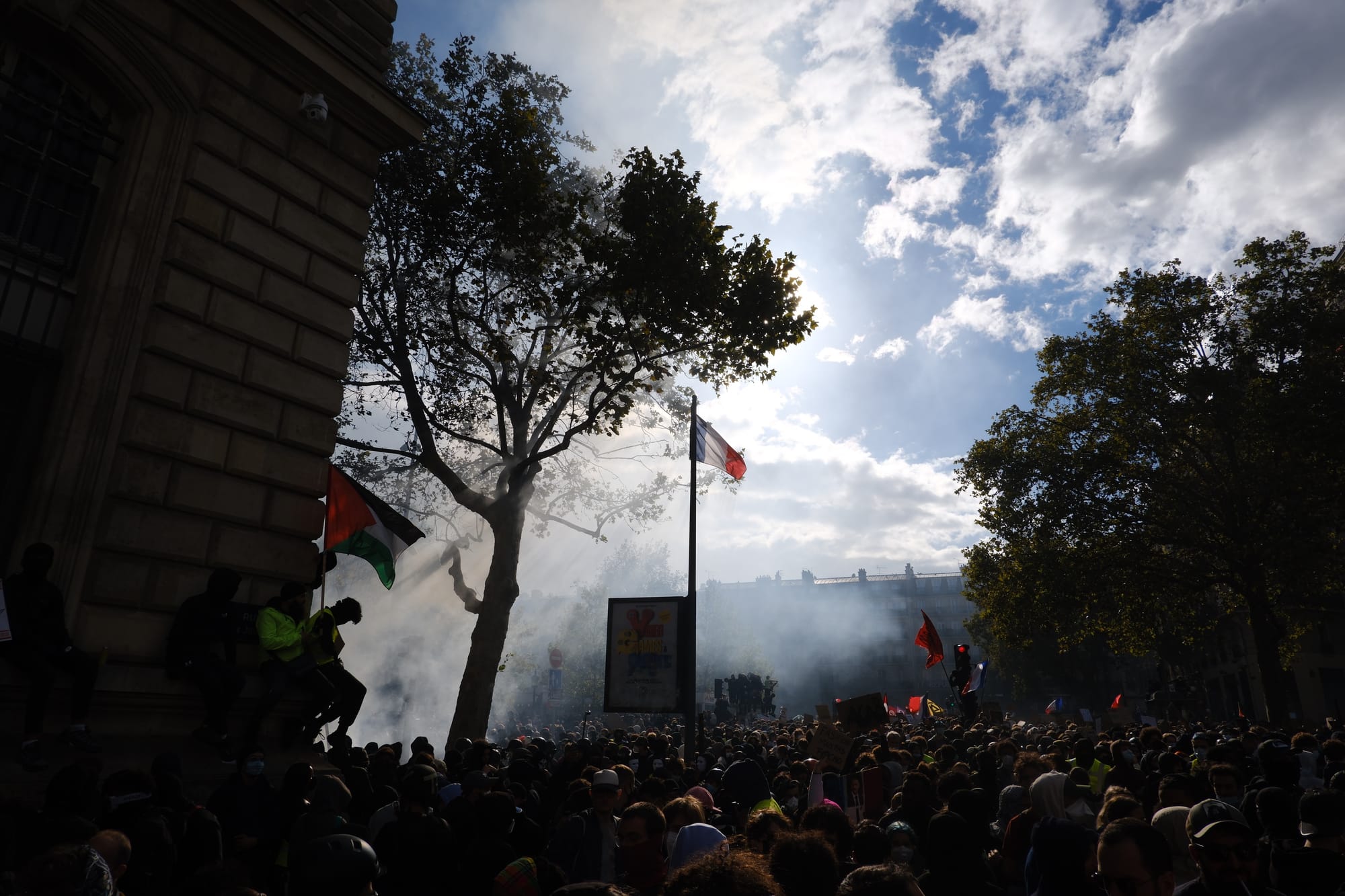
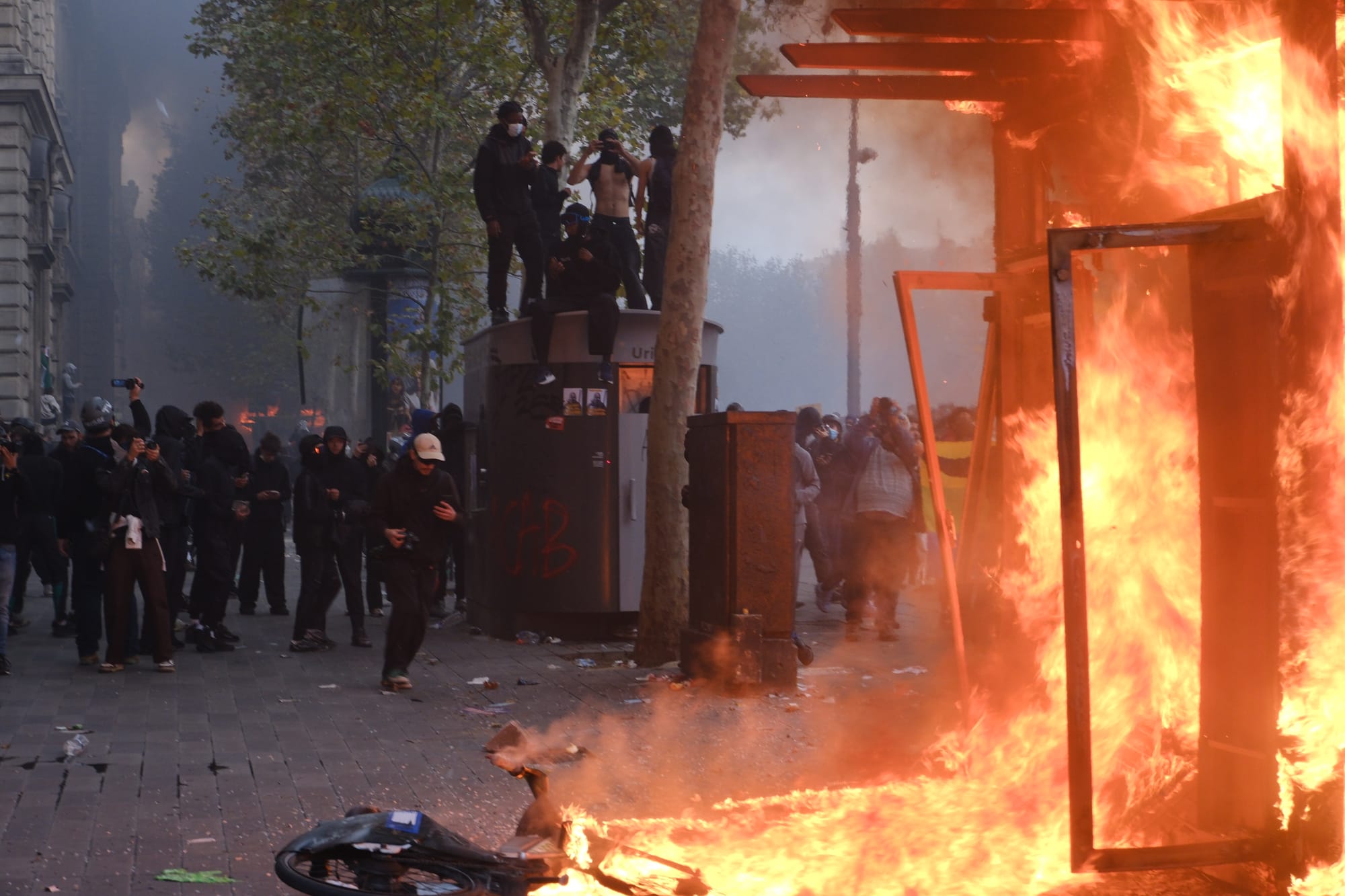
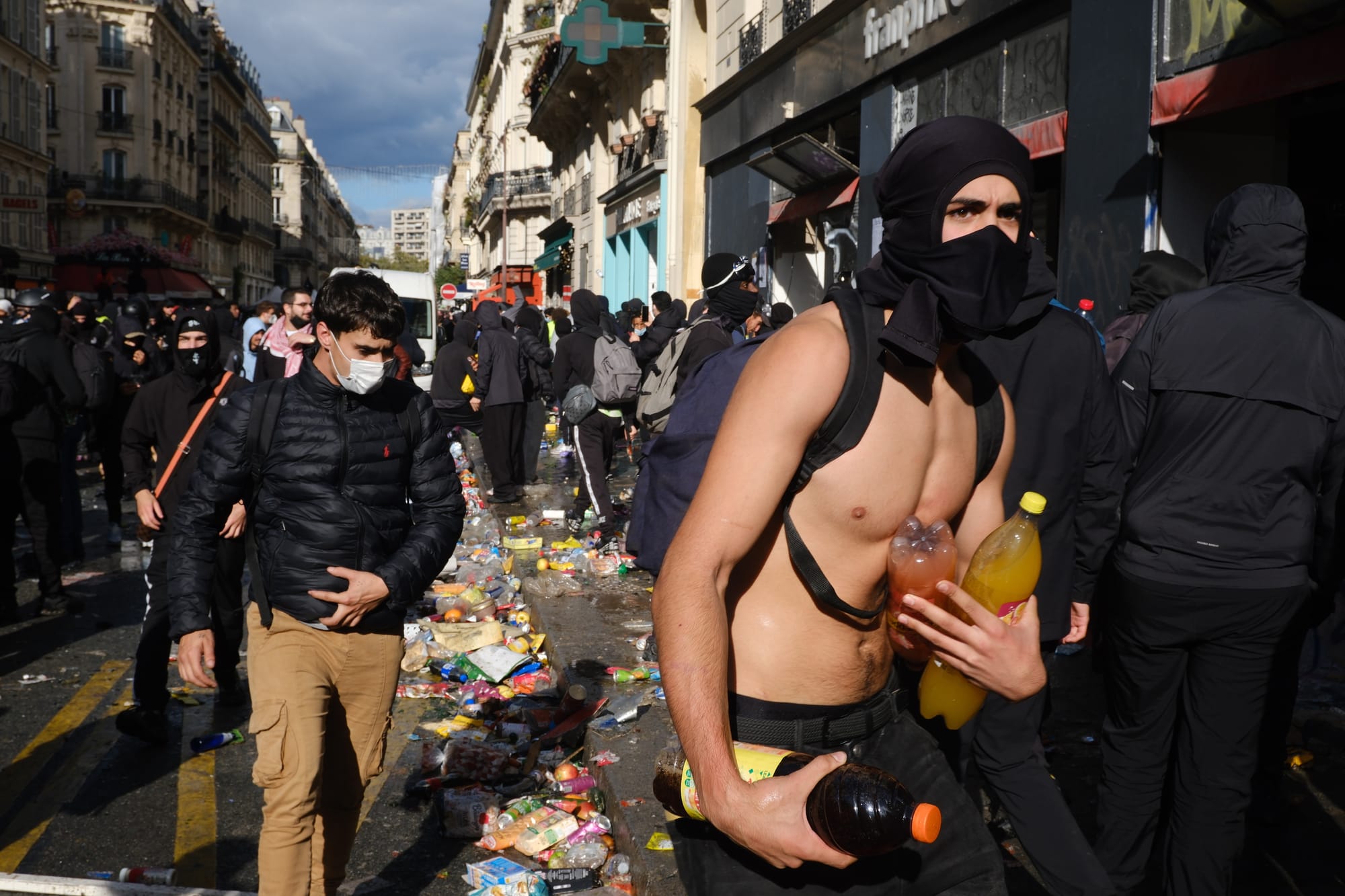
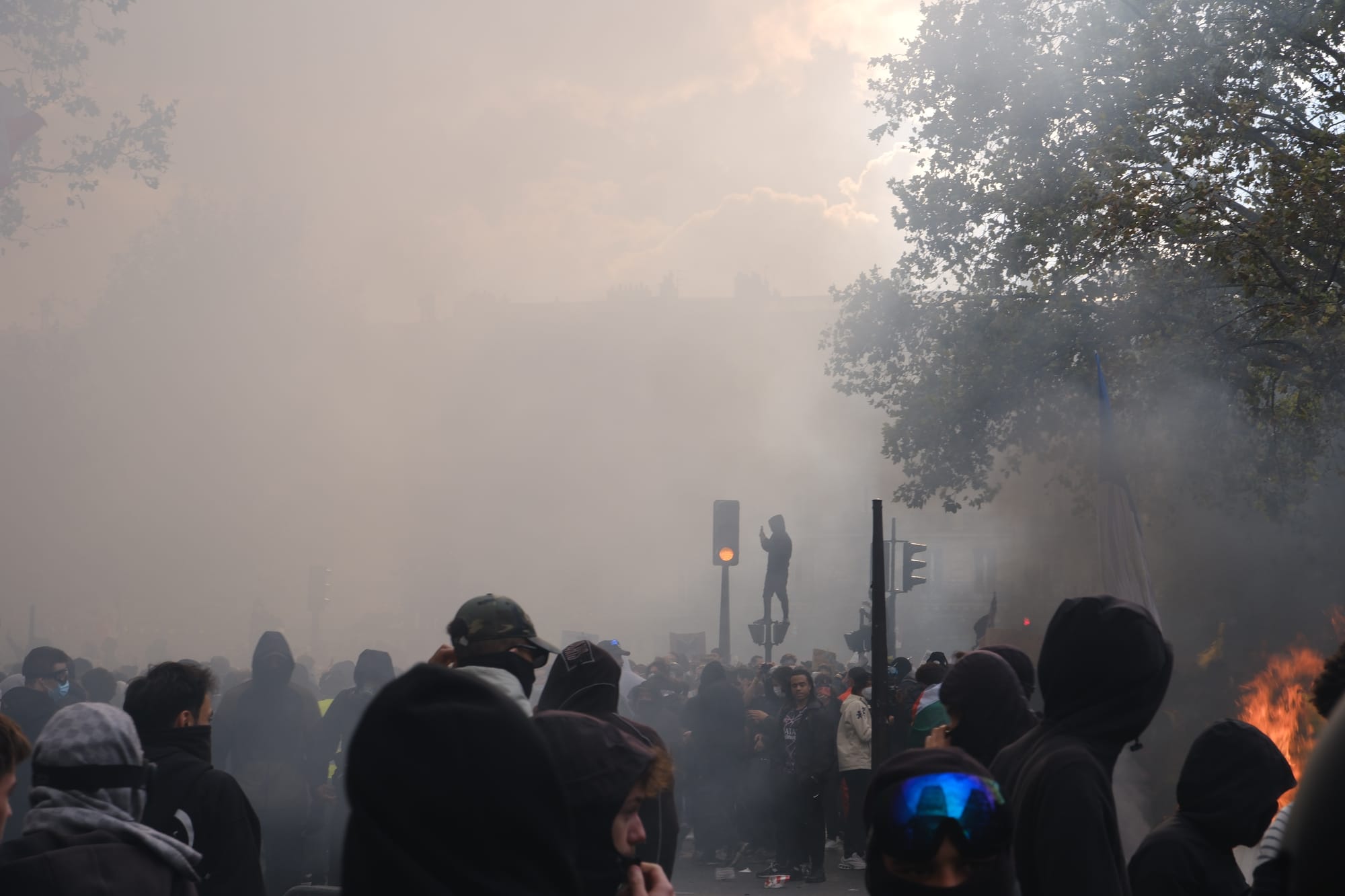
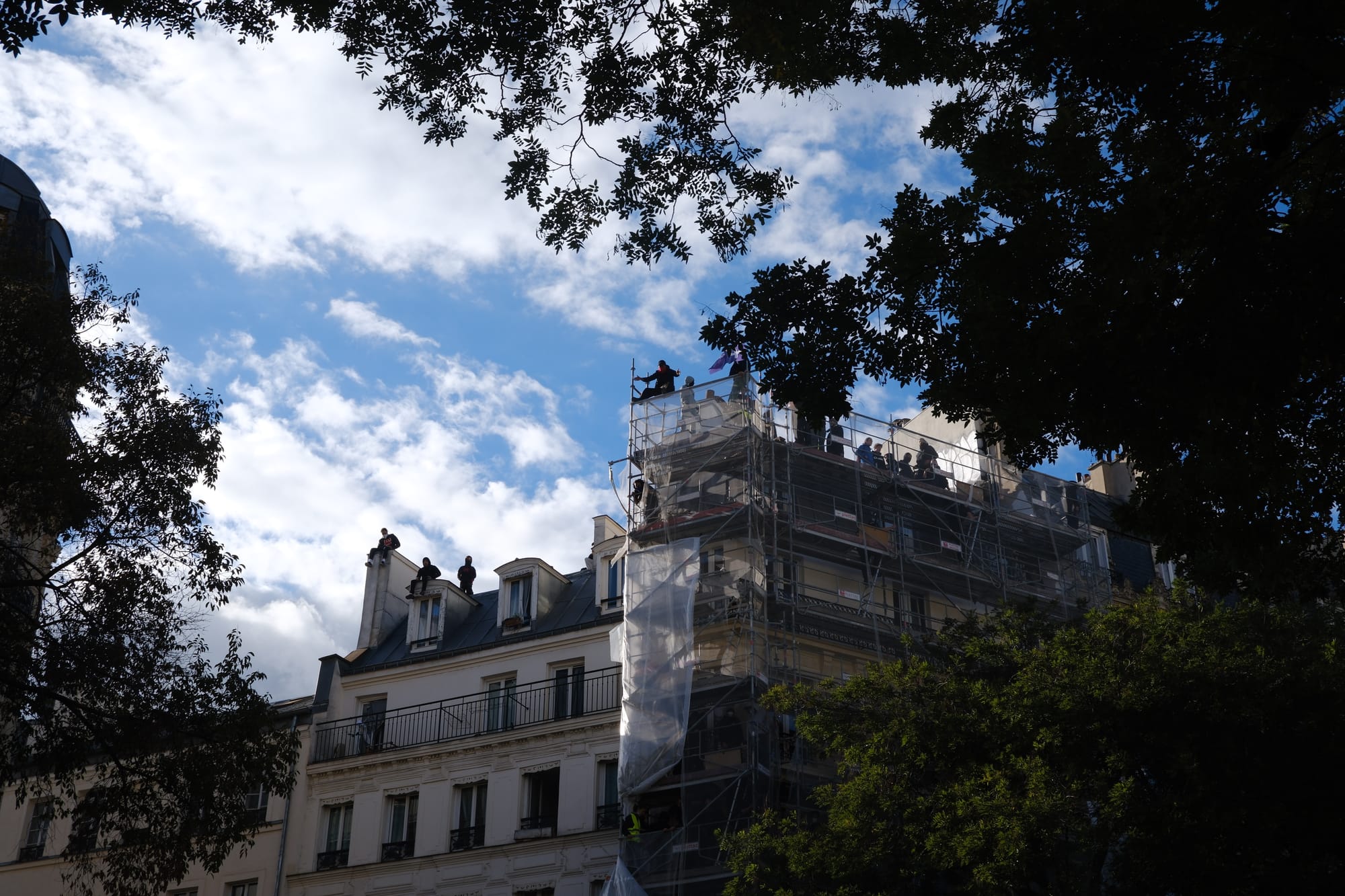
I attended the October 17 protests on Saturday at Place de la République and it was sensational, thrilling and, yes, at times pretty wild but not quite so much in the way I've seen it reported internationally. I will write something here about it soon (and just filed a piece for The Saturday Paper which will come out this weekend) but wanted to quickly add some perspective on the reporting I've seen. There were up to 800,000 people marching across France on Saturday and they are angry, partly for economic reasons but especially in response to the police brutality that emerged during student protests over the past two months. A student lost a hand. Another the use of his eye. They were only asking for better conditions and the police met them with stun grenades and beatings.
It's easy from the images alone, mine included, to conclude that Paris and France is destroyed. It is not. I was tear gassed repeatedly at the march on Saturday and I was at the location where the police had sanctioned the protest. It was a legal gathering, and the vast majority of people were there with legitimate grievances. It didn't stop us, or the tourists and people on the metro, being felled by the tear gas that erupted in plumes across the square. Later, I embedded with the casseurs who always attach to these protests – the looters and breakers, setting fire to bus stops and raiding supermarkets – and the police were nowhere to be seen. They were too busy firing tear gas canisters at the peaceful crowd gathered at the approved protest.
I'll have more to say on this soon, but for now, I will simply say I have an enormous amount of respect for the French culture of protest. They fight for what they believe in. It's quite inspiring. Here are some of the shots I took on the day.
Addenda
To be fair, this whole post is really something of an addenda this week as I settle back into Parisian life. Worthy of mention, though, is a wonderful dinner I had on Sunday night with some temporary new residents who I know from back home, the writer Lech Blaine and his artist wife Laura Jones who have arrived for three months. Omar Musa is just about to leave and Ennis Ćehić now lives in Sarajevo but was visiting so I got them all to venture up to Montmartre to this charming chalkboard-only menu bistro called Café de la Butte. Having been a bit out of the Australian arts and letters scene it was a pure delight to catch up with everyone (and the gossip!) and talk about the absolutely silly things we are all working on.
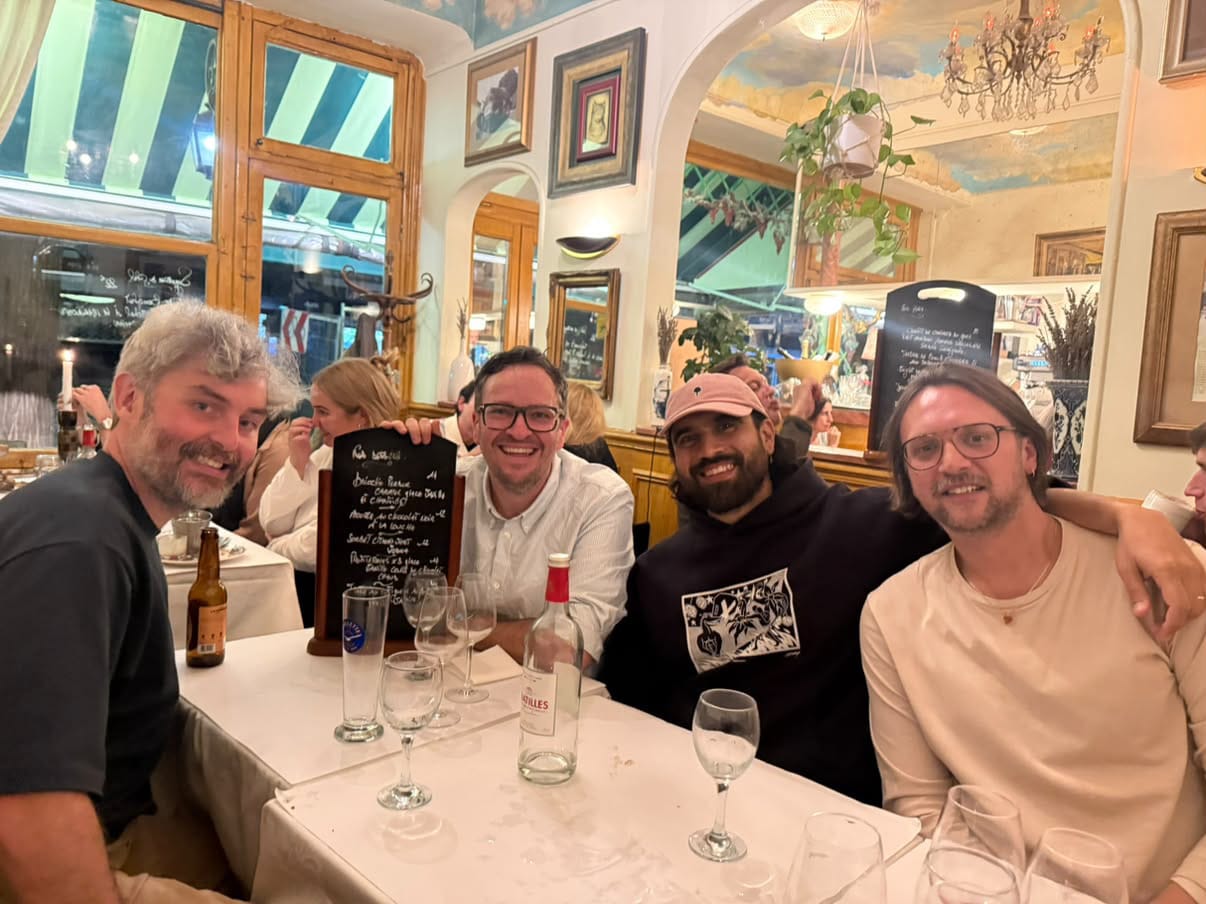
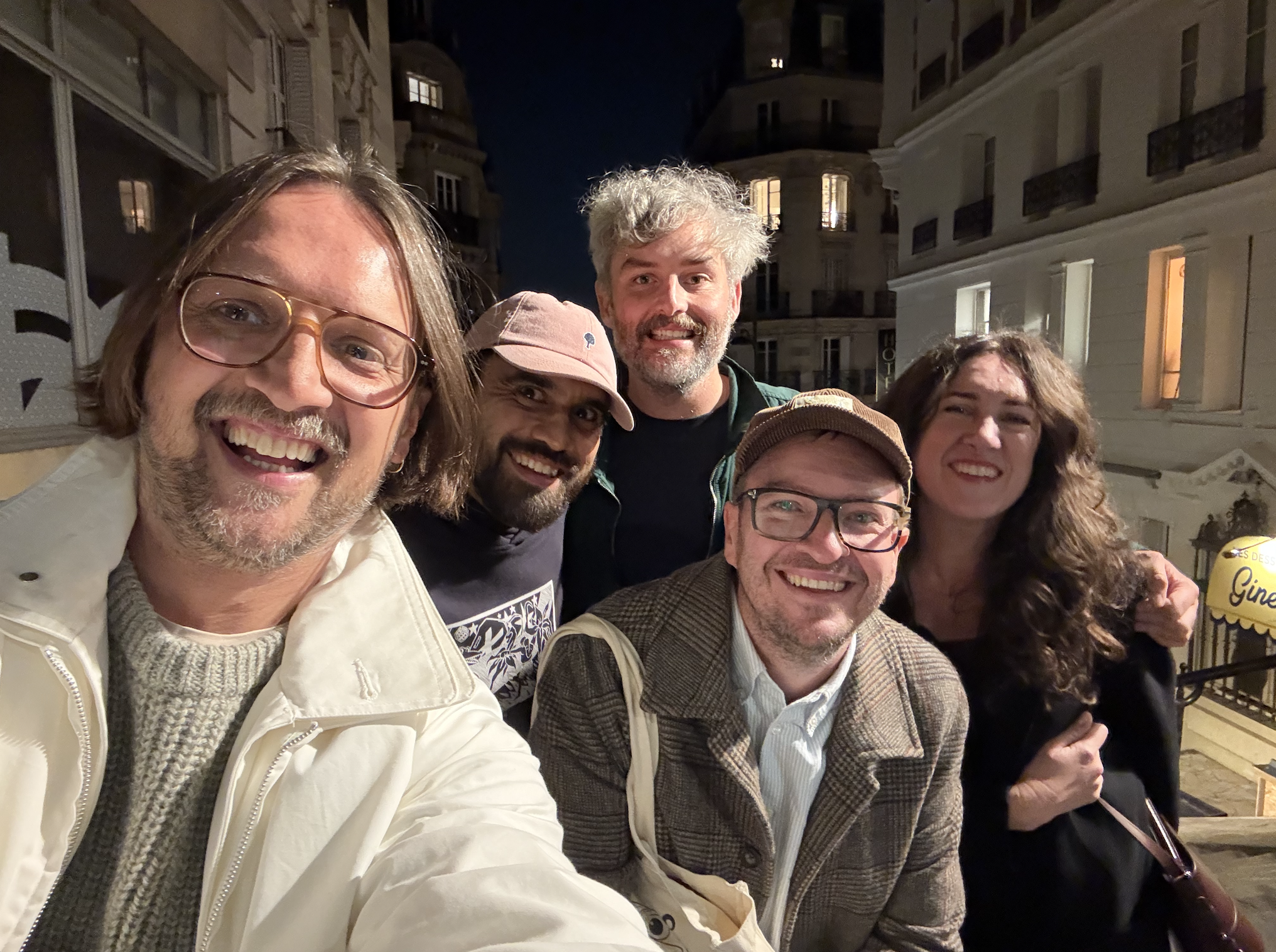
As the night ended I walked the crew back to the Metro and Lech asked what I was doing for Christmas.
'I'll be here,' I said, 'probably doing an orphan's Christmas so you should come to that!'
And he said, laughing: 'Well I actually am an orphan so I find that incredibly offensive.'
Sensing the moment, I replied: 'But at least your dad loved you! Oh it must have been so hard.'
Ho ho ho, love the Australia culture sometimes.