
This Is How It Happens
Israel, Hamas and the moral calculus of war

Benjamin Netanyahu is a war criminal. Of that I have no doubt. When history’s account is finally settled — the ledger a tally of bodies — Bibi’s savage legacy will be viewed with the ‘moral clarity’ so much of the world’s political establishment professes but is unwilling to produce right now. Its twin, sorrow, will arrive in the form of impotent reflection: why didn’t we do more to stop it?
I’ve been thinking a lot about this since the horrific attacks by Hamas almost a month ago on October 7 where men, women and children were slaughtered by the hundreds in civilian kibbutzes in Israel. Some 1100 ordinary Israelis were killed that day by Hamas militants alongside 300 members of the Israel Defense Forces (IDF). That same day, I wrote in my diary that I felt sick. For the loss of life on this day but also ‘thinking about what is to come’. I wrote this because I knew that, as much as Israelis are not their right-wing government, Palestinians are not Hamas. This is literally true in the West Bank and practically true in Gaza where Hamas seized control in 2007 following an election victory in the Palestinian territories the year before. It has solidified its control in every subsequent year. There have been no elections since.
There are more than 2 million people who live in the Gaza Strip, about half of these are under the age of 18. Since the Israel aerial campaign in Gaza began, some 18,000 tonnes of bombs have been dropped on the strip, equal to 1.5 times the explosive force of the nuclear weapon that detonated above Hiroshima in 1945.
By the time all of this is done, the locked away population of Gaza will quite genuinely need to be revised down. By 10,000 at least (the death toll in the territory is already approaching this figure). 100,000 or more if Israel gets what it openly wants which is the forced relocation of vast swathes of the area into the Sinai Desert; such a population transfer would be “temporary”, Israel says, though Egypt doesn’t believe this. Nor does just about anyone else.
Why? We don’t need secret powers of deduction, nor even any specialist expertise in the 75-year history of Israel-Palestine affairs. We need only listen to the on-record comments of Netanyahu and his supporters, some of whom he is specifically chosen to elevate into positions of immense power and influence. Bibi says Israel is the light in a war against darkness. You might argue this is similar to framing from the allies in World War Two. So be it. But on October 28, Netanyahu invoked the ancient biblical enemy of the Israelites: “You must remember what Amalek did to you.”
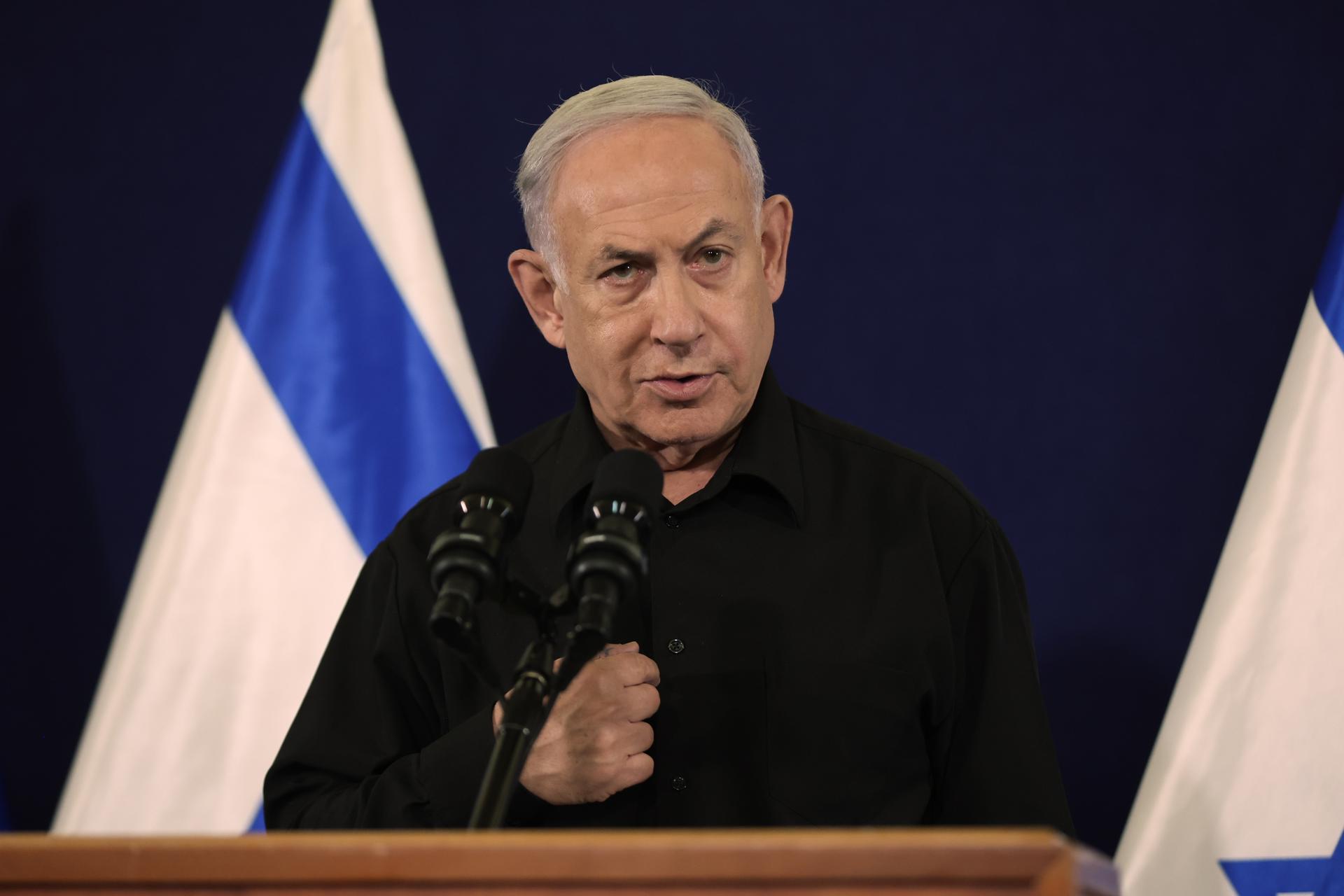
It was ostensibly a remark about Hamas but, as Jewish observers noted, it was a comment designed to be read much deeper. Just two passages following the one highlighted by Bibi, Deuteronomy exhorts Israelites as so: “You shall blot out the memory of Amalek from under heaven. Never forget!”
The former head of Human Rights Watch Kenneth Roth tweeted this week: “There has been much discussion about whether the Israeli government is committing genocide in Gaza. Netanyahu's citation of ‘Amalek’ -- a Biblical injunction to ‘slay both man and woman, infant and suckling’ -- will be cited as evidence of intent.”
Israel’s Defence Minister Yoav Gallant appeared to address his initial comments on the October 7 attacks to Hamas. But he went further, drawing no distinction between the group and the millions of people who live in Gaza:
“We are fighting human animals and we act accordingly. We are imposing a complete siege on Gaza. There will be no electricity, no food, no water, no fuel. Everything will be closed.”
Maj. Gen. Ghassan Alian, head of the Coordinator of Government Activities in the Territories (COGAT) addressed Palestinians just days after the Hamas attacks and echoed those sentiments:
“Kidnapping, abusing and murdering children, women and elderly people is not human. There is no justification for that. Hamas has turned into ISIS, and the residents of Gaza, instead of being appalled, are celebrating. Human animals must be treated as such. There will be no electricity and no water [in Gaza], there will only be destruction. You wanted hell, you will get hell.”
No justification for that? And yet, here we are.
Israel’s Heritage Minister Amichai Eliyahu said northern Gaza was “looking more beautiful than ever” after the bombing campaign began.
“Blow up and flatten everything. Just a treat for the eyes.”
“Only an explosion that shakes the Middle East will restore this country's dignity, strength, and security! It's time to kiss doomsday. Shooting powerful missiles without limit. Not flattening a neighborhood. Crushing and flattening Gaza. Otherwise, we would have done nothing. Not with passwords, with penetrating bombs. Without mercy! Without mercy!"
Reservist major general, Giora Eiland wrote in an Israeli newspaper, Yedioth Ahronoth, that the “State of Israel has no choice but to turn Gaza into a place that is temporarily or permanently impossible to live in”.
“Creating a severe humanitarian crisis in Gaza is a necessary means to achieve the goal. Gaza will become a place where no human being can exist.”
Some of these comments are inseparable in their grotesque formulations from the chant of ‘gas the Jews’ offered by a fringe element of a pro-Palestine protest in Sydney shortly after October 7 (and which were rightly repudiated by organisers of the same protest) in every way but one: the comments about Palestinians are coming from the most powerful people in Israel. The state has the power to act on every last one of its insidious hatreds. It is the most technologically advanced power in the region; the only one with nuclear weapons. It enjoys a breathtaking immunity from criticism even as its own citizens express a grim concern for the position in which Bibi in particular — but also the world — has put them.
It is not and never has been antisemitic to critique Israel, or any other nation state for that matter.
The thing about all of this that pains me so much is the asymmetry of the forces at play. Hamas attacked with such swiftness and surprise on October 7 that not even Israel’s famed security apparatus saw it coming. There were general warnings — notably of the type that firmly suggested keeping millions of people caged in an open air prison for almost two decades was always going to be a disaster for Israel — but precisely nothing about the plans that became Operation Al-Aqsa Flood. What the world could see coming, what it sees happening, is the response from Israel. Disproportionate. Indiscriminate. A Holy War waged between two enemies who have previously been convenient and uneasy bedfellows. Bibi reportedly told a meeting of his Likud Party in 2019 that “anyone who wants to thwart the establishment of a Palestinian state has to support bolstering Hamas and transferring money to Hamas”. He knew (and his policies reflect this knowledge) that Hamas was a roadblock to the proper establishment of a complete and effective Palestinian state. Now, of course, all bets are off. Hamas still has more than 200 Israeli and foreign hostages taken during the massacre on October 7. It has said it is willing to release them in exchange for Palestinians jailed by Israel, but Netanyahu has refused to negotiate.
What follows this impasse is an insatiable vengeance. Insatiable, that is, until Gaza and Palestine more broadly is rendered completely inert. The war machine is indiscriminate because the people who direct it are indiscriminate.
This is something we can prevent. And I truly wonder what the world and its leaders need to see before they are willing to say that a line has been crossed.
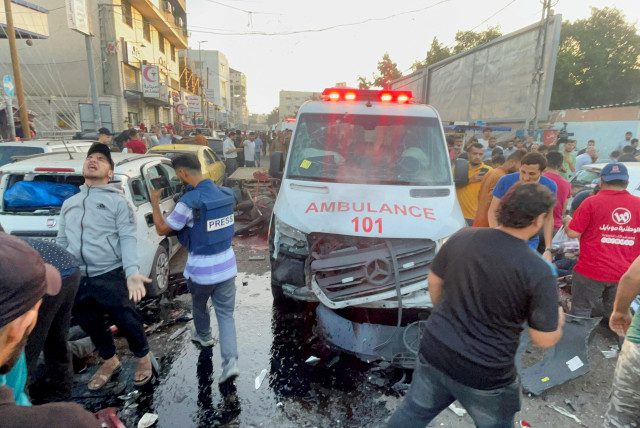
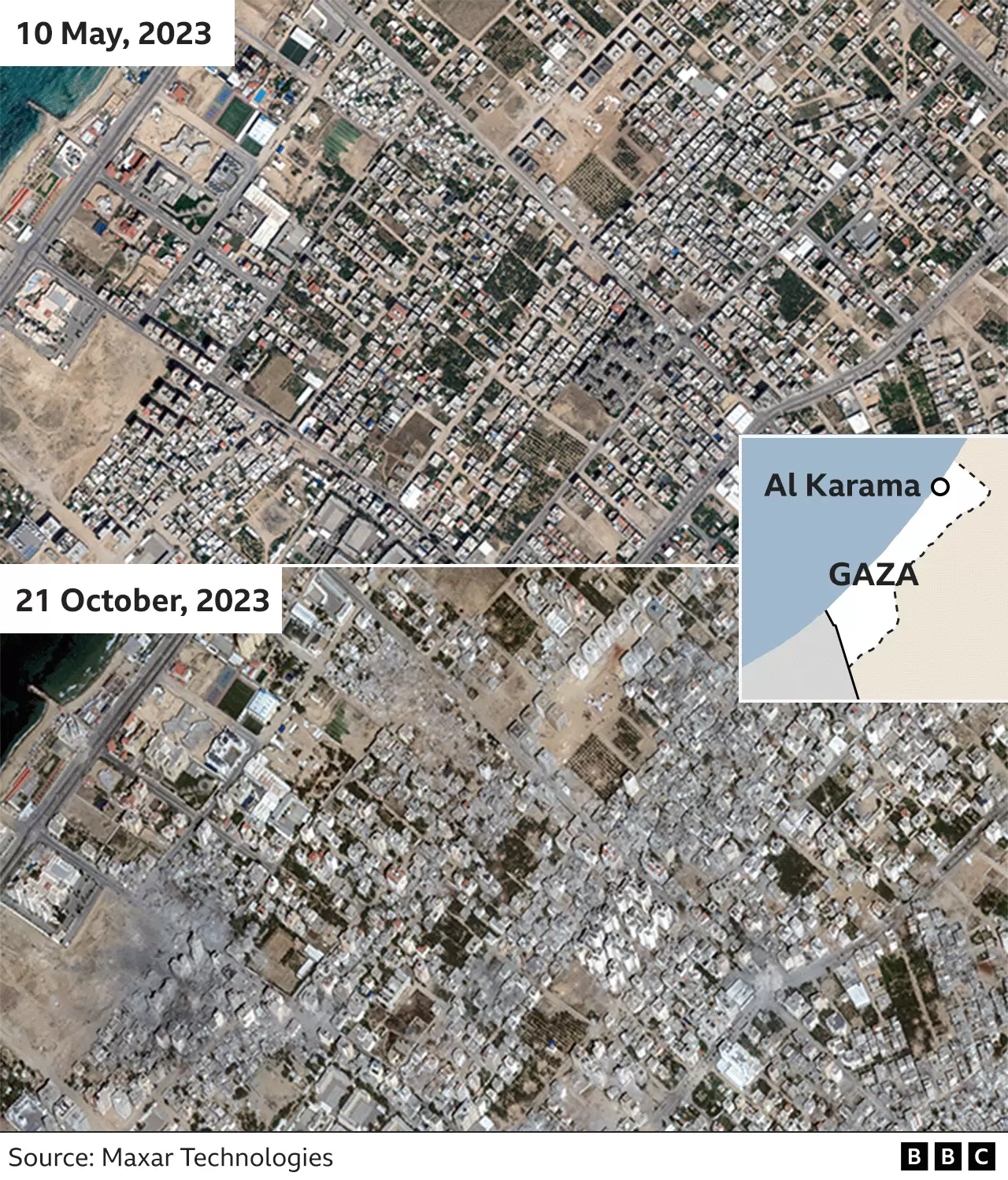
Is it the levelling of entire residential neighbourhoods in northern Gaza? Is it the apparent use of white phosphorous in those same civilian areas? The bombing of hospitals and schools? The bombing of southern escape routes designated for northern Gazans, 1.1 million of whom were told with limited food, water and fuel to evacuate south with less than 24 hours notice? The bombing of ambulances which, despite Israel’s claims they were being used by Hamas, resulted in the death of 16 civilians? The targeted air strike — twice — of the Jabalia refugee camp in southern Gaza which killed hundreds of civilians? The killing of 36 news journalists in Gaza which, according to the Committee to Protect Journalists makes this war “deadliest period for journalists covering conflict since CPJ began documenting journalist fatalities in 1992”?
At a certain point even the scaliest of eyes must concede there is a pattern here. Actions in Gaza match the professed, on-record comments of the most influential members of the Likud governing party in Israel right up to its leader Benjamin Netanyahu. That is, a genocide in the making. There seems to be a common and perhaps deliberate misreading of what genocide actually means, as if we must wait until the last person of a race or ethnicity is slaughtered before we can safely invoke the word. How else does one get to that point of total genocide if not by way of completing its necessary steps? In any case, the United Nations Convention on the Prevention and Punishment of the Crime of Genocide (ironically ratified in 1948) is clear that “genocide means any of the following acts committed with intent to destroy, in whole or in part, a national, ethnical, racial or religious group” before listing five acts. Of concern to us here, the first three are: Killing members of the group, Causing serious bodily or mental harm to members of the group; Deliberately inflicting on the group conditions of life calculated to bring about its physical destruction in whole or in part.
Now, I have been watching this unfold over the past four weeks. I have been reading and learning and paying attention. But that is not enough. Our leaders, Anthony Albanese, Richard Marles and Foreign Affairs Minister Penny Wong, have shown an almost impressive cowardice in, at first, giving Israel a blank cheque to respond as it sees fit and, belatedly, asking it very politely not to kill as many civilians as it was currently killing. The formulation of words is a fascinating one to me, warning that the “international community will not accept ongoing civilian deaths.” Presumably it will accept time-limited civilian deaths.
How many?
I’m not writing about any of this because I think I have some special claim to knowledge or understanding. The opposite, in fact. I didn’t meet a Jewish person until I was 23 or a Palestinian until I was 26. I now have friends who are both. And, look, I’d rather be writing about almost anything else. So would my friends. But, over the past few weeks, I have consistently returned to the thought experiment that asks us how we think historic atrocities actually happened. Our modern sensibilities and natural biases imagine a set of very special circumstances in which good and just people like ourselves would have done something. Spoken up, protected minority friends and strangers alike; put even a skerrick of our own comfort on the line so that the force of persecution met, in everyday people, the resistance of those who know the difference between right and wrong and then act on it.
But that is not what has unfolded throughout history. With precious few exceptions, regimes have targeted, harassed and ultimately massacred the powerless because people with a little bit of power did nothing. They were just like us. Whispering in safe circles about how terrible it all is, how difficult it is to watch, how little there is to do. What good the value system that doesn’t even make it out of the garage?
It all feels incredibly insubstantial. Everything does these days. In moments of uncertainty, however, I test both my assumptions and moral code. Take, for instance, this piece. Nothing will change if I do nothing. My concern that writing this will also do nothing is plainly absurd, then. And besides, every voice I respect in this arena is begging people to say something. Even above and beyond donating to international aid funds for Gaza. All the money in the world will not reverse a war crime. Israel has blockaded the strip for as long as half of its residents have been alive. Israel’s friends, if that is what they are, need to intervene. Public opprobrium must tip those scales.
An element of the astonishing and successful global PR campaign out of Netanyahu’s Israel over many years now, as settlers assert themselves in the West Bank and Gaza’s residents are starved of participation not only in the world but in the rest of Palestine, is the calculated and theoretical reversal of fortune. Only they are allowed to be victims. They are an oasis in the desert, besieged from all sides, an occupier that sees occupation wherever it goes. It is telling, then, that the moment even the mildest criticism of this model is offered there is a cry of hatred and antisemitism. The words of critique and justice look and feel, to this self-fashioned figure of righteousness and good, like pressing existential threats. They feel like more palpable threats to the very existence of the state then, say, the methodical depletion of the Gaza Strip before running thousands of bombing flights in a matter of weeks.
People mock progressives who maintain that words are violence. It might be more accurately said that words have devastating consequences. The global fear among Jews that antisemitism is on the rise is real. So is the trauma that lives on via the Holocaust. The hatred is real, too. The world is infected with it and it is a ruinous thing. There will be those who conflate anti-Zionism, or even just a general contempt for the actions of the leadership of Israel, with antisemitism. This is wrong, and there is no better evidence for this than the thousands of Jewish people worldwide who have and continue to condemn Israel’s actions. Critically, Netanyahu doesn’t care. He doesn’t care about who gets hurt along the way, not even about the rest of the Jewish world. He is trying to save his job.
The thing about hatreds is that, left unchecked, they self-assemble into actual physical violence and social harms. It starts small, an assault by some members of an in-group against a minority perhaps, but the stakes are raised with each subsequent attack. Eventually the lack of serious response from other social group members and even authorities becomes permission for these attacks. Then, later, your belonging to the in-group is strengthened by your willingness to commit these harms. This is how it happens. This is how it has always happened.
If you call people animals long enough and mock their basic human aspirations long enough, and if you are cheered for it by your peers, then the cratering of entire neighbourhoods in Gaza City begins to look a lot like the acceptable mathematics of business as usual. What is the exchange rate of a Palestinian life? At the moment, in this war alone, it is 0.2 Israeli lives. That’s how slaves used to be counted in America, by the way. In fractions of the whole.
All my moral code asks of me is that those lives have an exchange value of 1:1. That is all. It’s the easiest question to ask of myself and, once the answer has been given, the surest means by which I can get a foothold in the shifting sands of argument about the October 7 Hamas assault and how far back in history its savagery can be explained. Absent the current total commitment to war, Israel’s own intelligence officials, its parliament and its people would be asking that exact question even more loudly. I do not need to know the answer to that question, although it will come in time.
There is another way of navigating this. It involves philosophy’s blind taste test, otherwise known as John Rawls’ veil of ignorance. I’ll mangle the finer details here in the interests of brevity. Imagine you are a visitor to Earth and you must choose between Israel and Gaza to live as an ordinary resident. As such, let us strip Israel and Gaza of any identifying details, of all culture and context save for the very conditions available to an observer following a cursory examination. You know nothing of past animosities, or atrocities, and have no biases in relation to religion or assessments of prior conduct.
Which would you choose?
The answer to that question — and I think on any good-faith reading there is only one answer — tells us a lot about the dimensions of suffering in this war. You wouldn’t choose Gaza now. You wouldn’t in any year going back until at least 2007. That is not to say there is something inherently wrong with Gaza or the people who live there. Nothing except what has been done to it.
How can it be that the state that paints itself as the force against barbarism is the very one that commits more of it? Israel’s leaders profess to be terrified of what a free Palestine would mean for Jews in the region. But we know the answer to that question. People of all races and creeds have lived together in the area before. They do now. Making Palestinians free does not equate to the erasure of Jewish people. In any case, that is a hypothetical. Somehow we have been convinced to overlook the current reality: that a free Israel has resulted in the deliberate, systematic subjugation of Palestinian people. Perhaps what terrifies Israel the most is not that a Palestine in the inverse position might innovate in its approach to violent rule but that it won’t need to. That path has been well trod.
There is another possibility, infinitely more damaging to Israel’s sense of itself. That is the possibility that a dominant Palestine would stop brutalising innocent civilians to reassure itself; that it would govern itself and a pluralistic people with a sense of fairness and justice. That it wouldn’t just have to say it.
Now, even Israel’s most forgiving and credulous allies are moving — all too incrementally, all too slowly — in the direction of restraint. Israel will resist every such call. It will cry abandonment and even destruction.
Israel will proclaim that the world seeks to destroy it by merely asking the state to consider proportionality.
It will do so while actually, provably, destroying Gaza.
An addendum:
I wrote this as a framework for my own thinking. If you’re after a better and more complete view that goes into some of the history, the best thing I have read on the current war is this by Adam Shatz in the London Review of Books. In the piece, Vengeful Pathologies, he ranges over an impressive amount of territory and does so with the imprimatur of someone who has been paying attention for a very long time. Here’s a taste:
What is Netanyahu’s ultimate aim? Eliminating Hamas? That is impossible. For all of Israel’s efforts to paint it as the Palestinian branch of the Islamic State, and as reactionary and violent as it is, Hamas is an Islamic nationalist organisation, not a nihilist cult, and a part of Palestinian political society; it feeds on the despair produced by the occupation, and cannot simply be liquidated any more than the fascist zealots in Netanyahu’s cabinet (or, for that matter, the terrorists of the Irgun, who carried out bombings and massacres in the 1940s and later became part of Israel’s political establishment). The assassination of Hamas leaders such as Sheikh Ahmed Yassin and Abdel Aziz al-Rantissi, both killed in 2004, did nothing to impede the organisation’s growing influence and even assisted it. Does Netanyahu imagine, then, that he can force Palestinians to give up their weapons, or their demands for statehood, by bombing them into submission? That has been tried, over and again; the invariable result has been a new and even more embittered generation of Palestinian militants. Israel is not a paper tiger, as Hamas’s leaders concluded after 7 October, still exulting from the experience of killing Israeli soldiers asleep in their beds. But it is increasingly incapable of changing course, because its political class lacks the imagination and creativity – not to mention the sense of justice, of other people’s dignity – required to pursue a lasting agreement.
A second addendum:
I am going to leave comments on, for now, but suspect they will need to be turned off at some point. Such is the nature of this subject. I don’t really have time to be moderating or making sure they stay within the bounds of human decency. To be honest, I don’t think we need comments at all. If you care, and I hope you do, please write to your MP or Anthony Albanese and Penny Wong. Attend a gathering or march. Say something, somewhere.
Thanks for reading.