Plumb and Plumber

On a recent Wednesday, the kitchen sink in my Paris apartment became totally clogged and I was deserted by the civilising infrastructure of modern life.
Thus begins my nightmare.
The building pipes in the French capital – and probably the rest of the country, too – are notoriously old and narrow. As a general rule, nothing smaller than a tardigrade should be sent down them and on some days it feels like the system struggles even with individual atoms of hydrogen and oxygen. C'est comme ça, the French will tell you, after having blown a small puff of air out their mouth to indicate that the mysteries of the universe are many and largely unknowable.
Sure, but my sink had about an inch of water in it with nowhere to go and I needed it to not be like that. Tried poking one half of a chopstick through the sink-hole and wriggling it around a little bit, to no avail. Then I bought some DeStop at the supermarché but all that did was sort of turn everything purple. It looked like somebody had shot Grimace. Having not studied plumbology at school and being fresh out of ideas, I raided the fridge for leftovers and went to bed.
The water was still there in the morning. I found a plunger in the deepest recesses of the apartment and gave that a solid 15 minutes but it did exactly nothing. Later that night I decided to be stubborn and make dinner at home anyway, come what may, and then remembered that I have a dishwasher in this place that I have never even opened, let alone used. I could run that while the sink was out of action, I figured. Early in the cycle the dishwasher caused a large volume of air to bubble up through the sink in a way that suggested it might actually unclog the damned thing.
You fucking genius, I thought to myself (celebratory). And then during the second phase of the cycle the dishwasher disgorged a large volume of water into the sink in a manner that suggested the first bubble was not air at all, but the inflow of water, which was now pushing perilously close to the top of the sink. The cycle was far from over and I could hear even more water sloshing around inside which would flood the kitchen if I did nothing.
You fucking genius, I thought to myself (derogatory).
After spending a delicate quarter-hour ferrying water to various other similarly narrow drains throughout the house I gave up and went down the street for a chardonnay to process what this final failure meant for the next day: I was going to have to call a plumber. In French.
On the Friday I found what I thought was the number for the depanner left for me by the owners near the front door but when I called it reached an automated introduction message in breathless French that sounded like it had been recorded through a sponge. It made zero sense. I hung up and called again to try and listen harder. Then hung up again to have another go. And then another, which is when I realised it was asking me for my postal code. So I typed that in and got through to the next automated message which I also couldn't understand. I hung up and called several more times and just started pressing buttons.
At the turn of the 20th Century there was a German horse called Clever Hans – Kluge Hans, way more fun – who seemed to learn how to count and would scuff his hoof on the ground to answer complicated oral or even written mathematical questions. One, two, three, four, five, six, seven. A genius! But, of course, Hans didn't really know how to count at all and certainly could not do fractions. He was responding to subtle, even subconscious, cues from the people giving him the questions that indicated when he had arrived at the correct answer. This was me on the phone to the depanner, dragging my mental hoof until such a time as the automated messaging system let me through to the next round. Our clever horse was eventually drafted into World War I, making him the first documented case of a Hans looking for arms, some nine decades before UN weapons inspector Hans Blix in Iraq in 2002. Clever Hans, according to researchers, 'was killed in action in 1916 or was consumed by hungry soldiers' for his troubles.
For mine, I was allowed to speak to a French person.
Turns out this was only the number for the electricity company. Merde!
I searched online and chose a local plumber at random and was thankfully able to get through without any recorded messages but now I really had to test my ability to have a conversation in French that I'm not even sure I could have managed in English. Water no go down! Me scared!
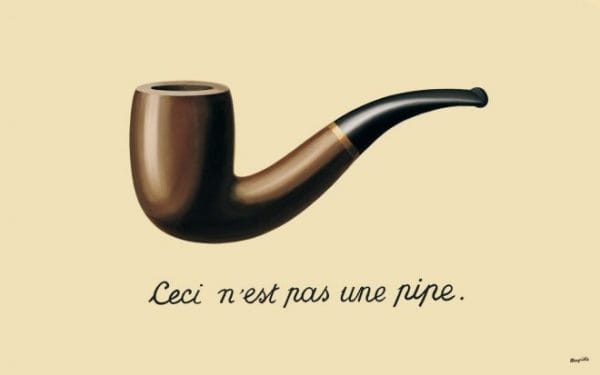
Surely, I thought, the word pipe is the same. I know this because of the famous René Magritte painting. Une pipe. I decided to check and, of course, the word is not the same at all. Pipes in this context are les canalisations and plumbing pipes are la tuyauterie which only makes the meaning of Magritte's image even funnier in this context.
And a bathroom sink – a word I learned on [redacted] language app, le lavabo – is not the same as a kitchen sink which is l'évier. And blocked, which I also know, is not, strictly speaking, bloqué with respect to pipes, which are not pipes, but bouché which only made me start singing 1990s Eurodance hit Be My Lover by the German group La Bouche (which is mouth, of course, not blocked pipe) while having a nervous breakdown and changing the words to 'be my plumber'.
The very patient woman on the other end of the phone asked me a bunch of questions which I didn't really understand at all but I Clever Hans-ed my way to what I hoped was an appointment by throwing out my address and phone number and agreeing to what I also hoped was a time frame between 1pm and 5pm, said in the 24:hour time format which I am fine with except in French because they do numbers like an Ottolenghi recipe. Oh, you want to make the number 97? Here's fifty fucken ingredients.
I hadn't really expected this to work but not 15 minutes later the plumber called to explain that he was at my door; and he was indeed, looking alarmingly like Jon Snow from Game of Thrones.

Naturally, and as with the others, this brusque, duty-bound man spoke only French. One minute I was watching British spy thriller Slow Horses over a baguette sandwich and the next I'm being yelled at by a quite attractive Frenchman in my apartment, which, combined, is how I imagine the battle of Waterloo sounded. What did this man want? I understood well enough when he motioned for me to clear everything out from under the sink but not a lot after that. He called out for something or other, a word I had never heard in my life, so I started picking up random objects and watching his face for clues.
He wanted a bucket. Two buckets. I didn't have one bucket. We improvised (two empty bins) and then, when the pipe started overflowing in the other room, he became even more animated and asked for a serviette. I knew serviette! I also knew that serviette meant towel, but in my panic I got him an actual stack of what we English speakers might more readily call a serviette, like, the ones at dinner. Not since opening Grindr in Sydney have I seen a handsome man more disappointed in me than in that moment.
Despite my best efforts, the plumber fixed the problem – which I could now see in horrific chunks of God knows what around him on the floor where the water came out – and then charged me €220 for the honour. In my long-running series of relatable Euro-AUD conversion calculators, that is enough money to buy access to the former frontbench of the National Party or about 10 minutes of bar tab in the function centre of a Gladstone motel for the closing down festivities of same.
I was exhausted by this whole affair. Every cognitive trick and interpretive boon able to be marshalled in my favour had so thoroughly depleted me.
When Napoleon was first 'exiled' to the island of Elba under the Treaty of Fontainebleu he was actually handed his own principality, over which he had total rule and a complement of 600 or so of his most loyal Imperial guards. Once there, and always the civic administrator, he busied himself with creating a miniature royal court and obsessing over every detail of his rule down to how many bread rolls the hunting dogs would get, the colour of the curtains in his home and even the rebuilding of the toilets in Portoferraio because they smelled, making this the first but not the last debilitating encounter with a port-a-loo in history.
He remained busy, despite the later protestations of his nephew Napoleon IIII that he was 'occupied with nothing' and in just 300 days on the island Napoleon issued decrees for the construction or reconstruction of roads and bridges and a water system for towns on Elba which was plagued by summer droughts.
Having attended to issues of plumbing, the exiled Emperor took his loyal soldiers and hopped on a boat for France where he proceeded to march toward Paris and swell his following as he went. The restored Bourbon king fled and the country was, again – and ever so briefly – Napoleon's.
We are not the same.
After attending to my plumbing issues, I had a nap.
Addenda
ICE, ICE, Hades
It does not seem especially novel to note that authorities in the United States of America have been able to murder citizens with impunity for some time now. What feels qualitatively, even quantitatively, different now is the total fervour with which the killing is being conducted and the candid evil on display by those who are defending it.
Terrible things happen in otherwise decent enough systems. That is not to say those systems, or societies, should accept them. But, it seems to me, one of the hallmarks of the slide into fascism – yes, in the literal sense of the word – is the loss of pretence. Where once we at least had a dog and pony show for even the worst injustices, like the murder of overwhelmingly black Americans during otherwise routine police traffic stops, now there is not even the faintest theatre of civility to go alongside the broad daylight, caught-on-video-from-every-angle execution of American citizens. You know their names now: Renee Good and Alex Pretti. Both protesting the faceless para-military goons ordered into Minnesota by President Donald J. Trump. Both 37. Both branded terrorists by their own government and a roster of dead-eyed lickspittles attached to it. And finally, not incidentally, both victims of this state violence were white.
I watched a documentary about Hurricane Katrina and its aftermath a couple of weeks ago. It was one of the first major global news stories that I remember in my first year as a cadet journalist in 2005 – alongside the aftermath of the Boxing Day tsunami – and I vividly remember the scenes of people waving for the help, the terrifying conditions of the Superdome, the inexplicable (to my 18-year-old self) absence of FEMA. What I didn't appreciate then, or for a very long time since, was just how badly, and to tragic ends, the stories out of New Orleans were misrepresented, misreported or plainly concocted in the middle of a crisis. Looters weren't simply trying to find water and food in the baking heat after being left stranded on overpasses and in fetid conditions across the city; they were coming to kill their rescuers. So the rumours went. As these stories snowballed, however, what shocked me the most was how easy it was for people to appear on camera and not simply believe the misinformation but revel in the way they would dispel a possible threat. That is, how quickly they were able to revert to some latent but by no means dormant pathology of hatred on the continent.
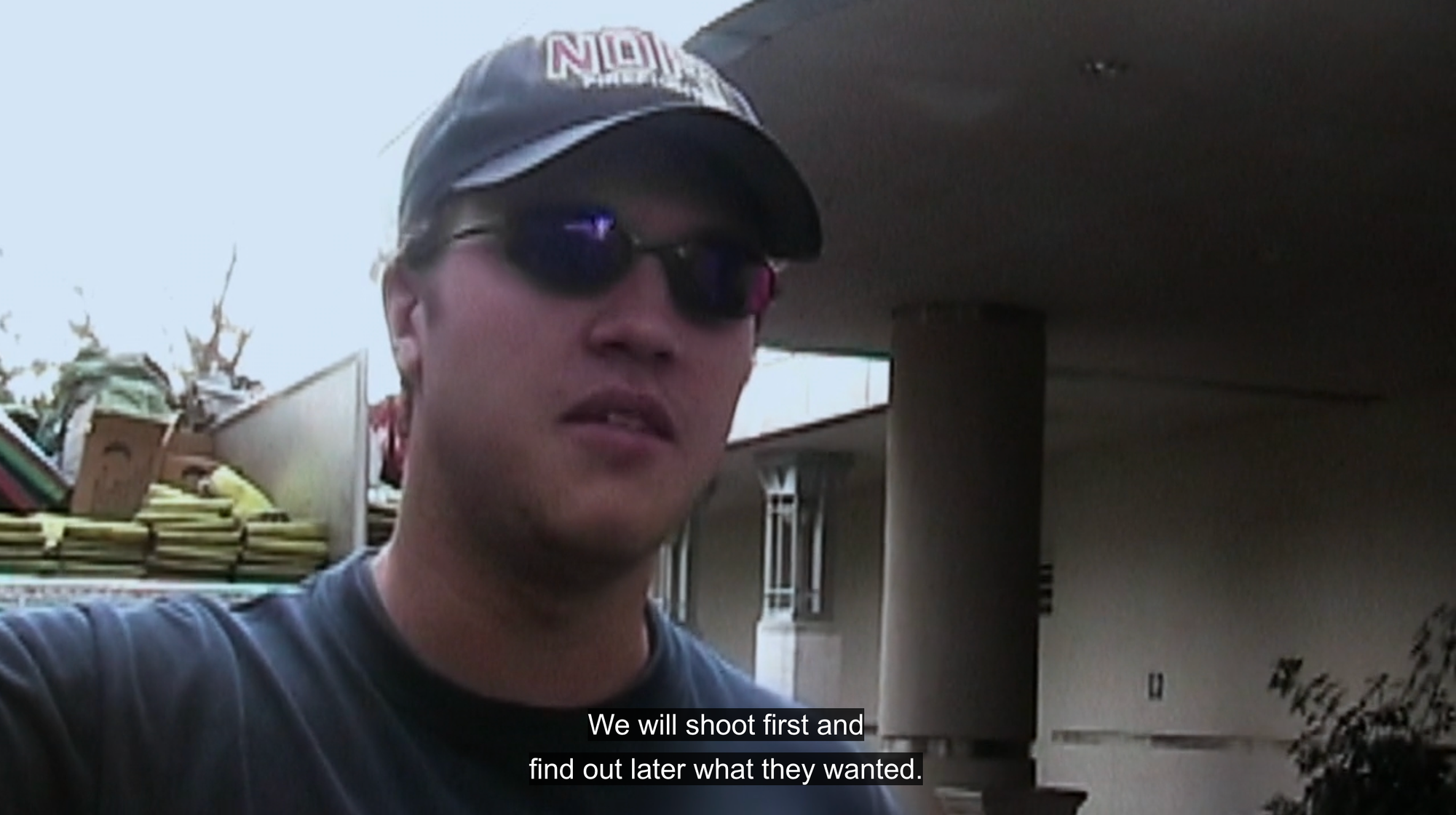
I mean, that guy is a fireman. He was talking about driving into one of the 'dangerous' parts of the city to provide help, as he was dispatched to do, but instead offered a glimpse into what Toni Morrison once called that 'ignorance of gothic proportions' that is the inability, or unwillingness, to become the other human being; to imagine them.
Later in the same documentary, white residents on a relatively unscathed side of the Mississippi River proudly announced they had been hunting so-called 'looters' who were not looters at all but thousands of homeless, destitute people who had been told by their own mayor to follow the highway out of town until they could find help after days of waiting in the city for rescue that never came.

I have no idea whether these people actually did shoot and kill anybody personally, but that's not quite the point in this analysis. What matters is that they felt free enough to even say as much, on camera, when people were dying.
We are in a type of hell.
Racism is the most common form of subjugation on this planet, still. But as the civil rights lawyer Sherrilyn Ifill wrote on Bluesky on Friday: 'I get tired of saying it, but I’ll say it again: the nature of oppression in America is that they workshop it first on Black, Latino, Asian & Native people. But it is always, in the end, coming for everyone.'
In this way, the forms of injustice we more 'tolerated' folk are inclined to aide and abet are always, always, allied to the whole project of power. And the nature of institutional power is that very few people have access to it and even fewer can wield it. Donald Trump's America is showing us what that looks like. Trump's extra-judicial jackboots in ICE are murdering, harassing and disappearing with abandon on the strata of a society that has allowed as much by degrees for decades.
When the length of rope eventually pulls taut, and we run out of room, nobody is safe.
Thank God Minnesota is showing us that this is everybody's problem.
In ordering the release from detention – a place long established in American 'law' but rendered even more terrifying under Trump – of the five-year-old boy snatched from the street on his way to school, US District Judge Fred Briery finally said what many of us have been thinking for a long time now. His orders are powerful and excoriating.
'The case has its genesis in the ill-conceived and incompetently-implemented government pursuit of daily deportation quotas, apparently even if it requires traumatizing children. Observing human behavior confirms that for some among us, the perfidious lust for unbridled power and the imposition of cruelty in its quest know no bounds and are bereft of human decency. And the rule of law be damned,' he wrote.
And the boy was so released. Because, at the very least, the law ought to count for something. The rest of our horrible impulses, as people, will take some time to fix. For now, we should have the law.
While this was unfolding, a parallel threat to all played out in the arrest of former CNN broadcaster and journalist Don Lemon, his producer and independent journalist Georgia Fort who all reported on a protest at a Minnesota Church where a pastor preached and is also an ICE operative.
Initially a federal court judge in Minnesota refused to allow the charges as there was no 'probable cause' but that wasn't going to stop a presidential administration turned on by animus and under-age children (I don't even have time to get into the Epstein files but have been reading, as I'm sure you have, and it's way worse than many of us could have imagined, if only because it takes a sickness to even conjure those details). Trump and co got around the judge's reticence through a complicated legal process that ended in a grand jury indictment, bypassing the more direct route, which allowed for the arrest of Lemon and his colleagues.
Journalism is not a crime, naturally, but at this point in Trump's tenure that is somewhat irrelevant. Everyone against him is an enemy and this, after all, is war. The White House official account on pedophile site X posted gleefully after the arrest, ending the simply threat with an emoji representation of chains.

A sickness.
Panic! At the Opera
On Sunday I finally made it to my first performance at the ridiculously large Palais Garnier in the ninth arrondissement. I've walked around it many times but wanted to save my premier journey into its storied interior for a show, not just a tour. That show was an opera, Eugene Onegin developed from Pushkin's verse novel of the same name by the composer Tchaikovsky, and also happened to be the first opera directed by one of my favourite actors, Ralph Fiennes. When worlds align, one must.
The crowd moved, impeccably dressed, into the main entrance with its white marble staircase. I waited for my friend Anna, on whose invitation I had secured a ticket, and watched. It was a rainy Sunday afternoon, cold but not freezing, and I enjoyed the theatre of people arriving and whisking off their coats, revealing further ornament and layers of fine fabrics underneath.
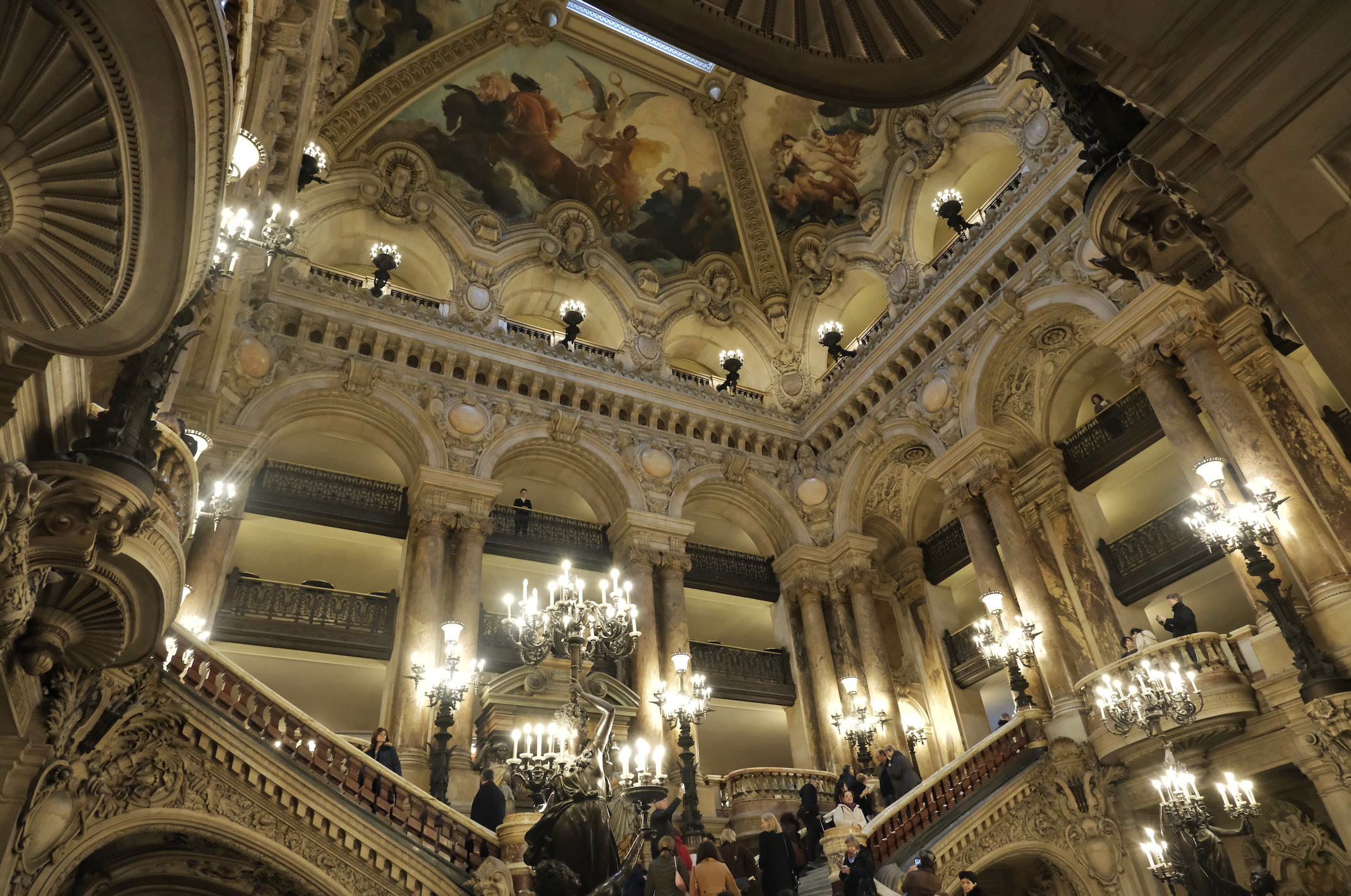
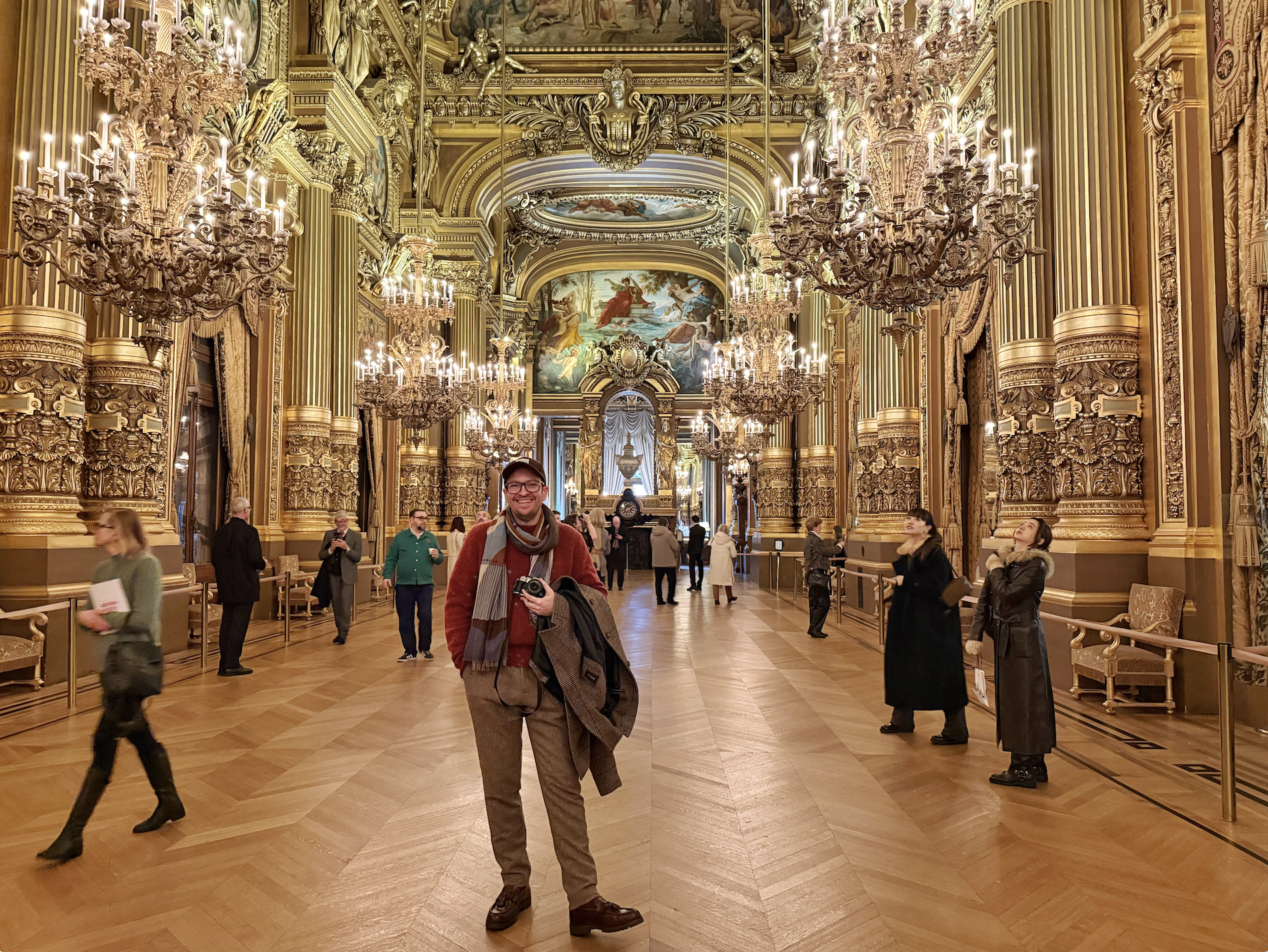
You could just tell some of the couples had been coming here every other week for decades, some of them dressed to match the mineral wealth of the interior. With Anna and her friend, we ascended the grand staircase and turned left toward the grand foyer. I had only dimmest inkling of what to expect, having long ago glanced at some photos, but no amount of study could have prepared me for the impact of that room. As we swept in silently I yelled, involuntarily and at some volume: 'Holy SHIT!' There was simply no way to keep that reaction bottled. It was like being winded.
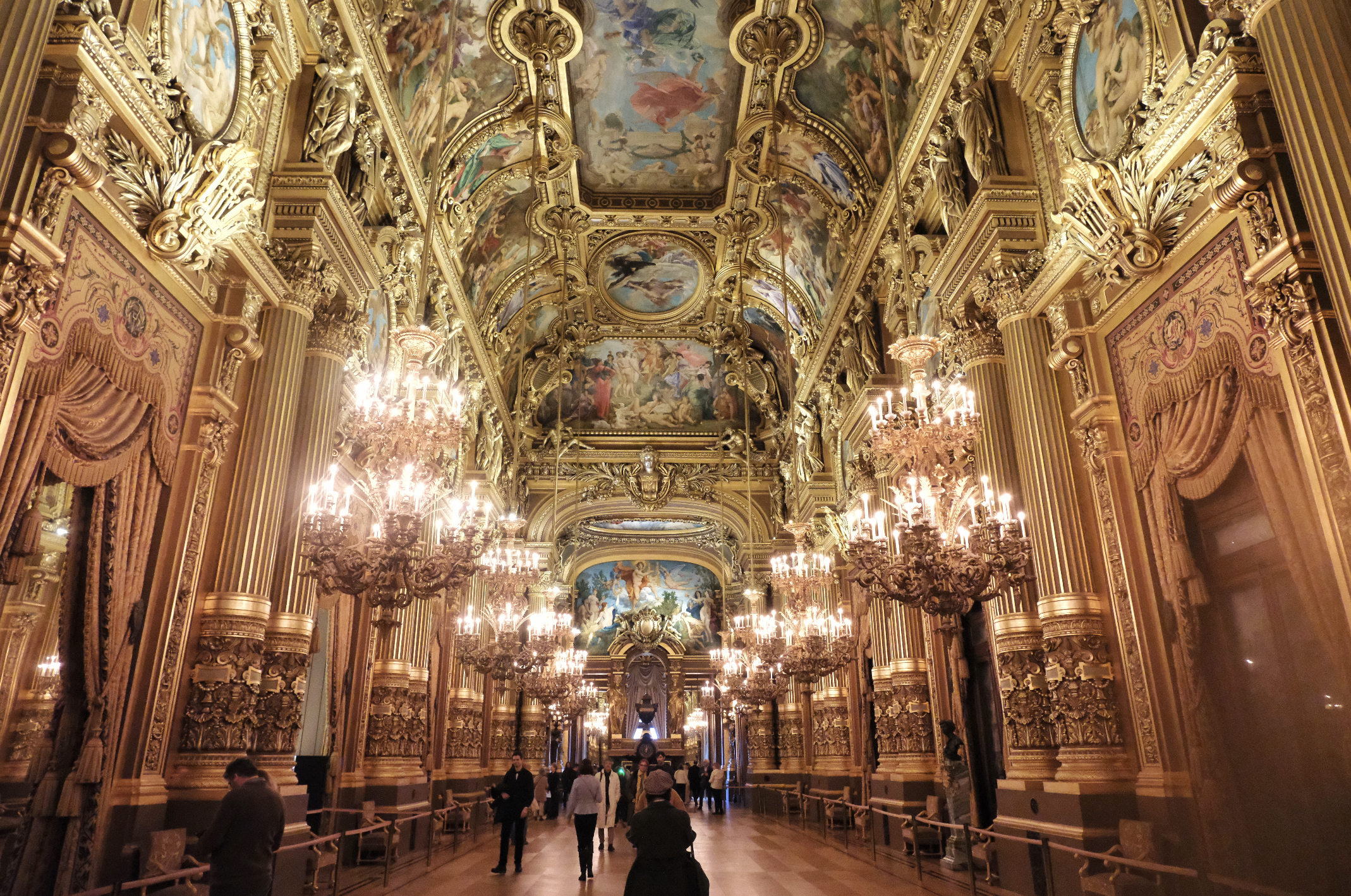
The opera itself was note perfect. I'm told that Paris audiences are not afraid to boo the first performance of a new production if it does not meet their exacting standards and especially so if the director is considered an interloper in the art. Ralph Fiennes did not suffer this indignity, and the reviews have been remarkably positive. By his own reckoning, Fiennes says Onegin is ultimately a 'love story that doesn't work' which is up there with some of the more sizeable understatements in the arts world.
Such thwarted love is universal and crosses epochs, which is what makes this story so relatable. I cringed with self-recognition as our mournful Tatyana writes a letter to the man who has kindled the flame of her soul – oh why, why she says, did he even have to visit for the first time and introduce her to this agony – and then absolutely freaks out when it gets delivered and he comes back with a response. He rejects her and leaves.
Events intercede, and eventually the roles are reversed. That is, after he shoots his best friend dead in a duel following a spectacular ball where Onegin becomes bitter at the gossip from attendees that he is a vain narcissist, a dandy and a gambler. Which he is. This personal sleight, as he sees it, produces one of the singular best lines of in the entire opera: 'Oh why did I even come to this stupid ball.' Amen, brother. We've all been there. Anyway, Onegin decides to take his anger out on his friend Lensky, who invited him, by stealing more than one dance with Lensky's beloved Olga and transgressing in the most obscene way; by stroking her hand as they danced.
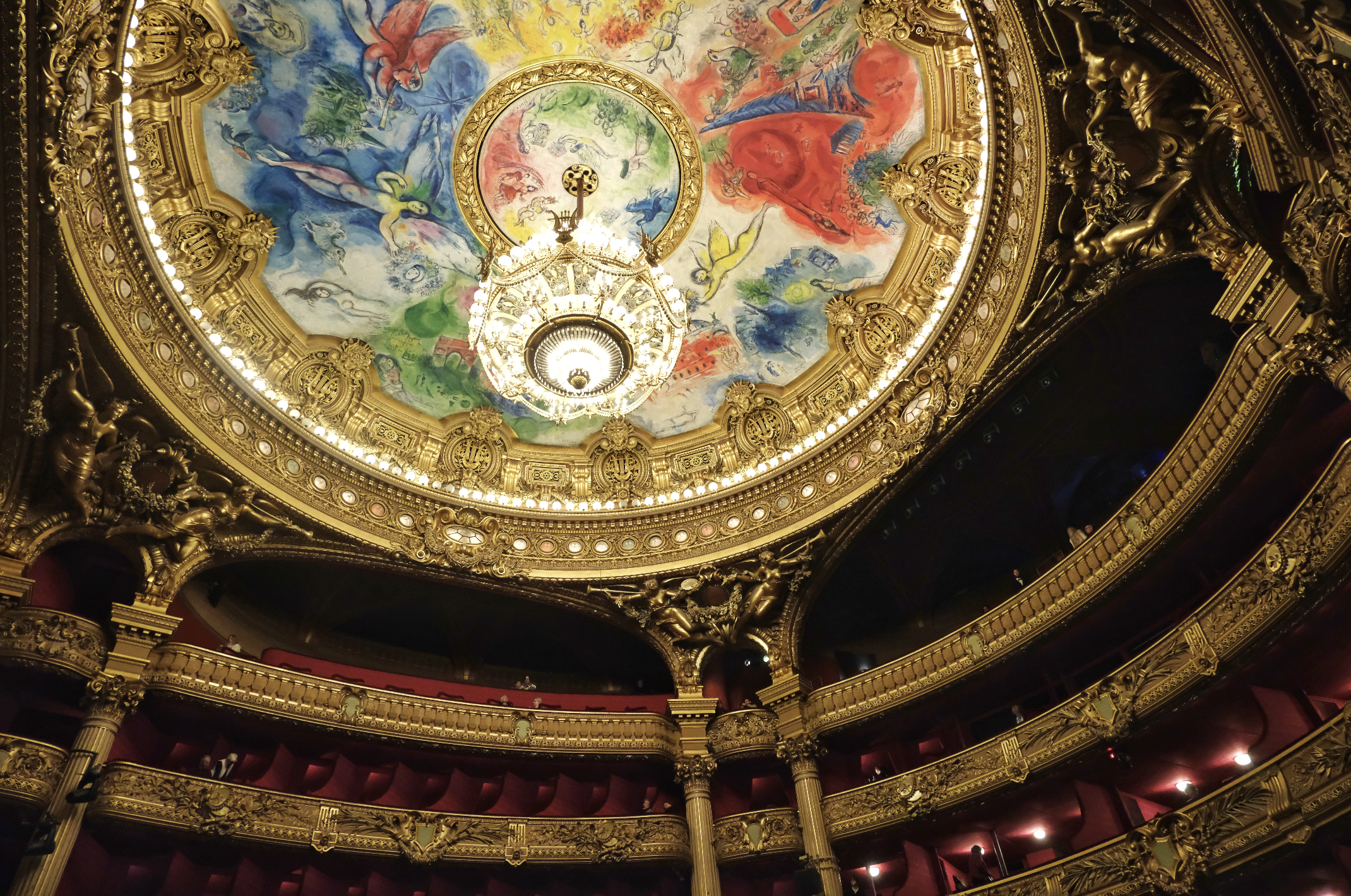
Speaking of transgressions, around this time in the production, a woman sitting two rows in front took out her phone and began texting a friend. She might as well have turned on a floodlight for how discreet she was being. The teacher friend of Anna leaned forward and told her off. She didn't seem to care. A few moments later the phone came out again. That's when the drama shifted from the stage to our section of the Garnier, all the way up in the God's where one was close enough, almost, to lick the 7-tonne central chandelier. A man unknown to us leaned across four seats and forward into the next row and shoved the woman rather violently on the shoulder. No gentle reminder of decorum was this. It was a shove. The phone almost flew from her hands. She then decided to put it away but otherwise did not acknowledge any of the growing disdain around her; she didn't even turn to look at the man who had just assaulted her. It's like she had gone to the opera alone and was surrounded only by ghosts. Or phantoms, if you will.
The more I thought about the opera, even as it unfolded, the more I realised we audience members were not so different from the performers on stage delivering their treatments of ancient human ritual. We had dressed up to be seen, just as the characters on stage used song and dance and plumage to win the eyes and then the hearts of their admirers. That's what birds do, by the way. And that cute little spider that flips its legs up to form a colourful ruff and does a little boogey to woo mates. As the poorer and older women sing at the start of Onegin, noting their lack of love, strictly defined: 'Heaven sends us habit in place of happiness'.
Some habits die hard.
An Important Update From My Sister

Duke is doing amazing with all his new friends.
And yes, I checked, my niece and nephew are also doing very well thank you!