NACC for Misunderstanding

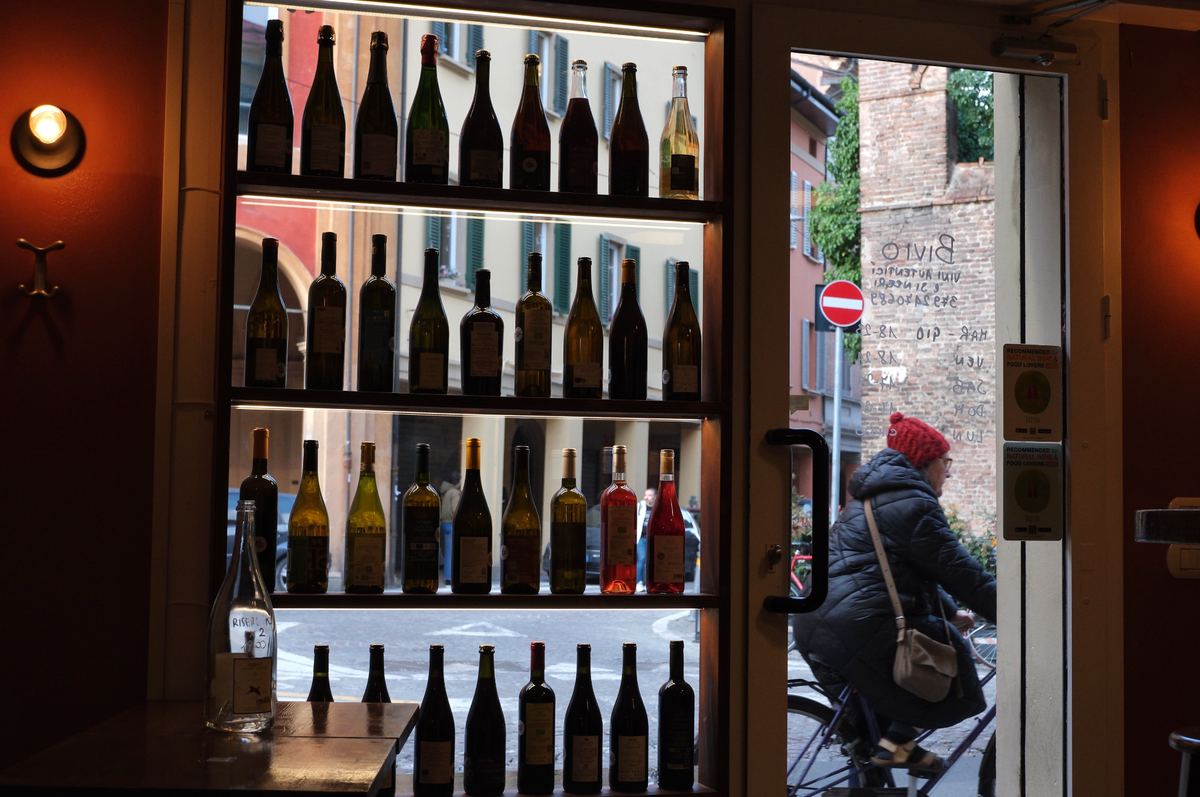
At a tiny natural wine bar in Bologna, a French couple from Paris walked in while I was sat at the counter and struck up a conversation with the Italian server.
'I hate Paris,' he said with a big smile, 'because every time I go there my girlfriend says she's going to leave me for a Frenchman!'
The Parisian man laughed and said: 'You know, it's funny. In France we have a similar saying: Never let the woman you're with meet an Italian man because then you're in trouble.'
Having listened silently to this exchange, I chose this moment to interject.
'You're both the same!' I said.
And they are, historically. Italian might be the second closest surviving language to Latin but French is a descendant, too, and the Italian and French tongues share a lexical crossover of something like 87 per cent, when they're not busy acting as counterweights for the otherwise destructive torsion of speech-related gesture. The essential paradox is that if the French, and especially the Italians, didn't talk as fast as they did they'd all lose balance and careen into walls or oncoming traffic while trying to say hello. They use their tongues like cheetahs use their tails in a high speed hunt, as a sort of rudder angling around in the mouth; a vulgar latin pendulum built solely to allow the perfection of gesture.
Whatever similarities there are between the two people and their flagellate tongues was unfortunately fuck all use to me when I arrived in Milan on Thursday a few days before my birthday. I forgot even the most basic, comically simple Italian phrases and consonant-vowel sound combinations, all of which I had previously learned from the unaccredited community college of Reading Pasta Packet. Things like the hard 'k' for the double-c in orecchiette or that 'ci' becomes 'ch' as in ciao. Or that 'ce' performs a similar task, ending in a 'chay' sound as when the Italian woman at dinner tried to say the English word vice and pronounced it veech-ay.
To be fair to me, my focus was elsewhere and any time I might have spent brushing up before arrival was devoted to the slow crush of an official report.
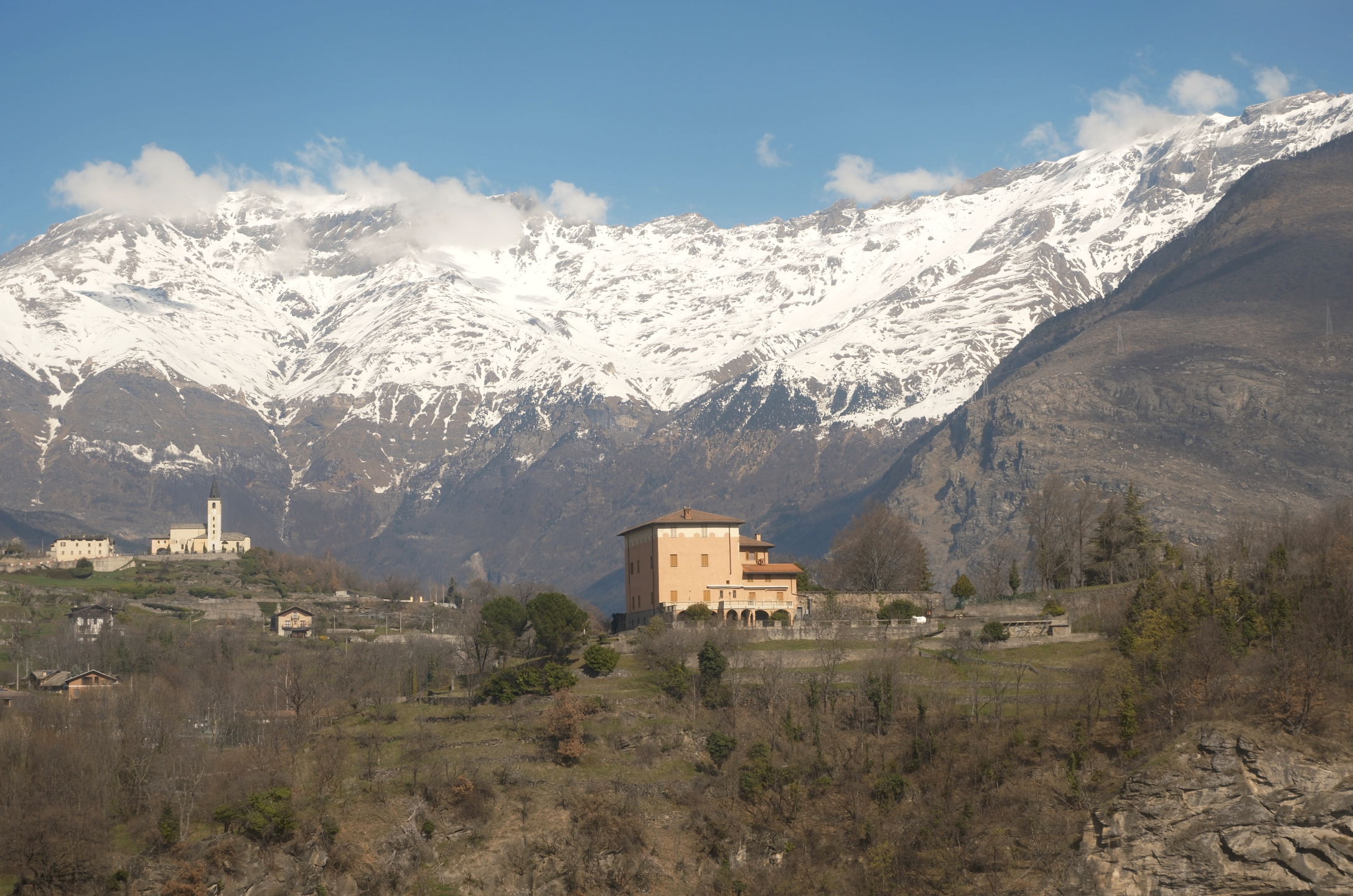
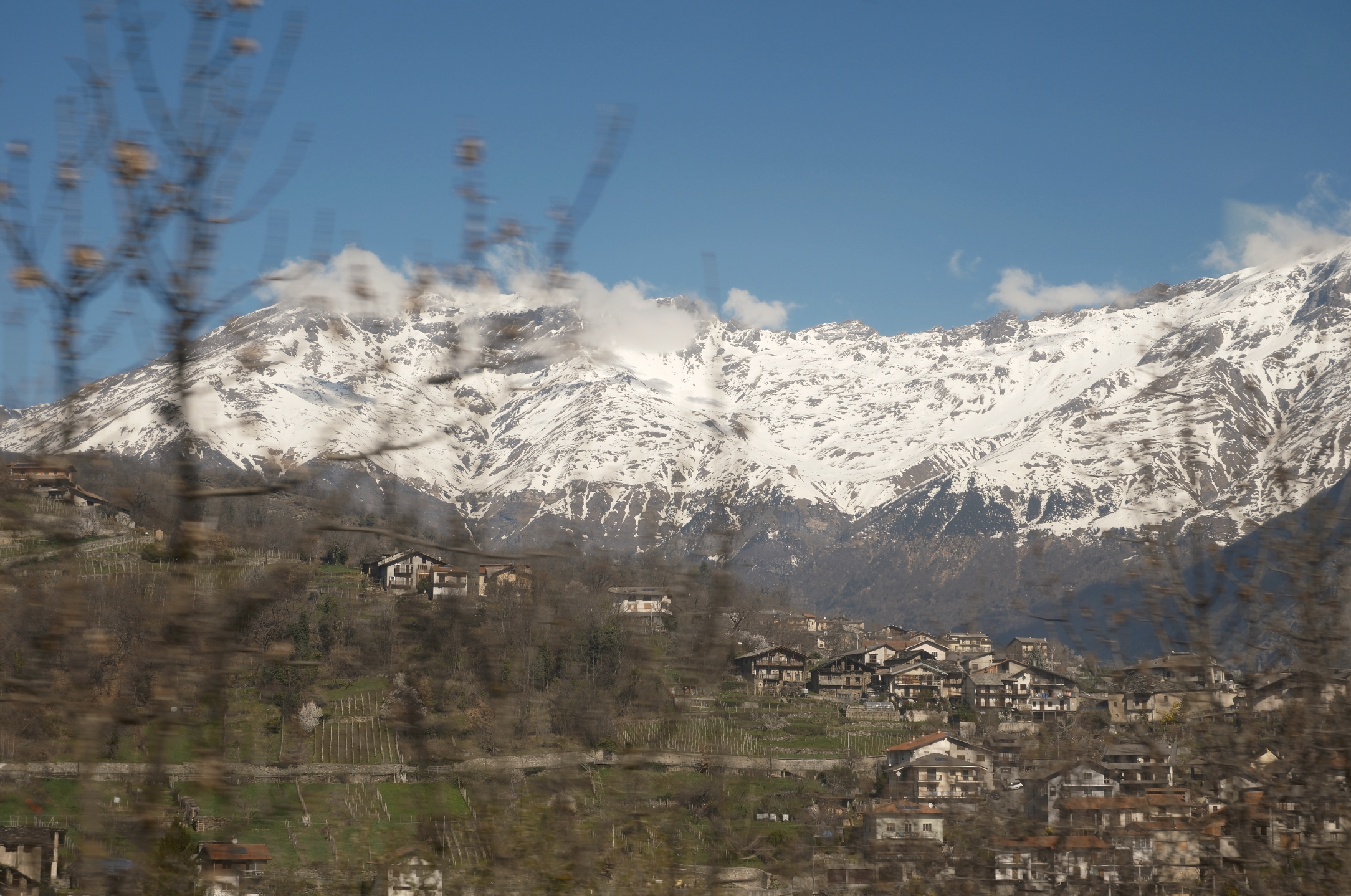
I'd taken the seven-hour fast train from Paris which shoots like a blow dart beyond Lyon and then kind of just putters through the alps for more than half the journey. It was a scandalously clear, blue-sky day the entire way and the scenes that presented themselves around each bend were quite literally sublime. Castles and forts shag-rock sitting on the side of mountains with blanket white peaks behind, the new blooms of spring along the rail siding and through the towns we passed; a man who appeared to take his cat out on to the balcony of his apartment block and point it at the train, as if to introduce the cat to the very concept of train.
Spoiled for choice, we were. Although when a family of pan-European-cross-American origin boarded the train, joining me in my group of four seats, they simply could not get their five-year-old-or-so son to take any notice.
'Look at that,' his Mum said, urging him up from his screen to look out the window at a jagged mountain peak cutting the view in half as the morning sun's rays perforated the wisps of fog behind it.
'What,' he said, looking, apparently unable to see what we were seeing.
Unfortunately for me, it has become clear that I am incapable of taking a train journey anywhere in Europe without it being ruined by some species of administrative or investigative intervention, in the theatre of my interests.
In December, in Strasbourg, it was the Commonwealth Ombudsman releasing its second investigation into a story I'd broken about employment services and last week it was the National Anti Corruption Commission, or NACC, delivering its verdict on the 'Robodebt Six' after a series of unforced errors led to its initial refusal to investigate the robodebt matter being overturned by an independent umpire who suggested the NACC bring in a new independent reviewer to decide whether to investigate the referrals from the royal commission it had just rejected and who, having later decided in the affirmative, could then hand the decision to actually do the investigation back to the NACC's sole remaining survivor from the mismanaged conflicts of interest debacle (because she started after everyone else had already been tainted); a deputy commissioner with a pretty anodyne work history and certainly nothing that even rises halfway to the expertise of former Supreme Court of Queensland chief justice Catherine Holmes.
Phew! If that was a difficult sentence to read imagine how hard it was to write without repeatedly slamming my head in a door.
The 425-page NACC investigation report was released late at night my time and I clocked it literally minutes before falling asleep around midnight. Then, within 15 minutes, came the messages from people asking me to write about it. I had skimmed the findings, read most of the reasons behind them and knew enough by then that to commit to writing about them would be an act of foolishness. I said no. I refused. I went to sleep.
By morning there were half a dozen or so missed calls on my phone and almost as many messages asking for me to talk about the report. I resolved to spend the day in Paris as if it had simply never happened. And a fine edifice of pretend it was! Until the following day, when I had that seven hour train to Milan and, in between those rolling alpine dioramas, I opened the report and read it from start to finish, clipping lines as I went for my research folder. By the time we'd arrived in Milan I had written a 2700-ish word analysis of the thing out of a propulsive kind of obsession. I'm not sure I expected all or even any of the robodebt referrals to be found to have acted corruptly – a hunch based only on the apparent total determination of the NACC to avoid the issue – but what I hadn't bargained for were the reasons that the body would offer in service of that avoidance.
In many respects they are profoundly absurd.
I won't re-litigate my argument here except in summary. And my summary is this: how embarrassing for all involved. The arguments, especially those made for Scott Morrison and Kathryn Campbell but also for former DHS chief counsel Annette Musolino, tax credulity. With my newly resurfaced appreciation for Italian consonant-vowel sounds we might more appropriately refer to the anti-corruption commission as the Chicken Nacciatore or Cacio Nothing of bureaucratic umpiring.
Verily, what is the point of it.
The most stark and troubling passages in the report are those that illuminate a childlike naïveté on the part of its author, deputy commissioner Kylie Kilgour, who was left to decide this investigation on her own but who still works for the recused-but-still-ultimately-her-boss, former Kathryn Campbell army colleague and acquaintance Paul Brereton.
It's as if Kilgour has never met someone committed to doing the wrong thing and thus believes in what she calls the 'inherent probability' in someone like Malisa Golightly, the now dead former deputy secretary under Kathryn Campbell, 'conniving in the deliberate deceit of DSS' simply because of her seniority. Do I really need to spell out how ridiculous this is as a belief by anybody let alone as a belief by a person whose job it is to root out corruption?
By this logic, the CEO of Enron couldn't have been involved in the collapse of the company because he was the big cheese at the very top, and since when did powerful people willingly break the law?
It is this specious reasoning in the NACC report that does two things: it allows a serious corruption finding to be correctly made against Mark Withnell, the general manager who reported to Golightly but who Kilgour finds 'more likely' acted alone in his deception of DSS. So according to Kilgour, at least, there is some kind of invisible line between senior public servants in which one is actually found to have engaged in a deliberate deceit of another agency but another at the very next level above that person and their boss can't even be imagined to have done the wrong thing.
In constructing this reason, the case is then simply made that because Golightly couldn't have done anything wrong than she most certainly didn't involve Kathryn Campbell. Withnell takes the hit, everyone above him is insulated.
This deception by Withnell is then crucial to understanding the NACC's approach to Serena Wilson, the former deputy secretary of the senior policy department, Social Services, who both the royal commission and the corruption agency agree had a meeting with Golightly on or around 25 February 2015 in which Wilson told her DHS counterpart that the 'bottom line' was that 'without legislative
amendment, there could be no change from the way in which income
is calculated for Social Security purposes'.
You cannot both make the argument Campbell does, that in advancing the theoretical line that DSS was the senior department responsible for the brief and New Policy Proposal and make the excuses offered for Mark Withnell by the NACC that he later came to believe the laughably wrong advice of his non-lawyer subordinates even as they collectively rewrote the NPP to remove any reference to the explicit and repeated legal advice provided by DSS in 2015 and the 'bottom line' ultimatum of Serena Wilson. If they were the department responsible for legislative authority, here is the then Department of Human Services ignoring the everlasting fuck out of it. Somehow both of these worlds are true, in the eyes of the NACC.
Wilson is still at fault for her failures, as she should be, by still allowing the clandestine NPP through despite her ultimatum and as the NACC finds:
'In this matter Ms Wilson had, at best, permitted DSS to sleep-walk negligently into acceptance of the DHS view, contrary to the 2014 DSS Legal Advice and without further distinguishing legal advice or any other documented analysis; and, to make matters worse, even after learning of or suspecting the dangers of what had occurred, she did nothing about it for possibly more than a year,' the NACC finds.
True. But in making this finding, the NACC only pins a momentary deception on Withnell, exculpates Golightly and assumes without any evidence that Campbell not only didn't but couldn't have known about the issue despite receiving the same earlier and explicit briefs that acknowledged the need for legislative change and which Marise Payne's own notes record had discussed 'what can we do [without] having to legislate].
The NACC simply doesn't believe this was a command from the senior policy minister Morrison via his junior Marise Payne and leaves it at that.
'There is no evidence that Minister Morrison expressed a preference of that kind and, in his evidence, which I accept, he denied it,' Kilgour says.
Oh very well then, I guess that's that!
OK, I said I wasn't going to re-litigate my argument here but there is just so much that is jaw-dropping about the logic of this report. Similar to the incredulity Kilgour expresses around why Golightly would ever deceive her counterparts, the deputy commissioner can't find even a hypothetical scenario in which Kathryn Campbell might do the same. It's all 'she was too busy' and then this astonishing declaration of porridge brain:
...it is objectively a most unlikely proposition that an already very senior, career public servant with a long and unblemished record of achievement and recognition in both the APS and ADF would so much desire further advancement as to premeditatedly commit the serious criminal offence of deceiving [Expenditure Review Committee] ERC.
It is surely even more unlikely in a case like this where the supposed benefit to be derived from the crime could never have been more than an unprovoked hope that a then junior Cabinet minister of another department would be so gratified by ERC’s adoption of a proposal developed at his request as to determine, and be able, to secure the public servant’s further advancement.
That last in particular is plutonium-grade stupid. I'm sorry, but it is. Because, as I explained in the Crikey piece, that is exactly what happened. It was Morrison who appointed Campbell, to the raised eyebrows of many at the time, to the plum job as Secretary of the Department of Foreign Affairs despite a distinct fear everywhere else that her style of rule would be a disaster, which it in fact turned out to be. I'm not suggesting this was a direct reward for Robodebt. It simply underscores the deficiency of Kylie Kilgour's imagination in her reasons that she apparently cannot conjure the hypothetical of a real-world event that did in fact happen.
Kilgour then goes on to show remarkable imagination in coming up with a scenario in which Campbell didn't kill the $1 million PwC report she had struck up with the consulting company via her association with its senior partner Terry Weber, despite the findings of the Royal Commission and multiple strains of evidence that pointed to her being the one that canned it.
I won't go on and on about it (he says, having gone on and on about it) and I do so again here not to make the case that Kilgour is acting out of ill intent but to establish, I think, that the NACC is an expensive exercise in lickspittle. Its construction, largely solid legislatively except for a spineless capitulation to private hearings by default – we didn't even get any public ones for robodebt, in a matter where the corruption umpire veered significantly off course from the royal commission, which was their main argument for not holding any – is no match for the profoundly neutering effects of its staffing.
The almost singular purpose of this corruption body, to serve as a warning to officials who might do the wrong thing with the very real power vested in their roles, serves no such actual function. Instead of clarity, it offers confusion. Where the beacon of accountability should flare, it flickers. What knowledge of corruption we might make out comes only from squinting, looking for clues in an agency that appears to regard the digestive tract of hierarchy as all middle intestine; no guts and no arsehole.
In the end we get a process that regurgitates the worst of the excuses and petty shunting within public office and makes us eat it again, all the while, mouths still full with this slop, we are told to say thank you.
Addenda
Bologna
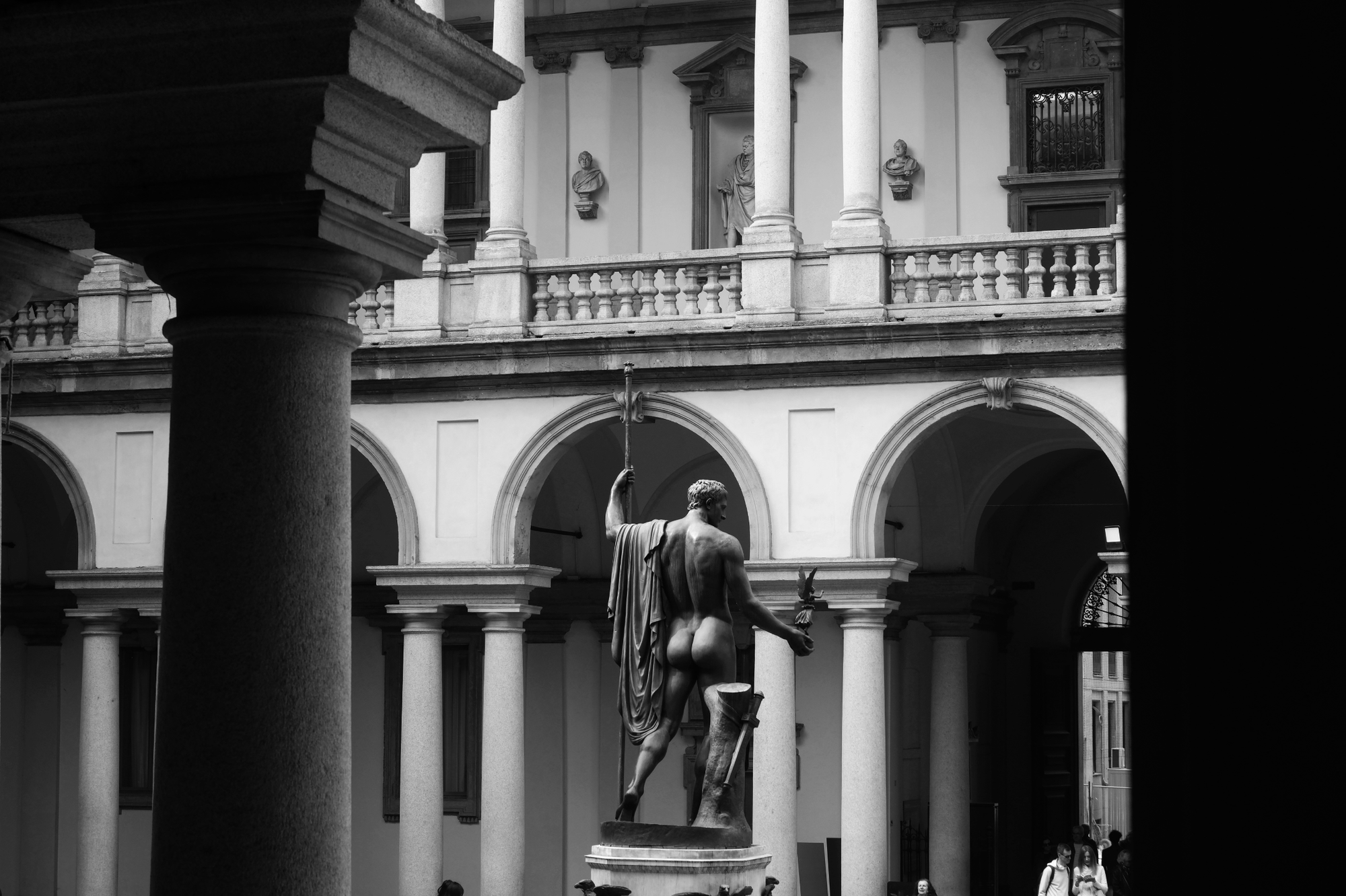
As per the above, I spent almost a week in Italy recently. I turned 39 in Bologna which makes this the last year of my thirties. I had planned on holding drinks in Paris with the surprising number of friends and new faces that I have met in the past nine months but the closer my actual birthday approached, the less interested I was in holding any event in my name. Maybe next year for the big one.
I always get depressed around my birthday and believe I am far from alone in this phenomenon. Rather than grow up, I did what I have always done and retreat into myself to spend some time alone. It was nice, though. I ate five or six different servings just of of tagliatelle al ragù as well as other local specialties like tortellini con brodo and the best two slices of margherita pizza I've ever had in my life. Further, I pledged my allegiances to one particular serving of tiramisu the size of my head, panna cotta and more than two dozen frittelle di riso e uvetta or sweet rice cakes with lemon zest that are traditionally popular in Bologna during Lent.
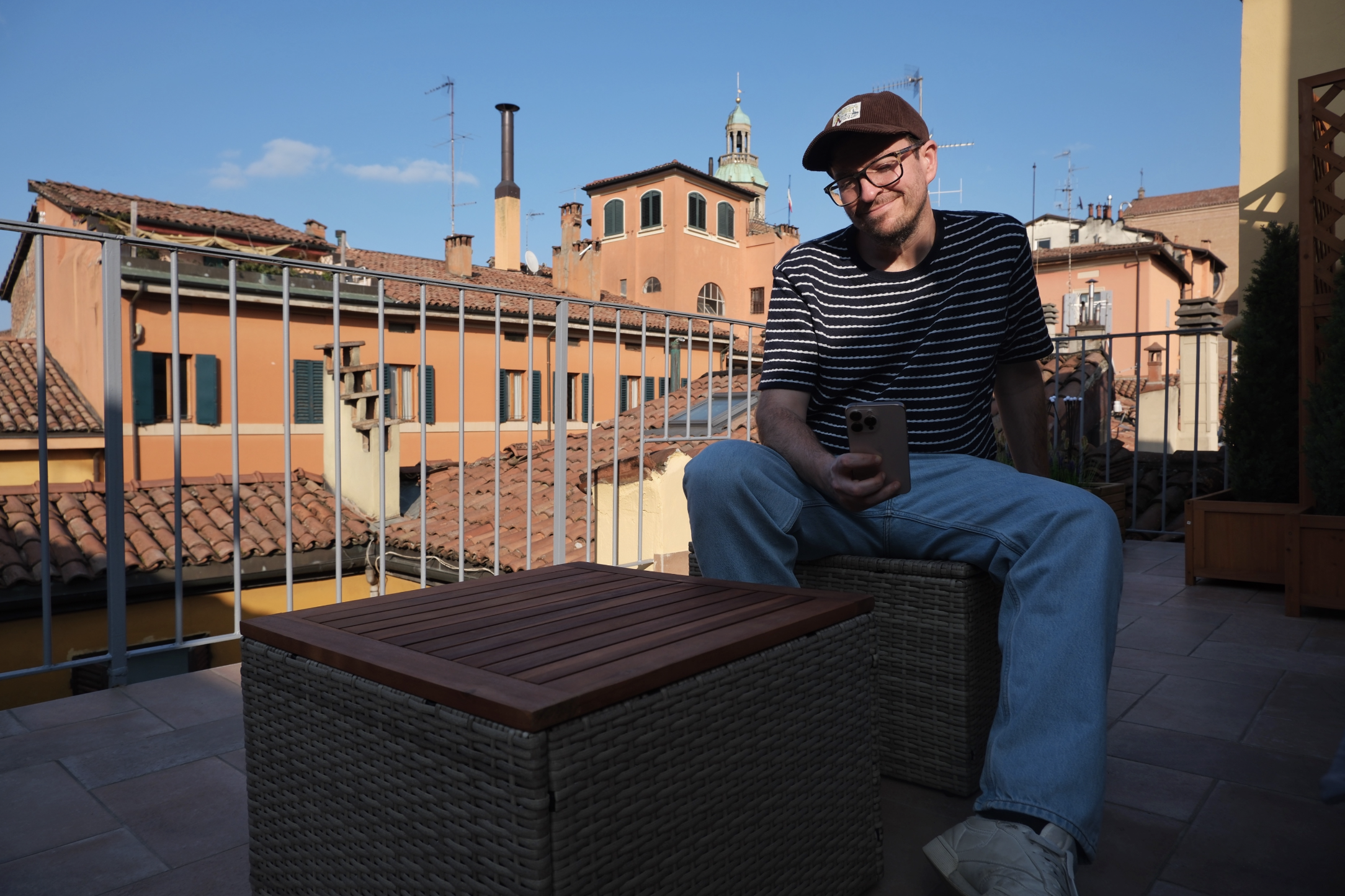
The Lord's work it was not, though the experience was supremely spiritual.
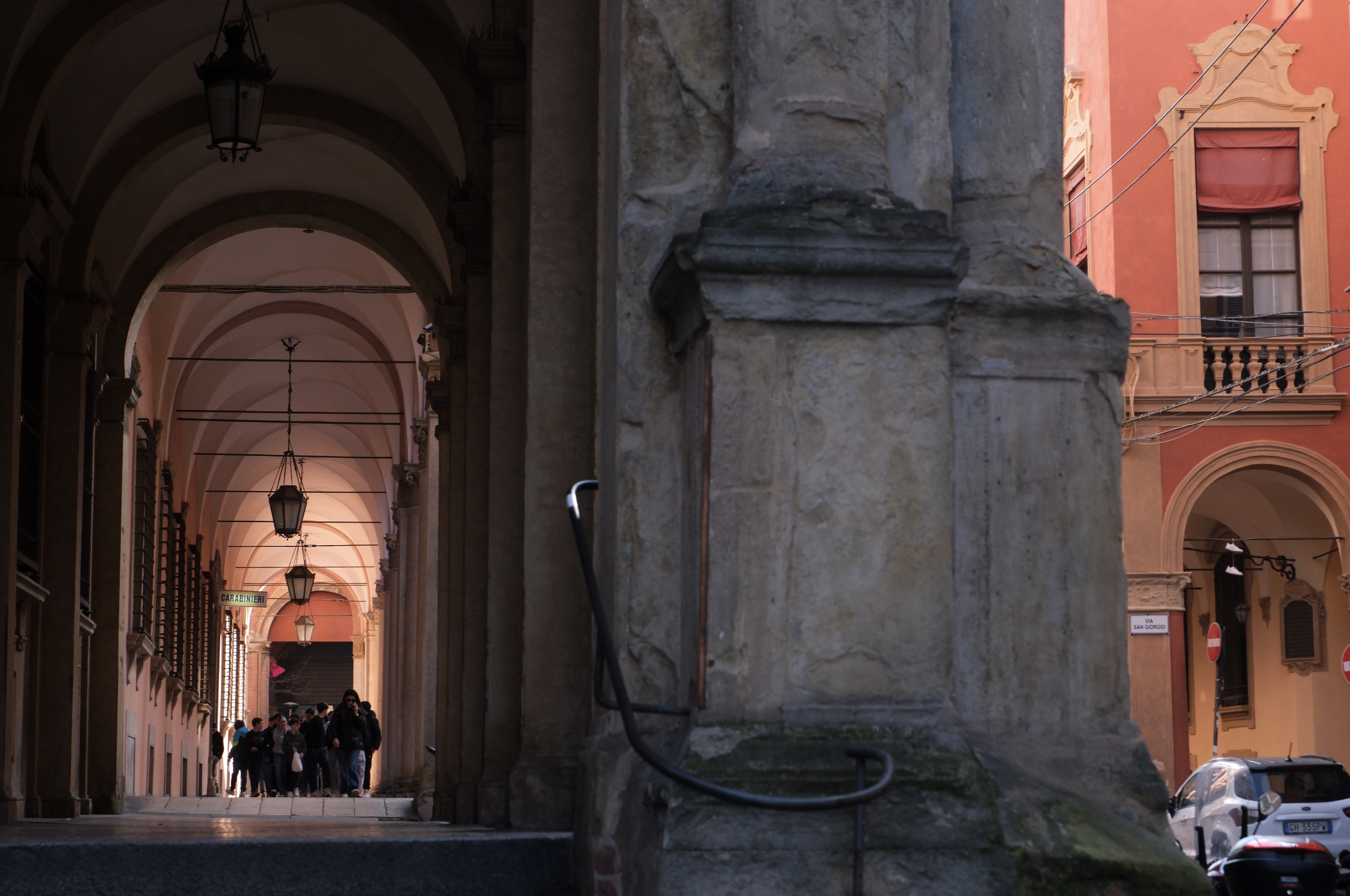
I deliberately chose Bologna because of the food and also because I didn't want to do anything particularly full-on tourist wise. My ideal getaway is to transport my routine somewhere else. And in Italy, my afternoon naps were basically a form of naturalisation. I did, however, walk up the 3.6km of world heritage listed and unbroken portico from the edge of Bologna to the basilica perched on the hill above town, the Santuario della Beata Vergine di San Luca. The porticoes were built from the late 1600s and finished a century later, while the basilica itself was completed in 1765 after a holy presence on the site dating back at least to 1194.
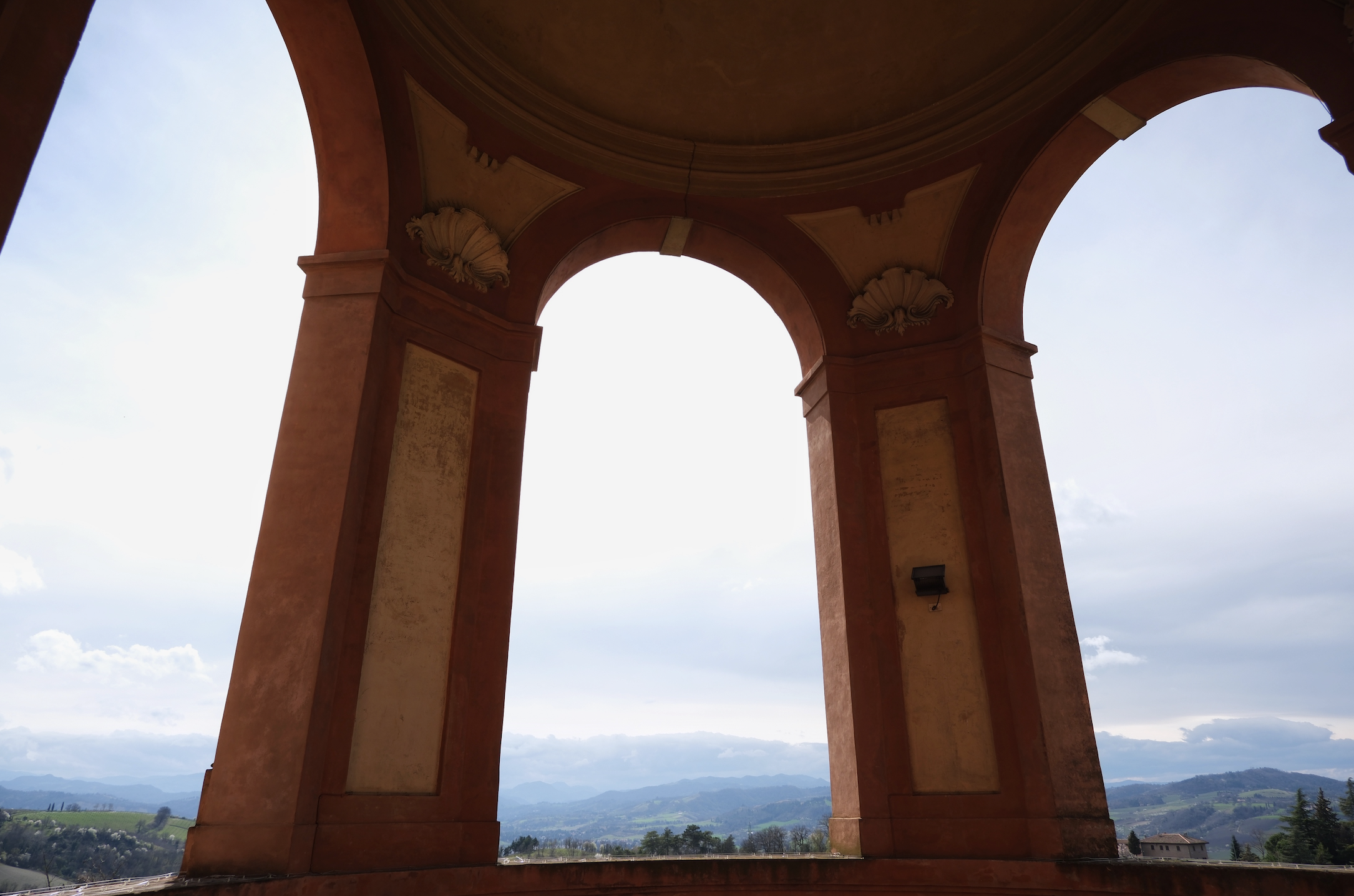
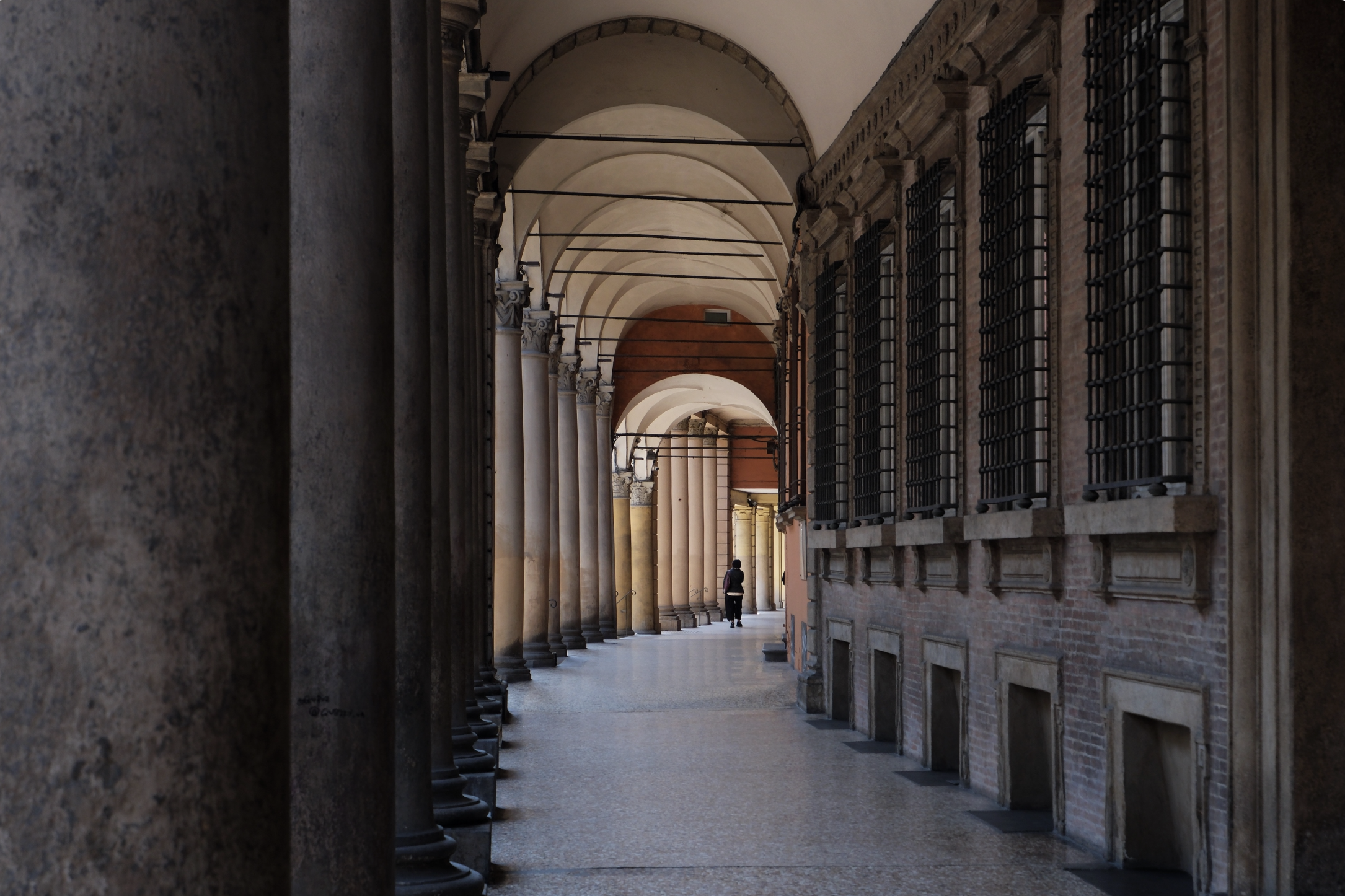
Here in particular the disappearing sight lines of porticoes that thread through the streets of Bologna and its surrounds were stark. The passageways shrank to a point in the distance and curled around corners before being lost to the eye and rediscovered only after another 500 steps, the pattern repeating itself over and over for kilometres. Sensational.
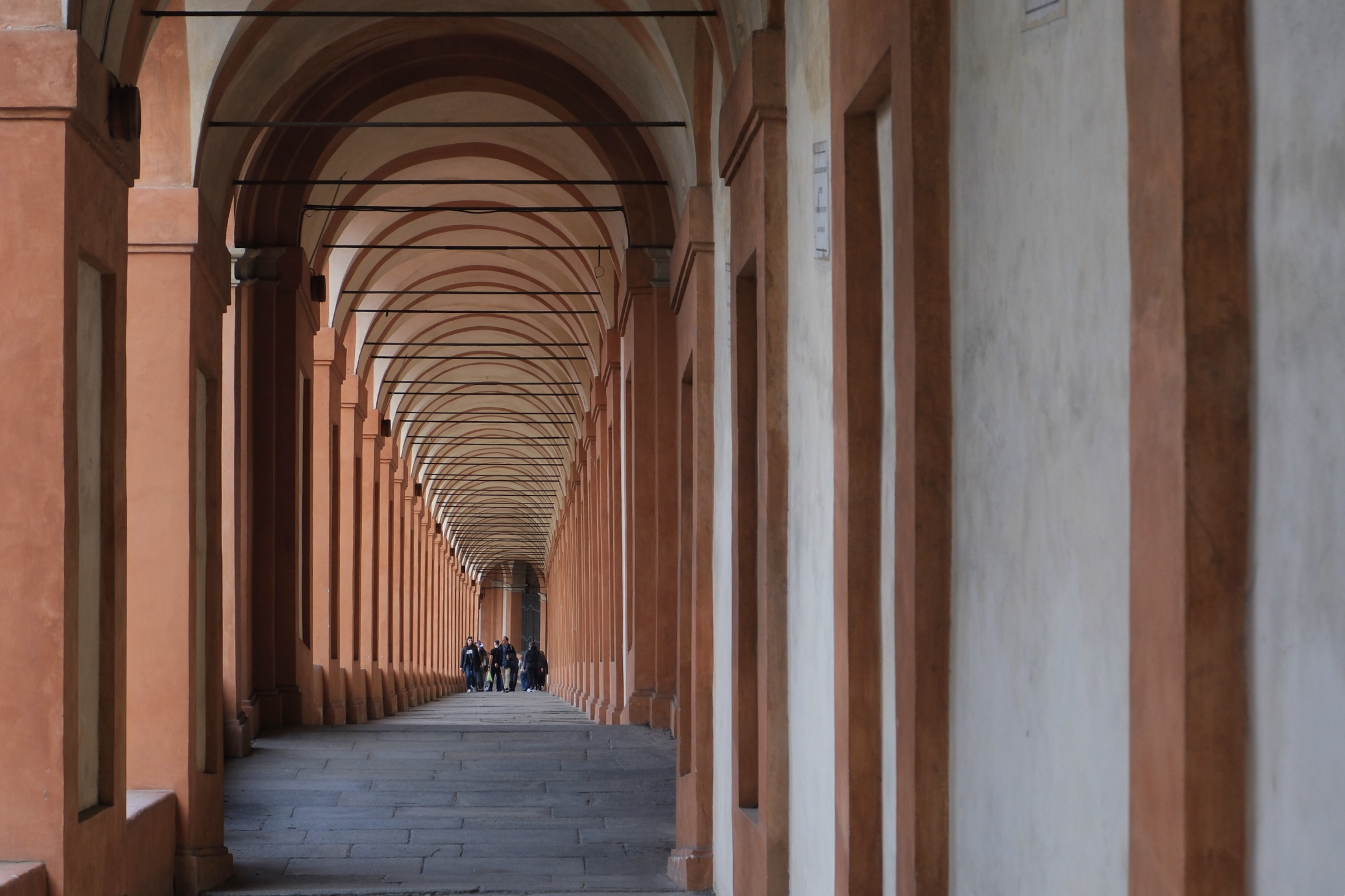
On the way back down I overheard some American man turn to his wife and say, without a shred of humour: 'You know, if they'd had access to this they might have discovered perspective a hell of a lot sooner than they did'.
Painters and artists, I presume he meant. I chuckled as I zoomed down the path, and thought: they still had the horizon!
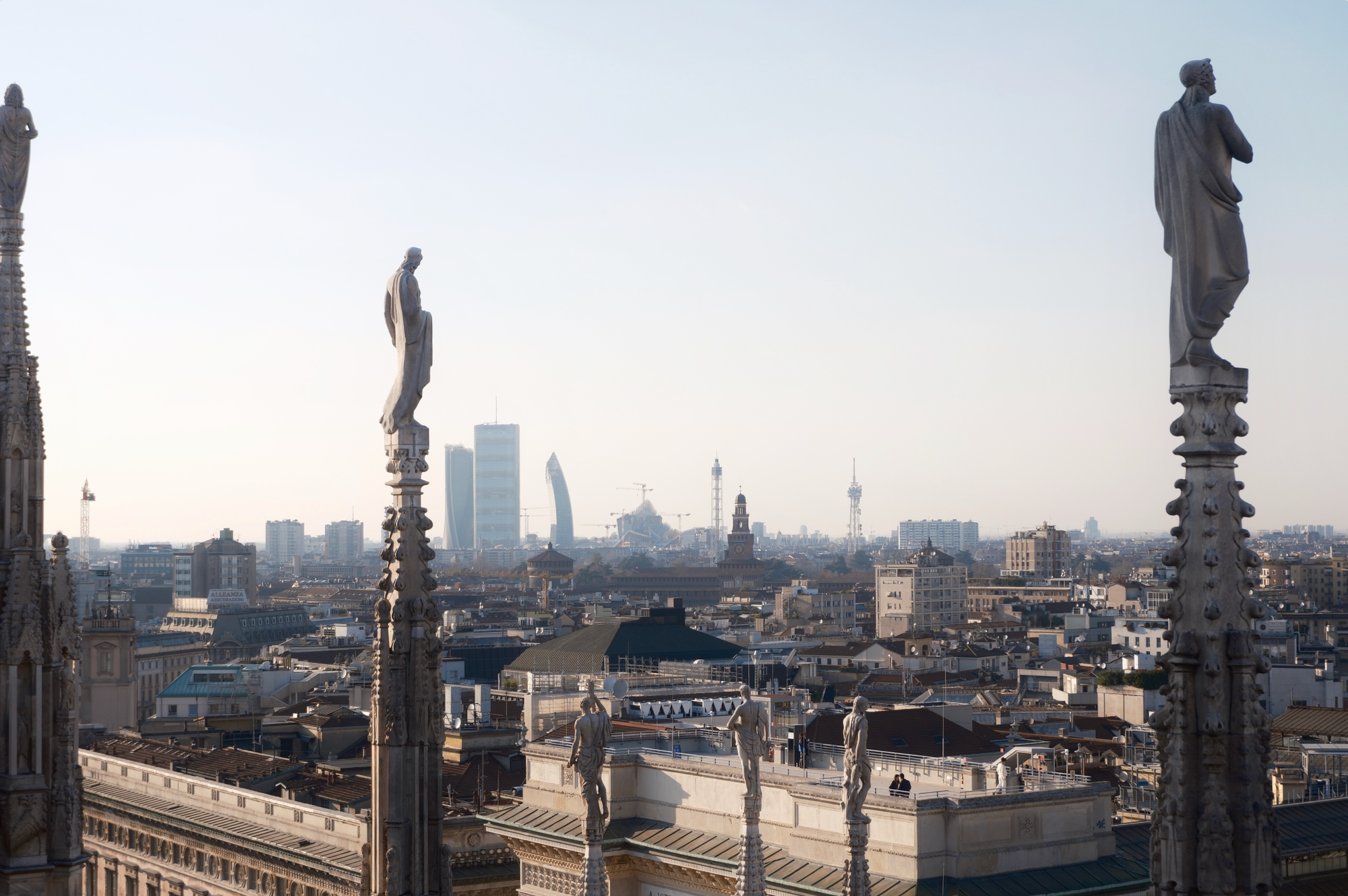
Jurassic Parked
I watched the world's best movie, Jurassic Park, for the first time at the age of seven or eight and have spent the remaining three decades converting my mother, then my friends, then my colleagues, my therapist(s), home removalists and other captive audiences to the virtues of the perfect film. None of these matter as much to me, however, as the next generation. As a now 39-year-old, the wait to be a fake uncle (and then later, a real uncle) and then the wait for the kids to be as old as I was when I first saw Jurassic Park has been long and difficult. When my best pal Bridie had her first son, H, I was of course first taken by the miracle of realising what it meant to love another human being so totally. It was instant, the moment I first met him at a few weeks' old. And then, very soon after that, I said: 'I can't wait until he is old enough to watch Jurassic Park with me'. That was eight years ago.
At the weekend, the time had finally come. I caught the Eurostar to London where Bridie and her family have just moved and we decided that Friday night was going to be the night. H is eight and his younger brother C is five. Perhaps C is a bit younger than ideal but he is also a little weapon who could survive a nuclear winter and end up leading a band of post-apocalyptic hunter-scavengers toward a final human epoch. So he's fine. Or so I believed.
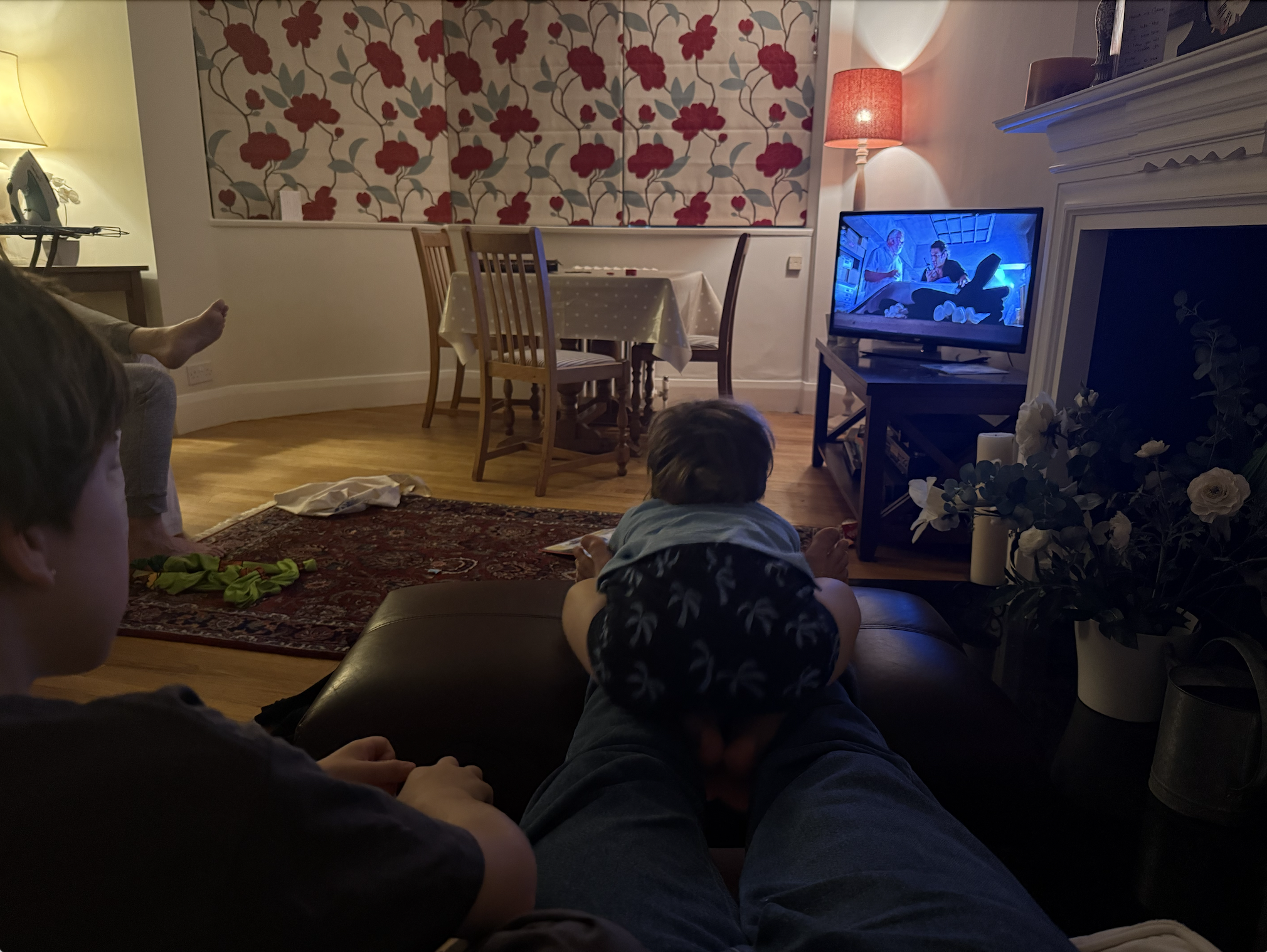
They saw the brachiosaurus and were in awe, as is right and just. Unfortunately by the time the tyrannosaurus-rex had escaped its paddock and attacked the visitor's vehicles in the storm the children were in open revolt. Just a fraction of a moment after the t-rex had eaten Gennaro from atop a toilet, H turned to me in horror and yelled: 'How is this your favourite movie!?' Not to be outdone, his brother C stood up, turned to face me and pointed at the TV while exclaiming: 'You like this!?'
I made things worse by telling H that the man snatched by the t-rex from the toilet was 'only a lawyer' which he did not seem to find funny at all. Then we had to turn it off and wait a night before finishing the movie on Saturday.
Their opinion of the movie did not change. My opinion of them did.
Known Mortal Orchestra
If you ever wonder why this newsletter is so long between editions, it's because I try very hard to write it properly in between work and other commitments and then also in between life. Par example: on Tuesday night, having very nearly finished writing this update, I made dinner at home in Paris and was ducking out the door with my laptop on the way to my favourite local bistro to have a glass of wine and knock over the rest of this update. Then my phone rang.
It was Ella, a barista at my local cafe.
'What are you doing tonight,' she said.
'Um, I'm about to go get a wine,' I said.
'Want to go to a concert?'
She didn't tell me who or what, only that it was at a venue nearby called Le Trianon and that the band had stopped by the cafe earlier that day and invited the two baristas who made them coffee to the gig. A slightly older version of myself would have said absolutely not. Accepting extremely last minute plans after I've made dinner and bet on a quiet night is not a natural gift of mine. Indeed, it is a singular burden. I imagine I'd have done rather poorly in spontaneous environments like improv or whoever has the job, in a clanking symphony of industrial fervour, of opening and closing all the steam vents inside Bob Katter to regulate his moods.
In any event, I said, sure! Why not! Only later, over a wine before the gig, did Ella tell me the band was Unknown Mortal Orchestra who, unusually for me as I have the music knowledge of an inkjet printer, I had not only heard of but also recorded one of my favourite songs, Multi Love and one of my favourite covers of a song, the same one done by The Temper Trap.
Moreover, the concert was held inside Le Trianon (readers of my Versailles update: yes, another Trianon) which is a gorgeous venue from the belle époque that was a real pleasure to visit.
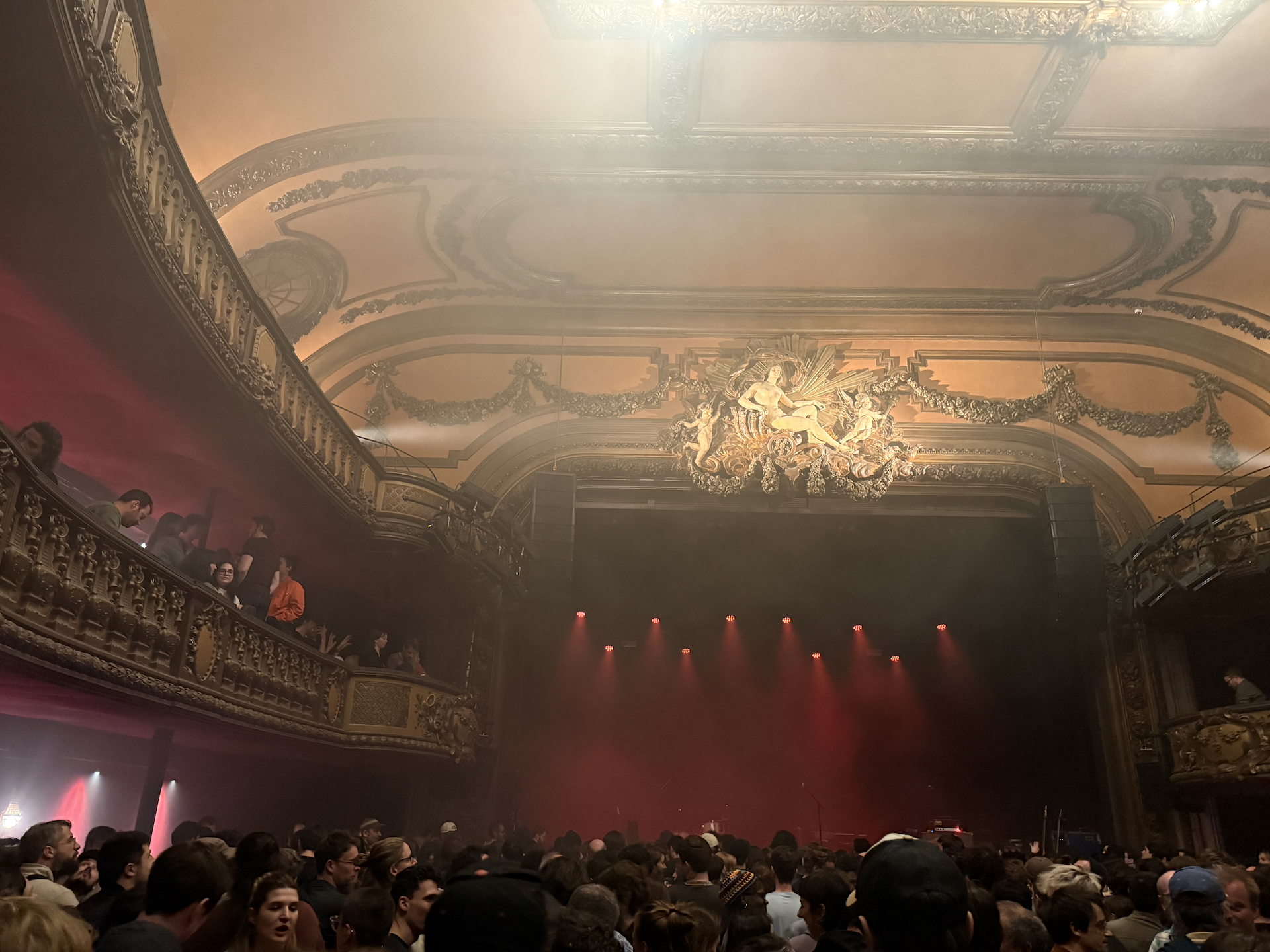
When we arrived, Ella went up to the ticket desk and said we had been added to the list for the evening concert. The lovely young chap there, apparently just collecting statistics, asked: Who invited you? And Ella, in French, said: ahhhhh, I don't know, the band? And in we went.
UMO opened with my favourite song and the entire set was a real marvel.
Here's to saying yes.