Immoral Rearmament


That terminated Department of Home Affairs secretary Michael Pezzullo thirsts for war quite as desperately as he does is confusing for, however much he fancies himself the master of whispers and strategy, the disgraced public servant has neither the stature nor the cunning to survive one.
At a glance it may seem he has, at the very least, the sheer mongrel to get by in a world stripped of resources and institutional scaffolding, flush with enemy combatants and absent the usual protections of peacetime. By which I do not mean war but an Australian Public Service Commission investigation into his years’ long campaign of influence with Coalition party hacks that spanned 1400 text messages.
It’s true, though, that he has survived this in one sense. The Pezzullo name still pops up periodically, quite inexplicably in a range of newspapers on a narrow range of issues as if he hadn’t already presided over the atrophy of capability in a department that nevertheless received so much money from an adoring government.
Yeah, let’s talk to that guy!
Rolling Pezzullo out to talk about some grand, intellectual theory of conflict is embarrassing for all concerned. Here is a man who so fundamentally misunderstands his role in the world and he’s giving advice? That’s real ‘dog terrified of vacuum cleaner put in charge of a Godfrey’s’ territory. We’d gain at least the same insights if so scared a dog was given a copy of Sun Tzu’s Art of War and asked to formulate some aphorisms about battle with the enemy.
'If you wait by the river long enough the bodies of your Dysons will float by,’ Dog Tzu says. Or: ‘Beware the mechanical howl of the enemy, for it troubles morale’.
Et cetera.
Pezzullo is now a part-time columnist with The Australian which, again, is a way of surviving the privations of the APSC code of conduct investigation but is itself no great feat of strategy or planning. Much as it hates unions, the op-ed pages of the national broadsheet are akin to a professional membership, not for people who sell their labour – there is no great effort involved in re-producing the same Bob Gottliebsen column every week and therefore no labour to speak of – but for those who have been ejected from various forms of more polite society and, for want of having somewhere to sleep, a bit of bread and some watery tea, have wound up in the intellectual Poor House for as long as they’re willing to clean the shitter.

Which brings me to Pezzullo’s most recent contribution to the national discussion: a call for a 'moral rearmament' so that Australians learn that war is sometimes necessary which he timed for Anzac Day in a direct salvo against all the dignitaries who, he said, would be telling everyone at dawn services that war is terrible and must never happen again.
Five years ago I set out to explain this to the staff of the Department of Home Affairs in an Anzac Day message when I was serving as a departmental secretary. It was a public service staff message that gained an unexpected level of notoriety and global attention. I was criticised and counselled (not that I cared much). Today, with the world at war, that message reads prophetically.
While he claims to hear the 'beating of the drums of war', I suspect this is merely a particularly aggressive case of tinnitus. Certainly it was not prophetic in any meaningful way. He was referring, in 2021, to the possibility of war in the Indo-Pacific and lauded the 'protection' afforded Australia through its military ties with the United States of America.
[Tugs collar] Anyway.
The spirit medium is picking up on a voice, someone who was very close to you, a friend or a relative perhaps? Yes, yes, they had a name. Whatever name you're thinking.
Having predicted, more or less, war with China, America at our backs, we instead got a war on oil supply and whatever the fuck Israel is doing in multiple countries all at once.
To be fair, if I was invited into a home decorated like this I would 100 per cent assume it belonged to a clairvoyant from late night television.

Michael Pezzullo is the national security equivalent of one of those old white dogs with crusty pink eyes that have ranged across their owner’s quarter-acre block for 17 or more years with unprovoked paranoia, suspicion and the mystifying reassurances from said owner that they are, in fact, loved. Of course the little dog knows much of war, for he has always been at war; with the postwoman, the meter reader, the extended family and even nothing at all, with the very suggestion of a discordant note — the off-key and almost inaudible squeak of a lampshade, or the same old noises that have always been there, rendered afresh each evening by a form of quotidian dementia — and all for nought.
The thing about these dogs, and specifically these little white ones, is that they almost always die in their sleep, untroubled in practice by any of their overbearing fears and anxieties. They slip away peacefully, after a lifetime of war, having grown fat and docile in the staging ground of their estate, never once having tasted the conflict that drove them senseless. Or else they get hit by a car.
But I digress.
I think what I find most disqualifying about this dweeb is that during his time running the Department of Home Affairs and its antecedents, the department was such a hot, dense mess that astronomers had to classify it as a super-clusterfuck.
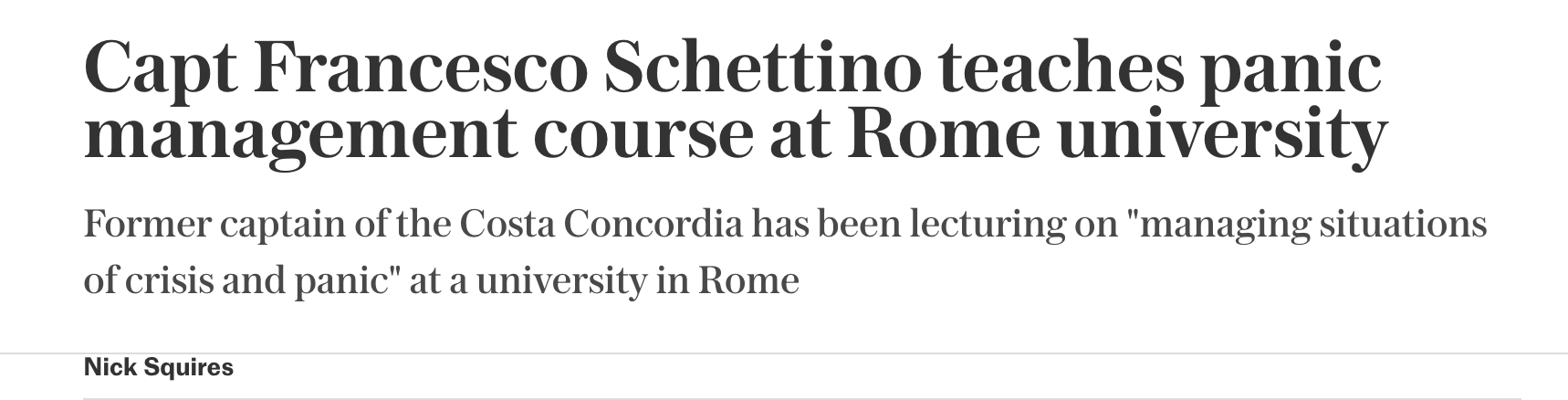
Imagine, if you will, the captain of the Costa Concordia escaping prematurely from his lopsided failure while passengers and crew were dying only to give a lecture two years later, apparently in complete earnestness, about the 'panic management' during a crisis.
Between him and Kathryn Campbell we’ve seen inside the brains of this class of senior public servant and, folks, it’s like one of those old film photos that purport to show a ghost in a hallway but no matter how much you squint it just looks like some kind of fraudulent smudge, a trick of the light at best. To the extent that either have ever been praised for their genius it is a political genius, though even Pezzullo falls short on this score. Victories at court are not, as it turns out, easily mapped to the day-to-day of, you know, running a department well.
Pezzullo was once, somewhat briefly, a deputy secretary of the Department of Defence but he was procured, as I understand it, during a particularly dark time in Defence procurement [a time that spans, roughly, from the establishment of the department to the present day] when the shiny buttons there kept buying helicopters that couldn’t fly in the rain or offshore patrol boats that couldn’t patrol offshore or, get this, submarines that were in fact very rarely submerged. By which I mean, we should rescind whatever Thales or Lockheed Martin contract produced this useless unit and offload him to somebody unsuspecting.
Although I guess that is what happens with most other defence tech judged past its use-by-date by a bigger power: it just gets hawked to the Australian(s).
Addenda
Craig Silvey Pleads Guilty
When the author Craig Silvey was arrested and charged with possession and distribution of child sexual abuse material at the start of this year my immediate reaction was a strange, visceral shame at having ever been associated with the guy. I'd interviewed him twice, as authors are often asked to do, at two different writers' festivals. As has been noted frequently since, his books almost universally locate their narratives at the pain of an abused child. Fiction is fiction but with the benefit of knowing what we now know it is impossible not to look at this work without the grotesque understanding that this was some form of living fantasy for him. He's now plead guilty to the charges, although another two have been dropped. One of the dropped charges alleged he was involved in producing child sexual abuse material in 2022.
It feels far too convenient to say this now but on the one occasion I met the man in person, at Adelaide Writers' Week, there was something cold and empty in his gaze. Naturally, I felt most upset for the victims and his wife and children at this news but there was, and remains, a sense of personal shock, almost of guilt, at the complicity-by-association that predators like this always build into their sick projects.
The Australian letters scene, being what it is, almost immediately took great glee in declaring that his books were never very good anyway. Who gives a shit? I mean, really. It changes nothing. What it does do, in my naive mind I suppose, is make me wonder what kind of person thinks child abuse is a great launching pad for some literary criticism. Look, I love literary criticism. It's a fucken skill. But come on! Read the books, read the room.
I've little else to say on the subject of the offending because it all feels so obvious.
Hellenic Panic
I popped over to Greece for the long weekend, which is something one can do from Paris. Not by train, unfortunately, but a flight only slightly longer than the drive from my hometown to Dalby before all the bypasses got put in (which is to say, the drive I remember as a kid, the distance it will forever be in my mind, no matter how many upgrades are done).
A friend of mine from Australia, Matt, who happens to be Hellenic and fluent in Greek, suggested I head to Athens to discover the delights of a civilisation that gave us democracy and the better part of Melbourne. A local guide, great food and fine weather? Sign me up!
On April 30, when I arrived in the late afternoon, it was 25C and the taxi driver who took me from the airport into Athens asked if I smoked which, in Europe, I do. We each lit a cigarette, he gave me the rest of his packet of Karelia Blues and we drove into the white hot expanse of Athens as the highway curled around the mountains and occasionally fell away to sweeping views of the city. The sun was getting low in the sky, I had drinks lined up, life was good.
The following day happened to be the coldest May day recorded in Athens in 70 years. And it really was cold. Miserable, even. The wind was bitter. The next day wasn't much better. What I got in return, however, was a remarkable story from Matt's friend in Athens, Vassillios, who told me about an unfolding Greek scandal relating to the wide-scale fraud of an EU agricultural subsidy that had been blocked from proper investigation by the ruling party in the Greek parliament which has now voted to lift immunity granted to lawmakers suspected of being involved in the fraud, including a former agriculture minister and his deputy, which would allow the EU prosecution team to actually adduce evidence for or against the credible theories furnished by their ongoing inquiries, which include phone recordings. Without the vote to lift immunity, the EU coudn't even properly investigate.
The story is one of the oldest ones going, at its core, which is fitting for a nation whose parliament looks out over the Acropolis and its crowning 2500-year-old Parthenon. EU offers subsidies to farmers, subsidies get rorted, parts of Greece experience an entirely artificial agricultural boom that includes claims for livestock grazing on ancient monuments and archaeological sites, olive trees on military installations a banana plantation on Mount Olympus.
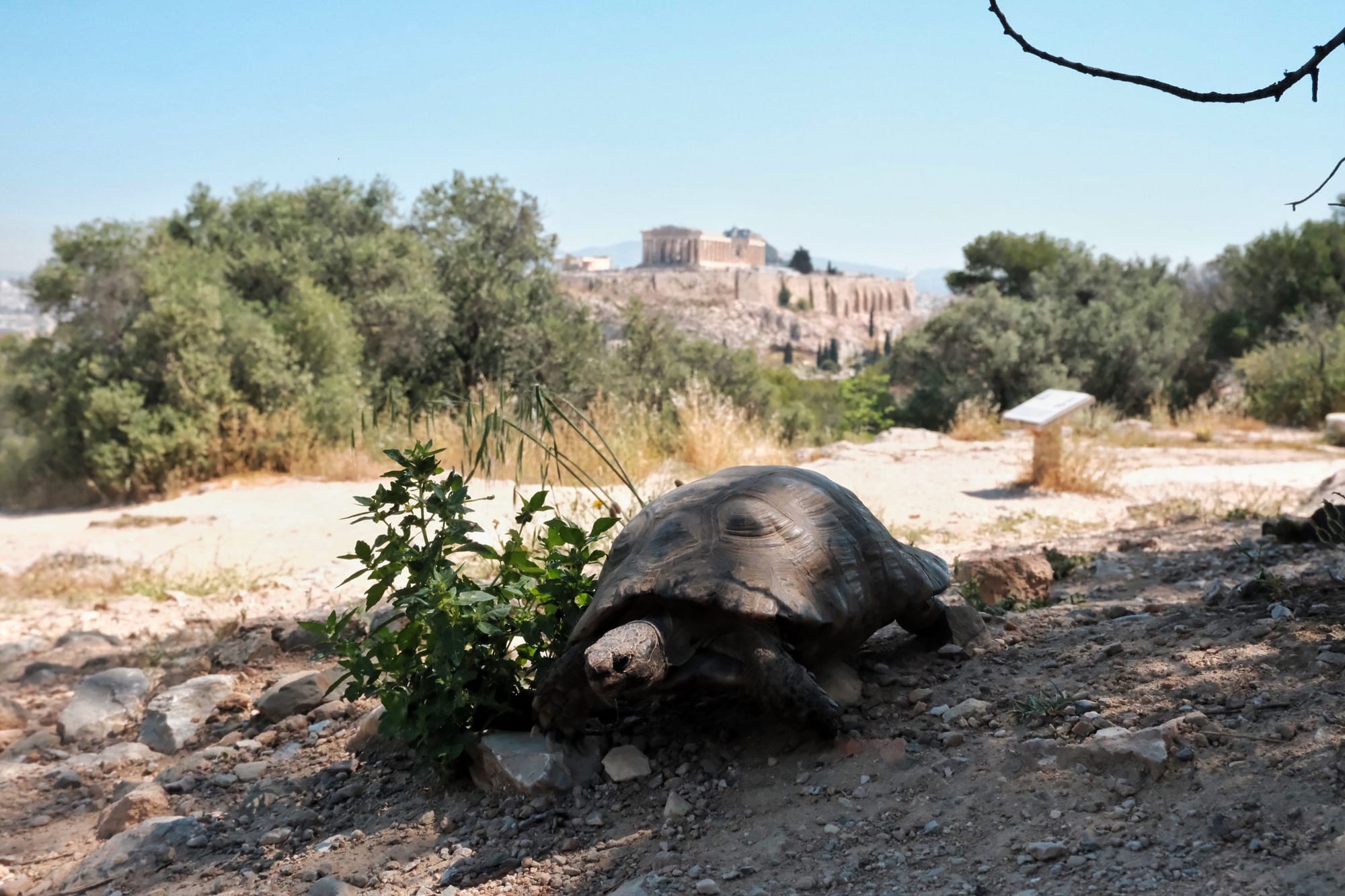
As Vassillios told me: 'Something like 160 per cent of the land area of Crete was registered as agricultural land'.
Ah, this kind of maths brings back memories of other government scandals.
About 80 per cent of all the farm subsidies claimed by Greece were claimed for Crete, which Le Monde notes is where the family of the country's Prime Minister Kyriakos Mitsotakis 'has been politically influential for over a century'. Mitsotakis denies any knowledge and says the fraud pre-dates his time. In any event:
According to Greek authorities, approximately 80% of subsidies for pastures granted from 2017 to 2020 ended up in Crete. Moreover, while the number of livestock farmers in Greece is decreasing, 13,000 new farmers were registered in Crete between 2019 and 2025. The number of declared sheep and goats doubled over the same period.
As Vassillios told me over drinks, there were farmers – or 'farmers' – driving porches and other luxury cars in the regions, flat out refusing to answer questions from the EU prosecutor over where the money came from for such extravagant transport.
Anyway, the scandal grinds on. And the sun came out!
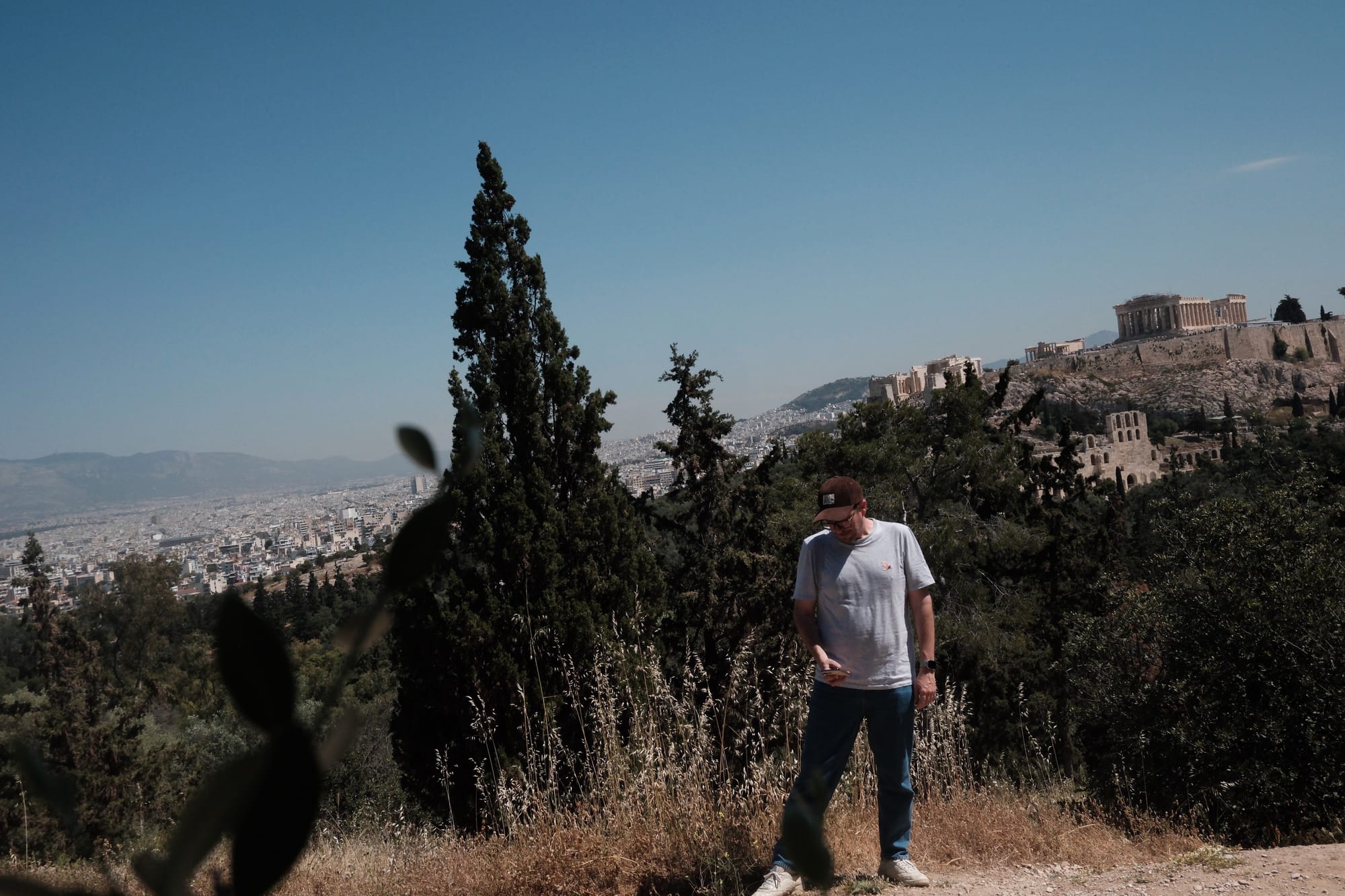
I won't bore you with the travelogue except to pop some of my favourite photos in here. Especially of Hydra, which I thought might be a little bit of a tourist trap and which was, instead, among the most beautiful things I have ever seen in my life. Matt was right that Athens, a glorious and chaotic city, makes the peacefulness of Hydra even more astounding. No cars, no bikes and, in early May, not all that many tourists. I walked for hours out of town and sometimes had entire stretches of the coastline to myself. It was so quiet and the wildflowers were out. Poppies I recognised. The others were yellow, purple, blue (?), white and additional shades of reds and pinks. I do not know their names. Equally, they do not know mine.
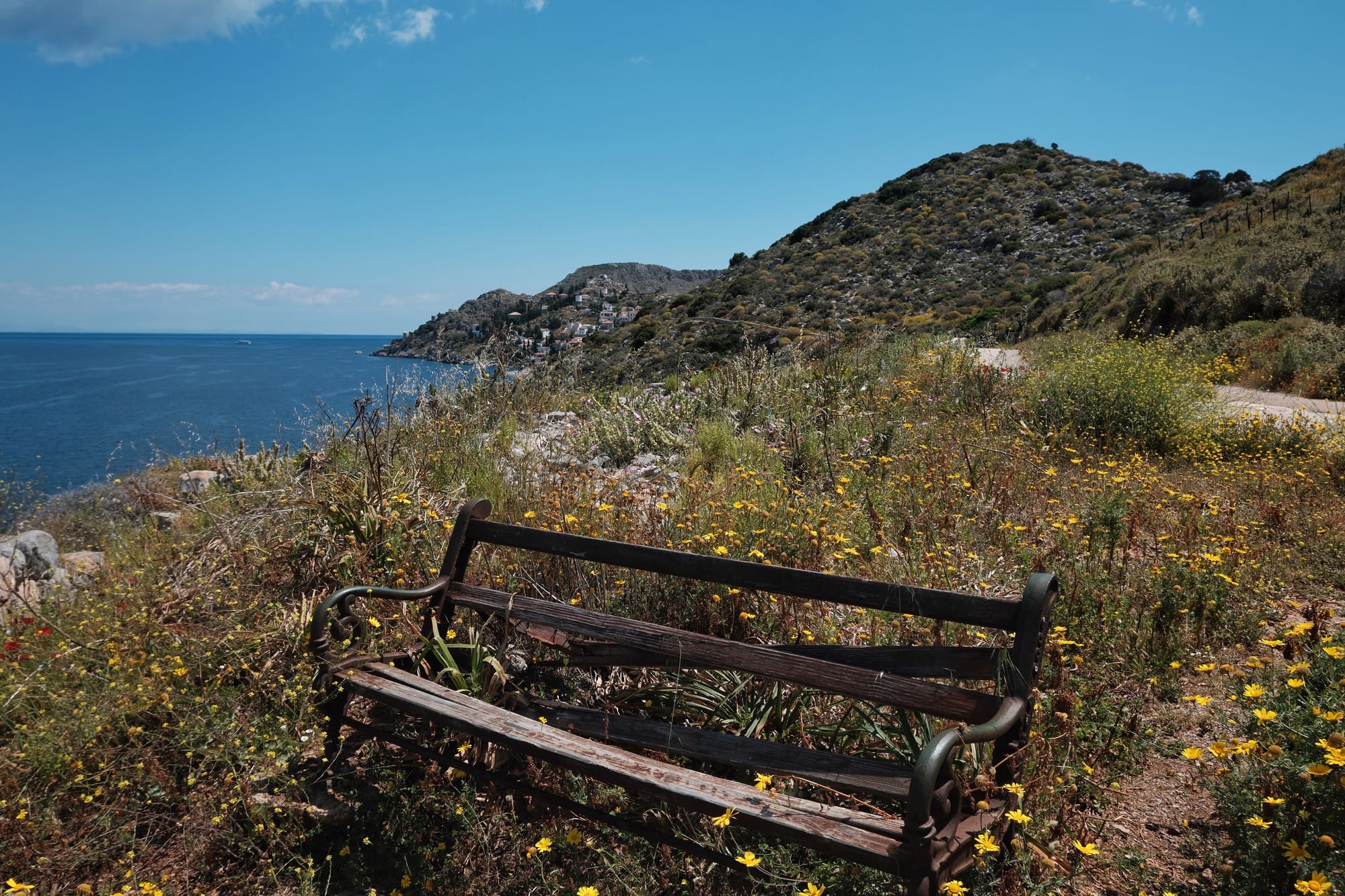
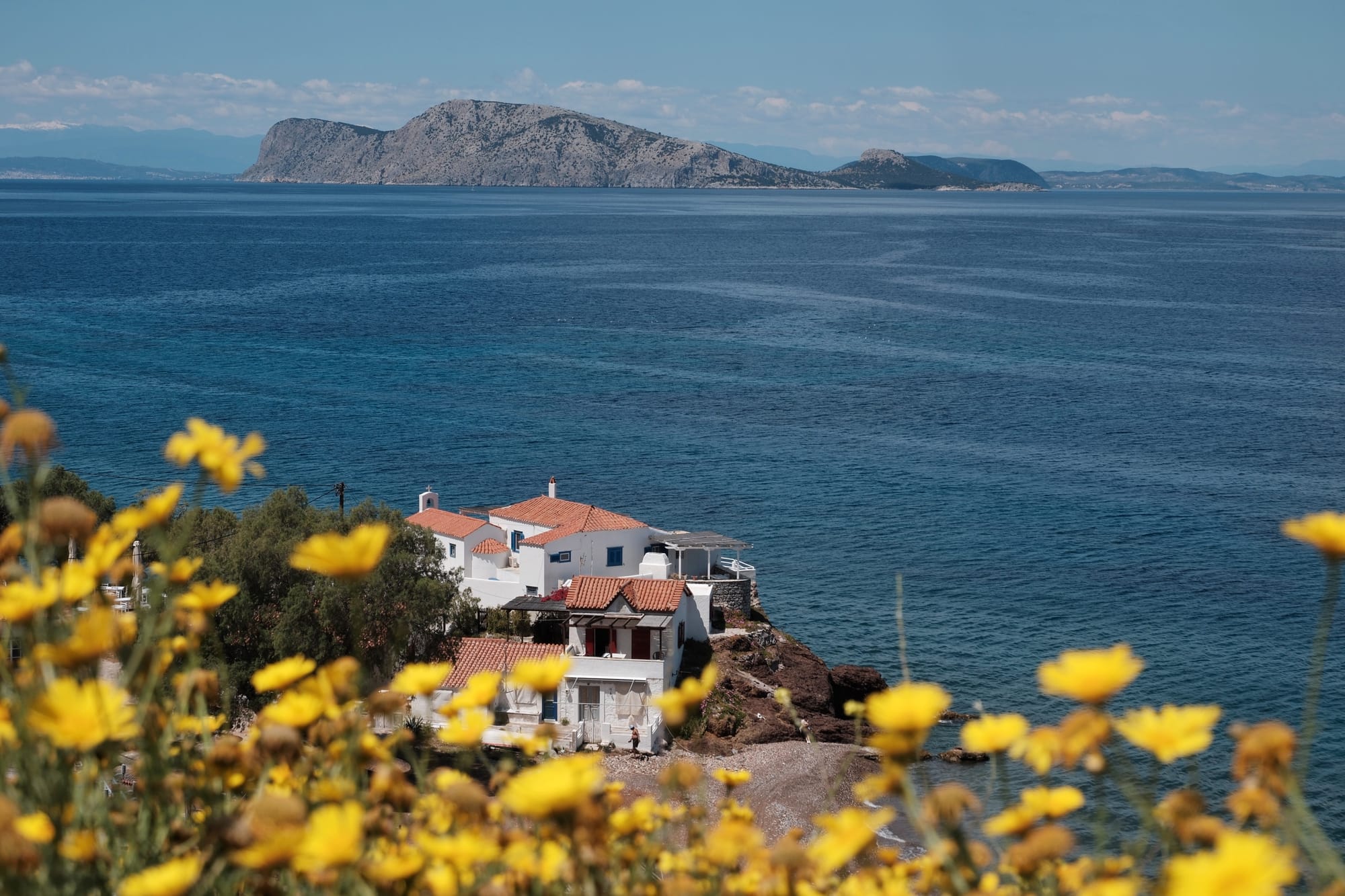
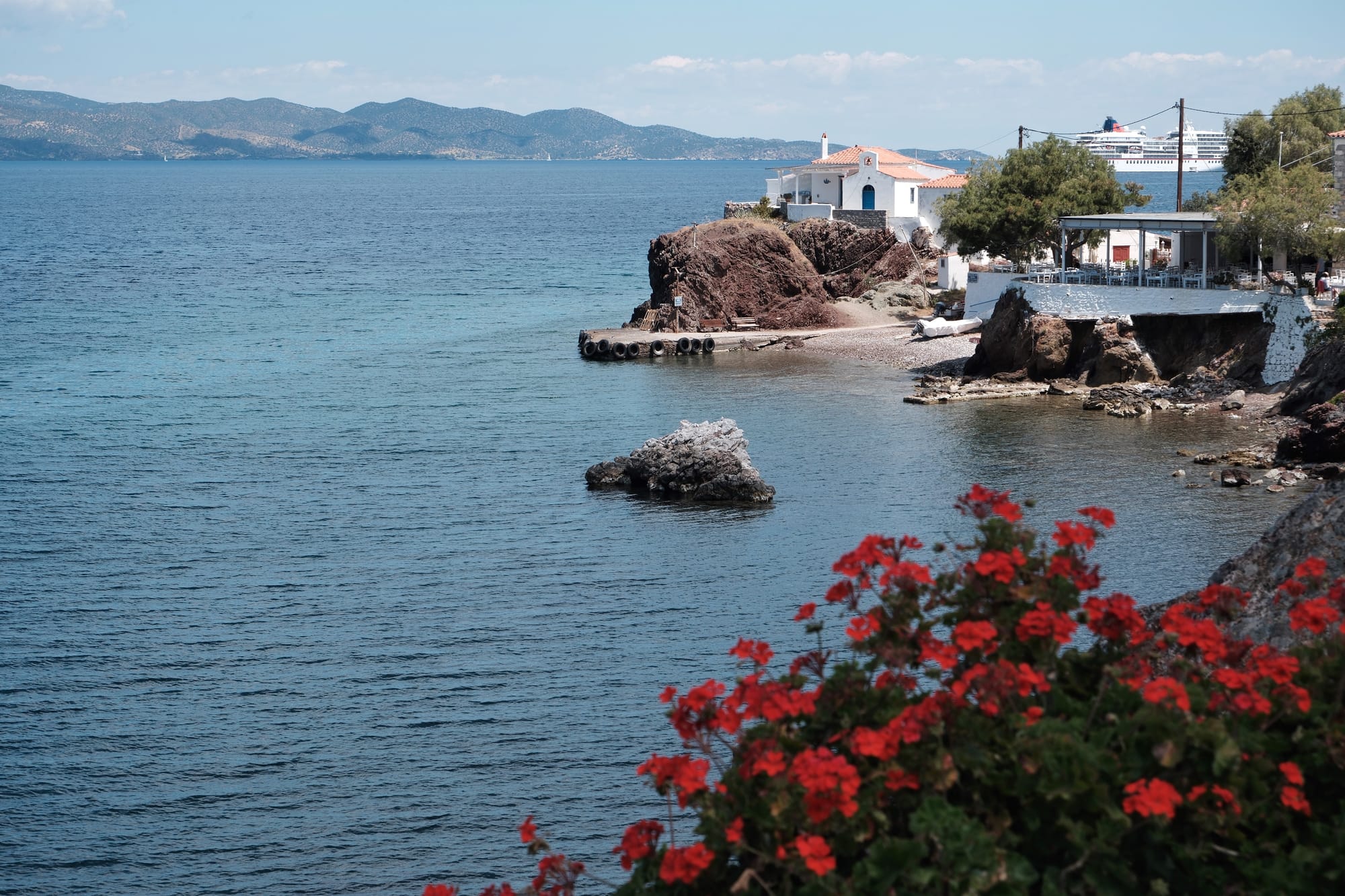
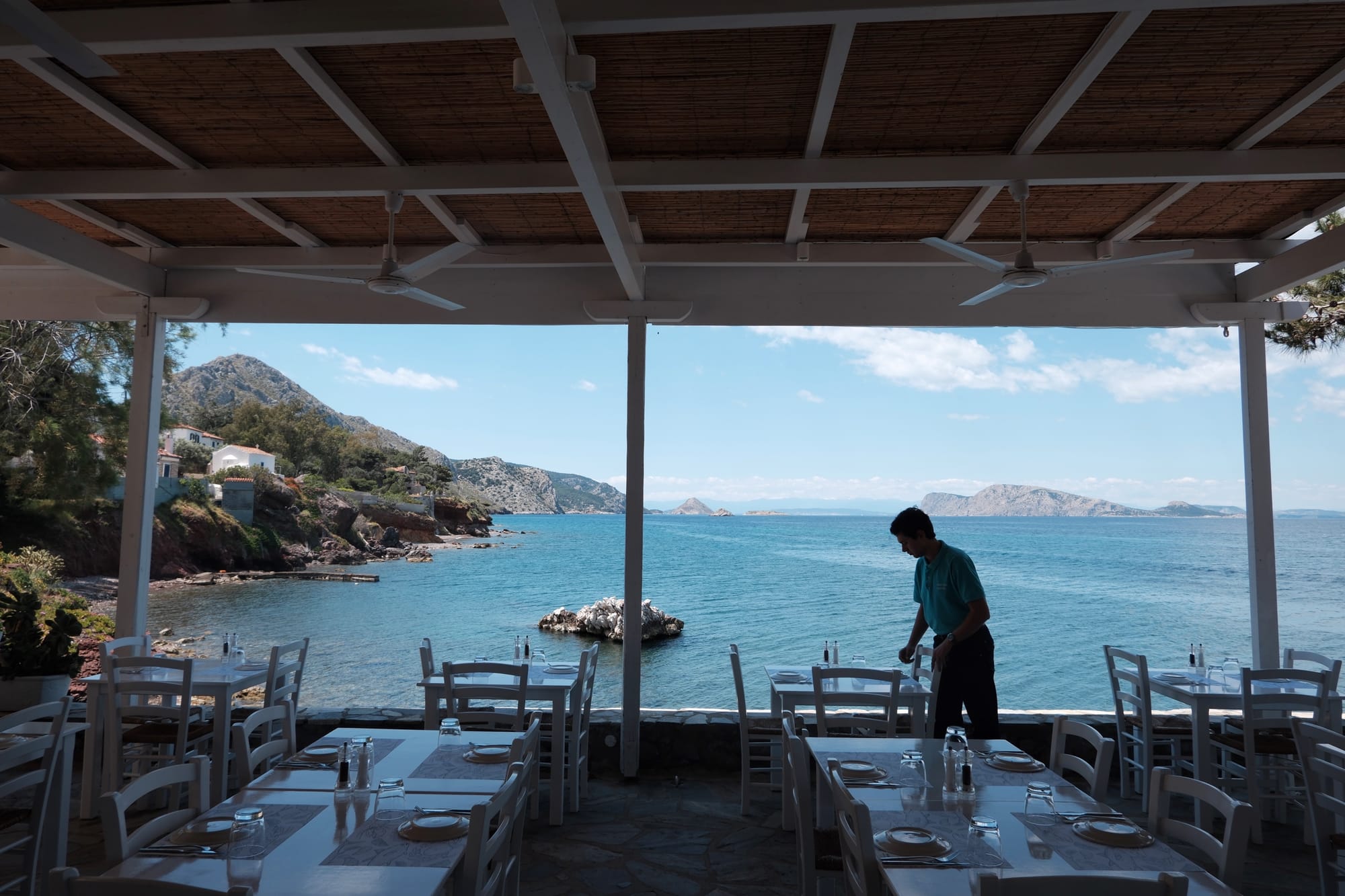
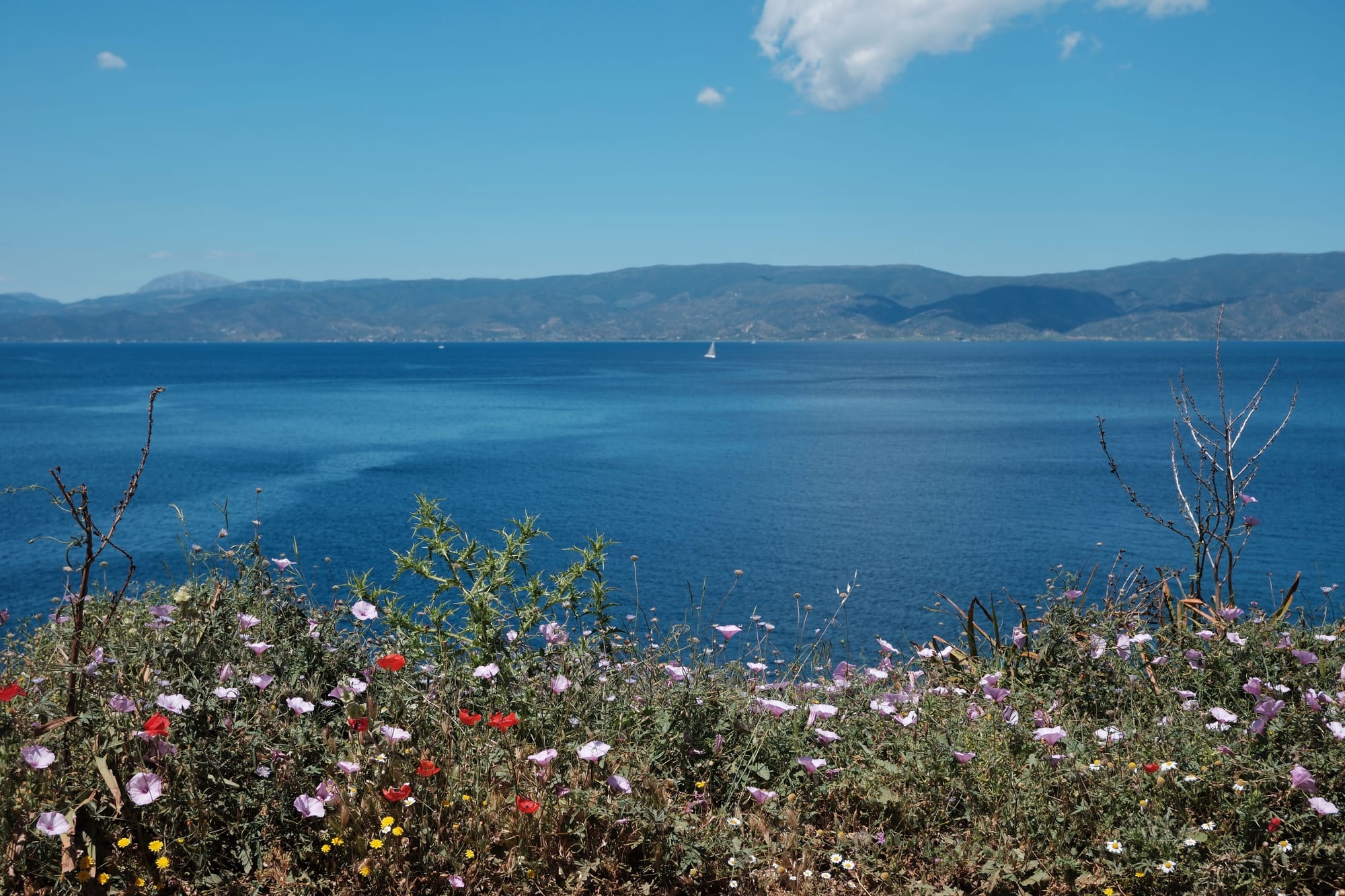
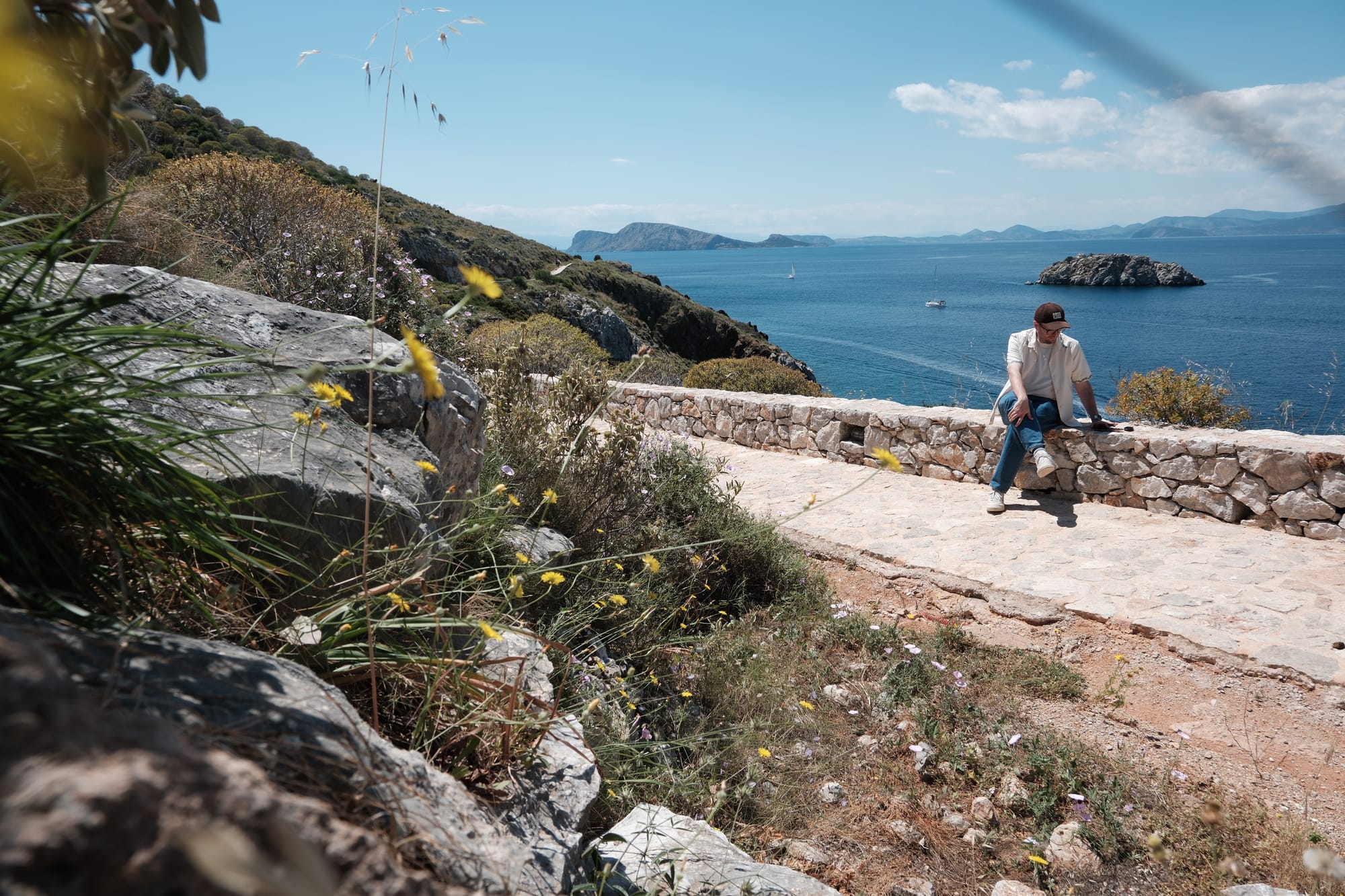
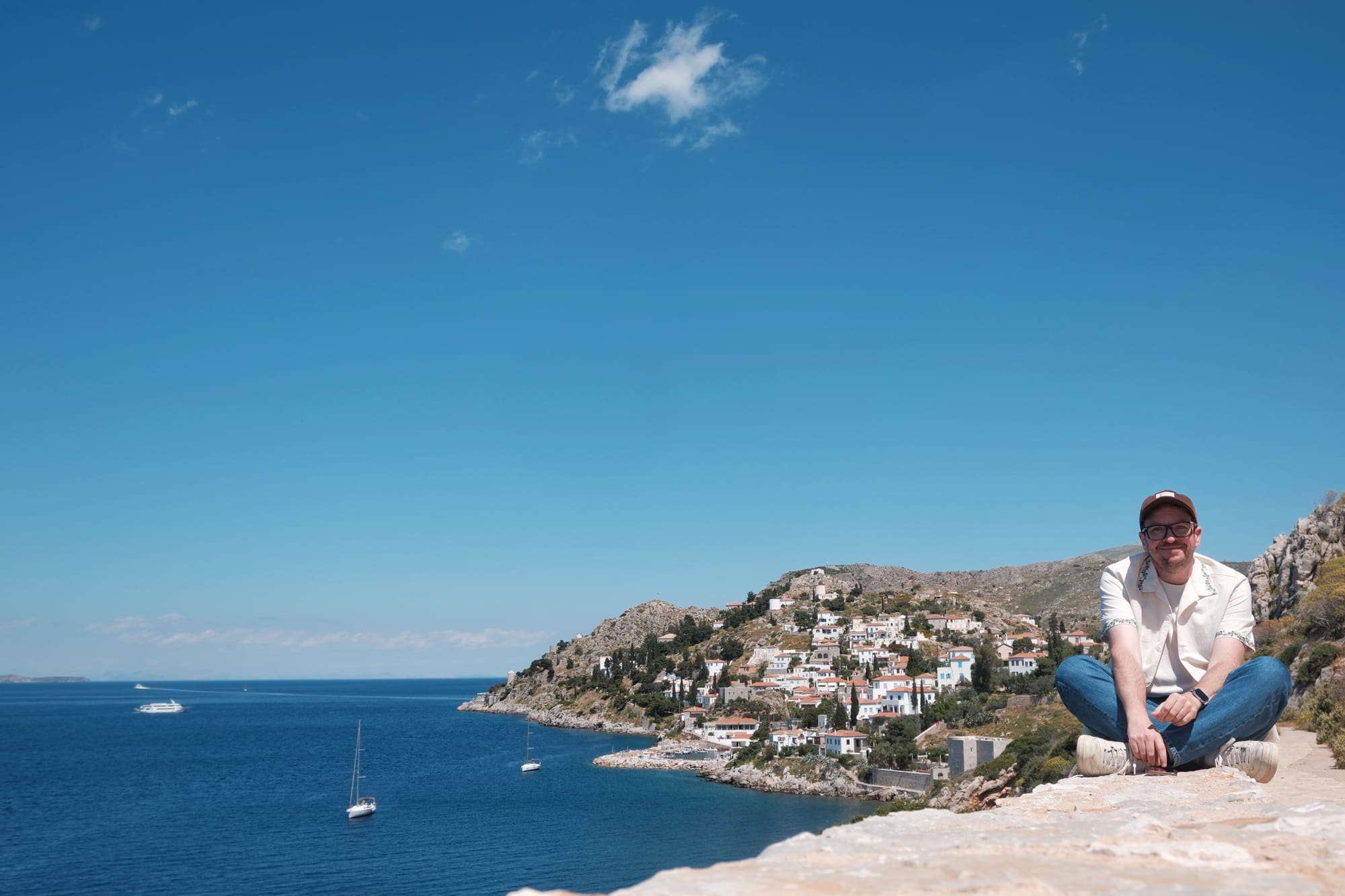
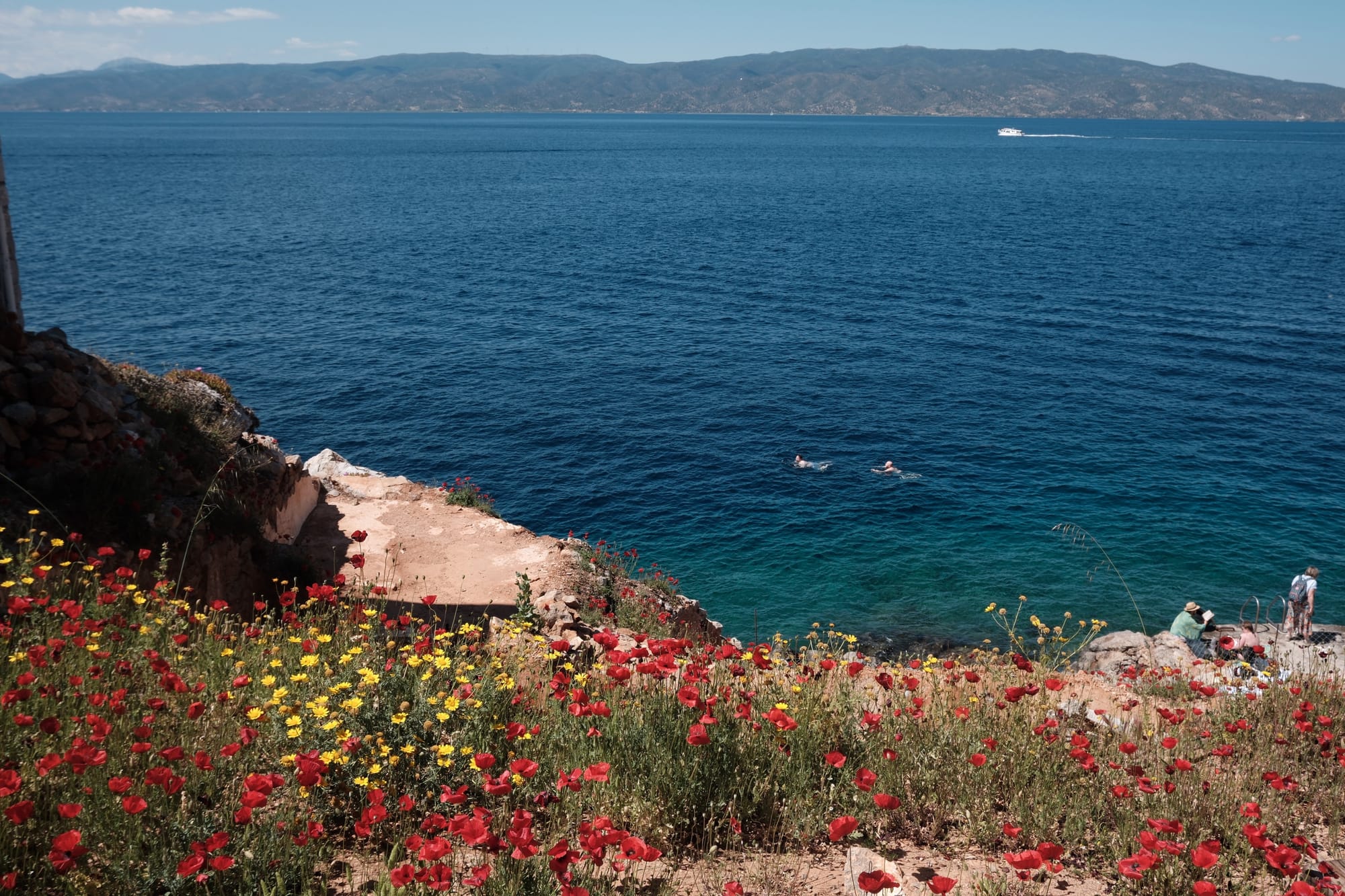
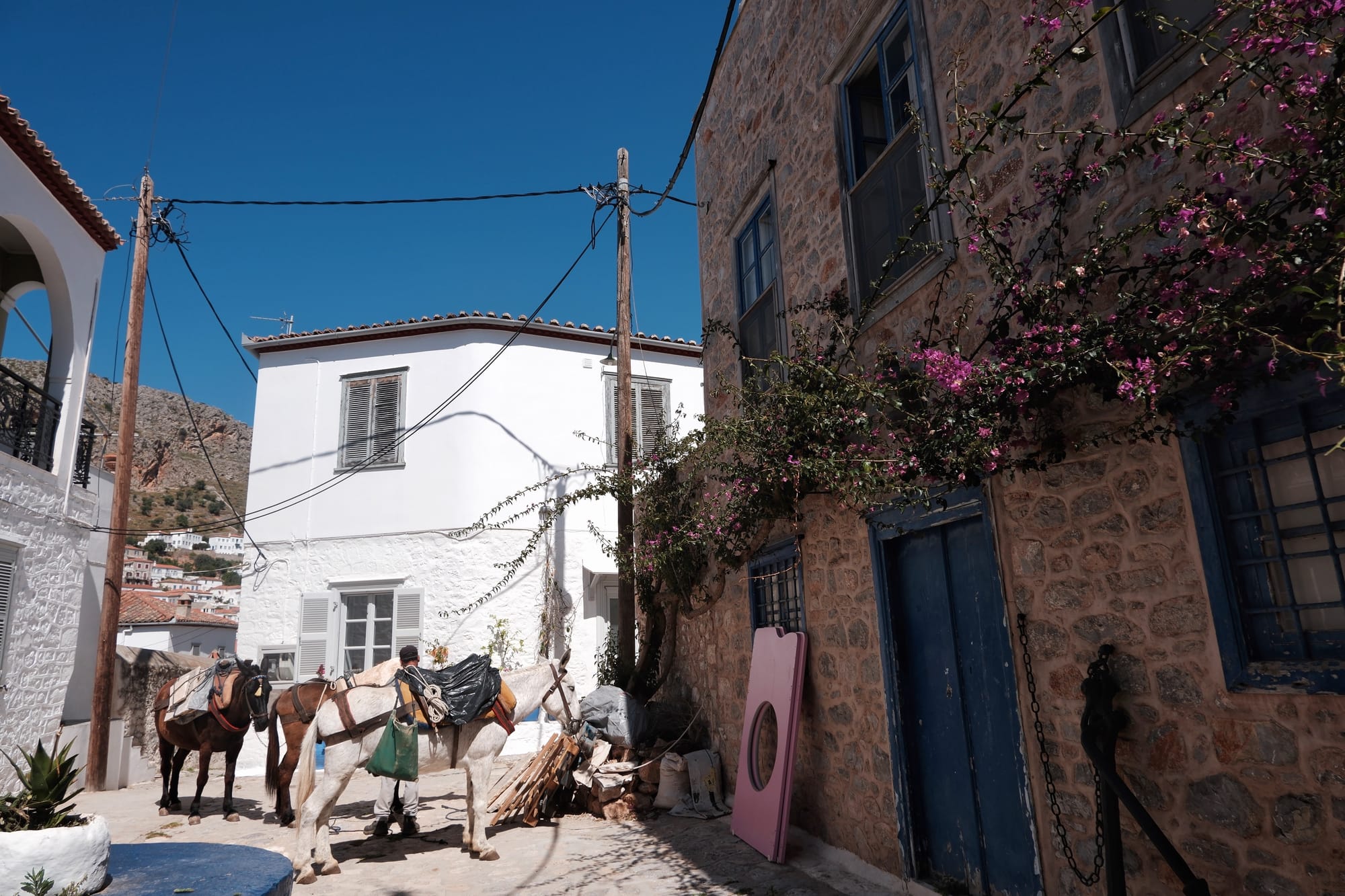
Look, I know almost everyone I've ever met seems to have been to Greece. I have not discovered this place anymore than I have discovered Paris. Looking at you, Captain Cook! However, I simply must say once more for the record that Athens is charming in that gritty way that I love and Hydra was damned near a spiritual experience.
Late on Tuesday, a Spartan taxi driver called Leonidas in a Mercedes E-Class with a 4.98 star rating drove me out of Athens, just like how I imagine the Peloponnesian War ended. Both of us, victorious.
TMI on SSRIs
A few months back, while trying to get a renewed prescription for the anti-anxiety meds I've been on since 2014 (or 2015?), the French GP looked disgusted and declared almost immediately that I should get off them. And you know what, I wanted him to say that! I wanted someone to say that!
Still, the idea of weaning myself off these things has always seemed so daunting. On the rare occasions where I have been caught short and been unable to secure a prescription for half a day or more, the consequent brain fog and debilitating dizziness – it's like playing a video game with a slow system, or lagging internet speeds, so whenever you go to do something it doesn't quite seem to accord with the time or space around you as predicted by your brain – have been enough to put me off the notion of trying. And besides, who has the time. I certainly didn't.
But in Paris, where life is so gay, well, surely that would be just the place to try. To be sure, the young doctor – who so stridently voiced his distaste of the prescribing practices of American and Australian doctors and railed against the emptiness of Canberra – was the first in the 11 or 12 years I've been on these drugs to actually suggest a structured plan to step down from them. Something like 100mg, 100mg, 50mg for the first month or so and then 100mg, 50mg, 50mg and then 100ng, 50mg, 0mg, and then on and so forth until one day I get to zero.
I've been doing this for months now and I'm only at 50mg, 50mg, 50mg and occasionally 0mg day in recent weeks, although good lord, it's not fun. My work has suffered. My anxiety has been off the charts in a way it hasn't been for six years and though I have had darker days in recent years that was more rage-induced while covering a certain something or other and writing a book about it. I suspect this means I should abort this plan, which was his advice if things started to feel bad, and bad they are. I don't have anything fun or funny to say about any of this yet and erred about even writing it because honestly who the fuck cares (I don't mean that in a personal sense, it's just, so mechanical) but, friends, it feels like a massive setback and I'm just sad about it all. Sad, sad, sad. And sleep-deprived.
Hopefully, at least, this offsets the Euro-posting.
The End of Eddy
Perhaps my state of mind has not been helped by the hauntingly beautiful book by the French writer Édouard Louis (born Eddy Bellegeule, literally pretty mouth but in French slang really it's like mug or face, like nice mug) which I finally read after every French person in Paris I've met told me to read it.
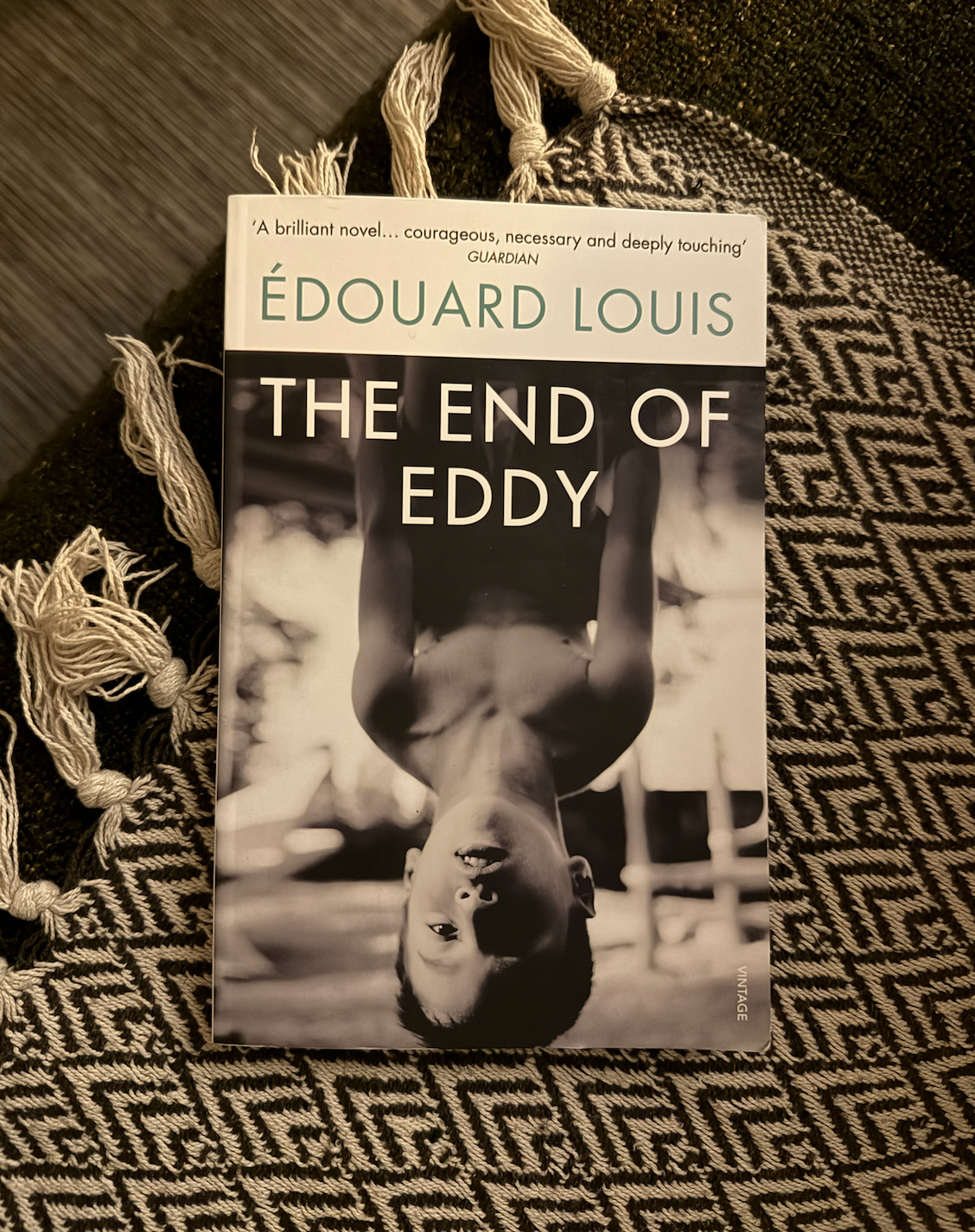
Without wanting to compare myself to Louis, this is very much like One Hundred Years of Dirt. Or the book I wish I could have written, at any rate. Eddie is gay, grew up working poor in a hyper-masculine environment in regional France and writes about all of the above with a singular and enviable precision. Read it. A line that punched me, among so many:
My mother liked to have a good laugh. This was a point of pride with her. I like to have a good time, I don't pretend to be a lady, I am what I am, ordinary. I don't know how she felt when she said things like this to me. I don't know if she was lying, if she was suffering. But why else repeat it so often, like some kind of justification? Maybe what she meant was that obviously she wasn't a lady because there was no way she could be. To be ordinary, as if pride were not the first manifestation of shame.
As if pride were not the first manifestation of shame.